

Antique Hall Tree Mirror
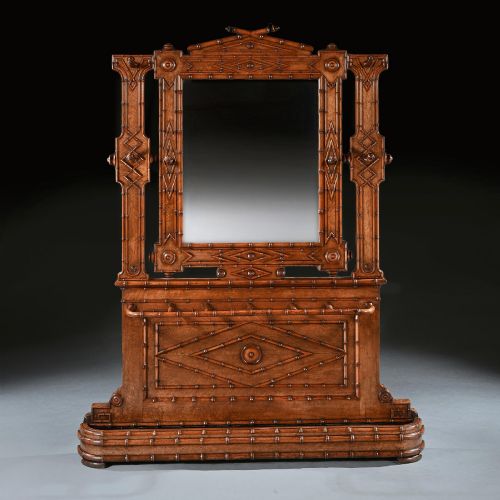
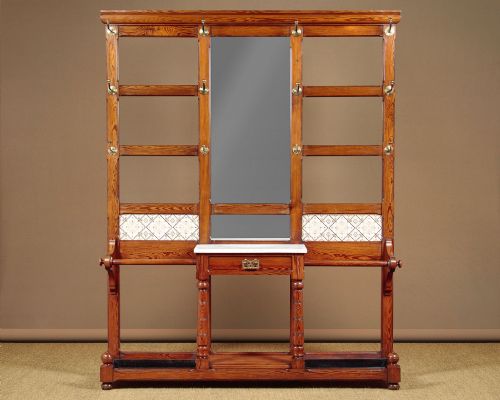
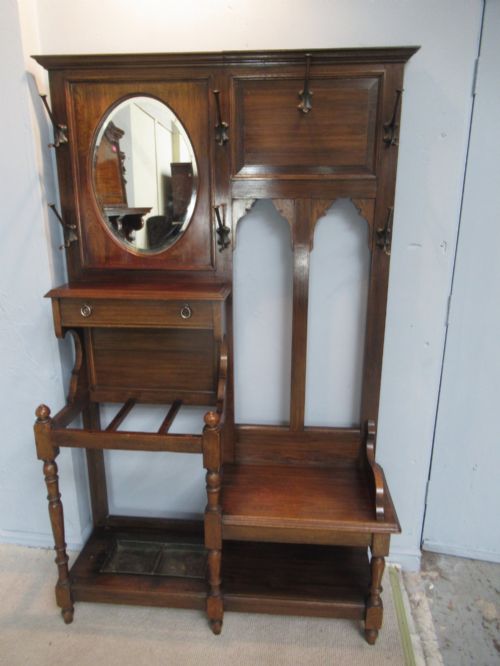
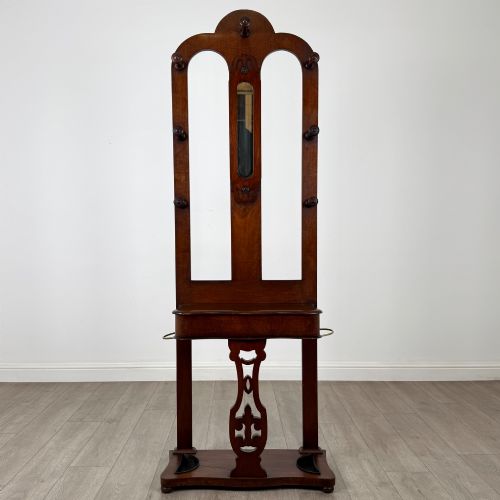
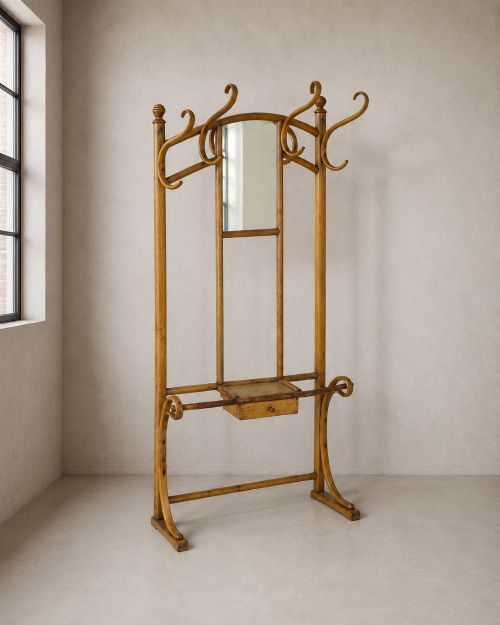
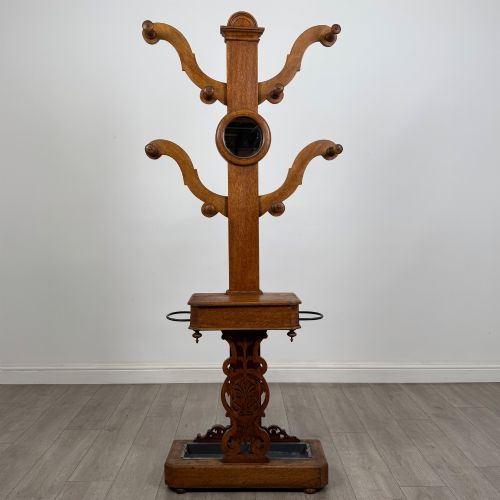
These antique hall tree mirror combinations organise the entrance hall with built-in glass, coat hooks and umbrella stands.
Identifying your antique hall tree mirror
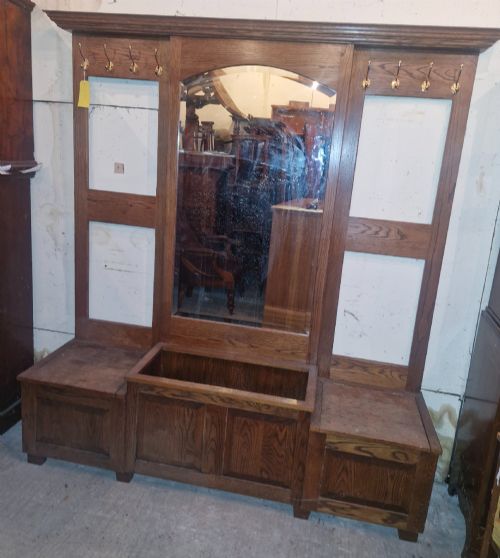
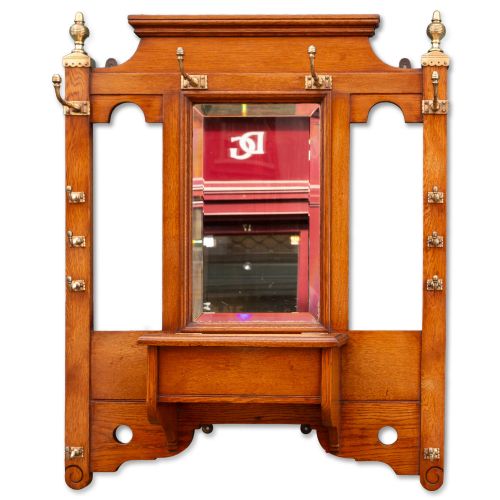
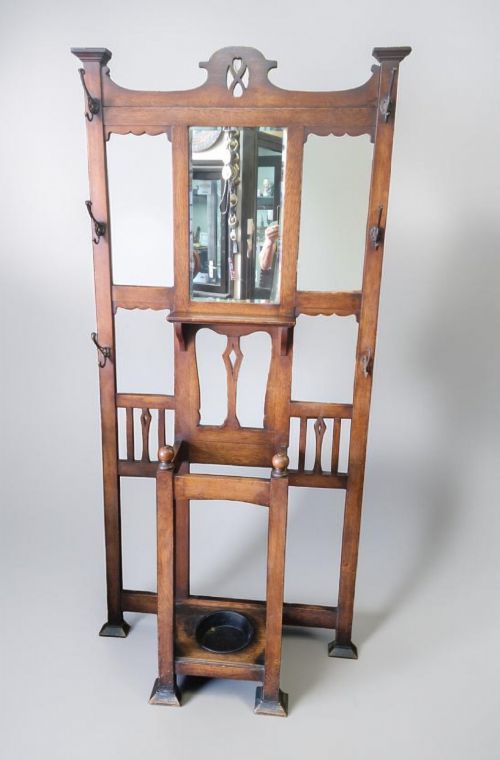
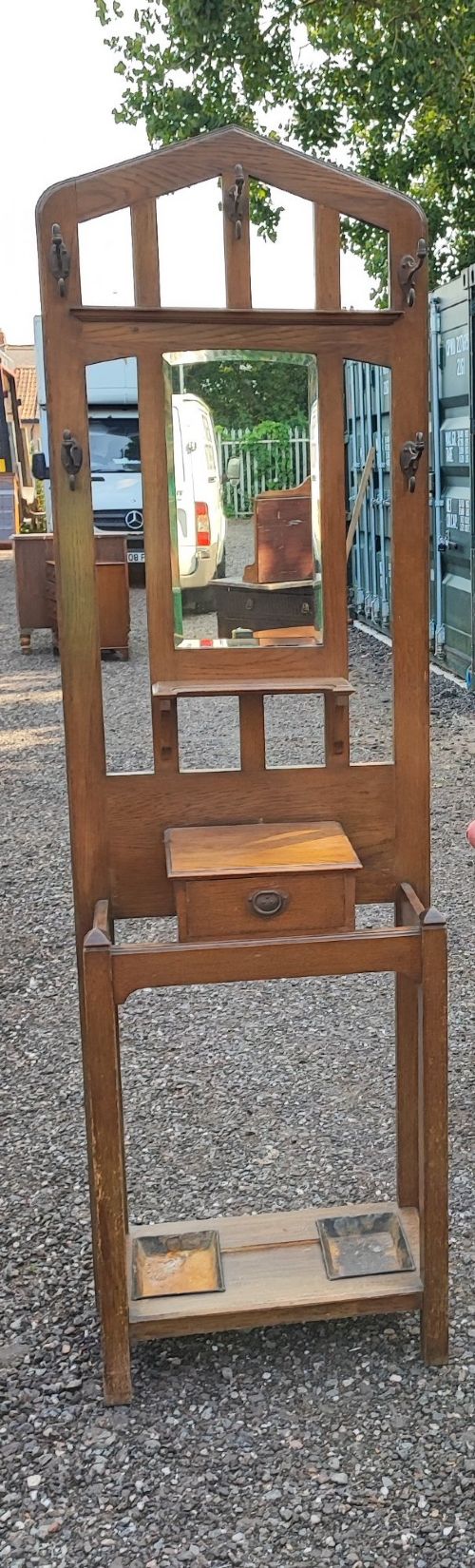
An antique hall tree mirror combines a central looking glass with timber framework, hooks for garments and lower trays for sticks or umbrellas. These pieces serve the hallway, greeting visitors and providing a place to check appearance before stepping out.
The versions met on this page span the Victorian and Edwardian eras, alongside pieces dated around eighteen ninety. Surviving examples appear in oak, walnut, mahogany, pine and cast iron.
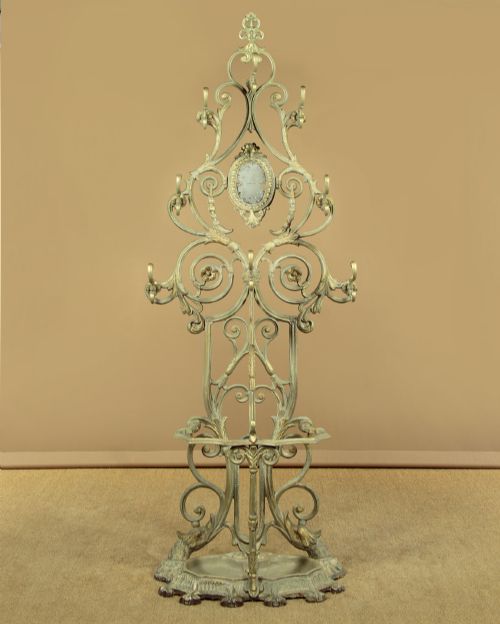
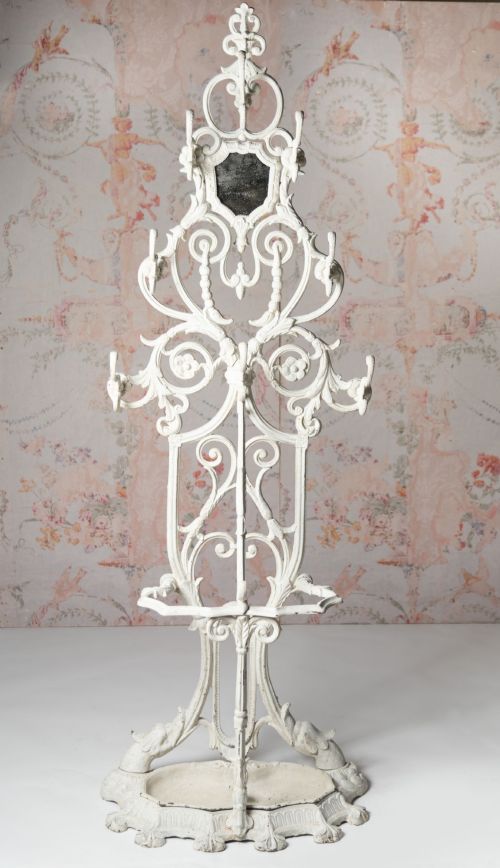
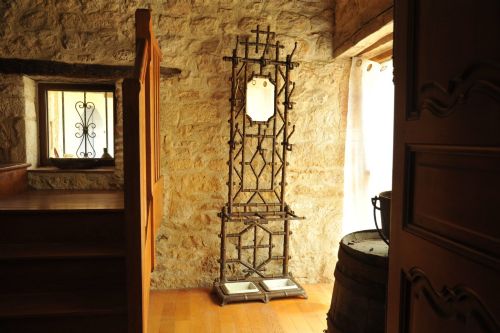
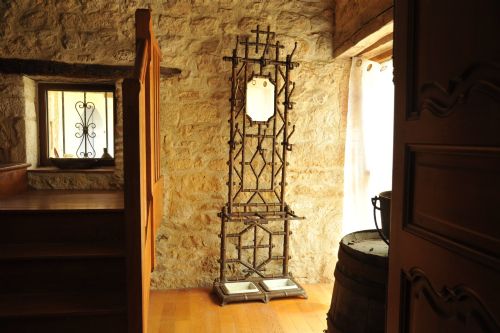
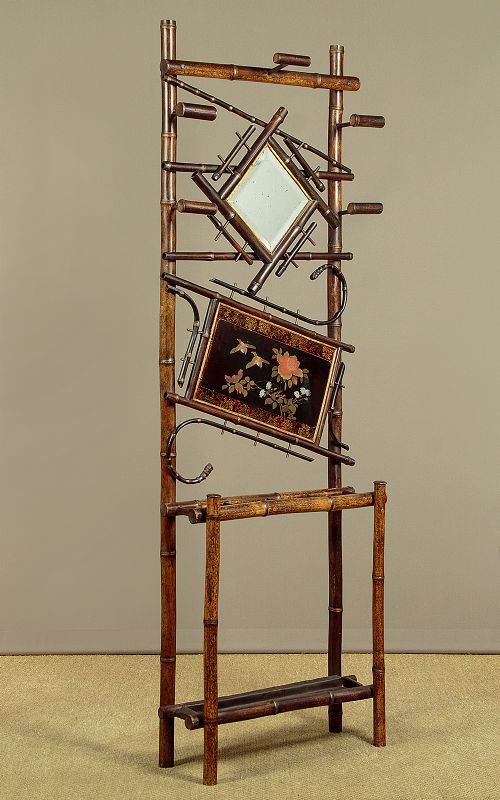
Forms range from carved and fretted oak stands to French cast iron faux bamboo designs and walnut wall mirrors equipped with valets. Most incorporate storage or surfaces alongside the mirror plate.
Construction and materials
Construction relies on solid hardwoods including oak, walnut, mahogany and light oak, shaped into substantial frames to support integrated glass mirrors. Metal elements such as brass, iron and cast iron form coat hooks, umbrella wells and structural brackets.
Surface detailing includes carved and fretted woodwork, marble shelves and specialised framing such as the faux bamboo technique seen on metalwork. Glass plates provide the reflective surface, secured within wooden or metal surrounds.
Retail Price Guide 2026
Typical UK retail prices for hall tree mirror, calculated from the Sellingantiques database of over a million retail prices indexed since 2003. This retail price guide relies exclusively on Sellingantiques data; no external sources or auction records are used, so the figures do not describe the wider market.
Current listings feature pieces from the Victorian and Edwardian periods, including an example from eighteen ninety.
Assessing quality and character
Quality separates pieces through the depth of woodwork carving, the presence of materials like marble shelves, and the integration of functional elements such as valet compartments. Elaborate fretwork and substantial proportions distinguish the finest work.
Makers such as Gillows represent the upper tier through distinguished joinery and impressive scale, whereas simpler vernacular pine or standard oak examples offer straightforward utility.
Gillows
The Antique Hall Tree Mirror Glossary
- Hall Stand
- A piece of furniture designed for the entranceway that incorporates coat hooks, an umbrella holder, and frequently a mirror. These items help keep hallways tidy.
- Valet
- A small compartment, tray or fitting integrated into hallway furniture for holding loose items like keys or coins. It provides convenient storage near the door.
- Faux Bamboo
- A decorative technique where metal or wood is shaped and painted to imitate natural bamboo stalks. This style appears on Victorian metal stands.
- Fretted
- Woodwork pierced or perforated with decorative open patterns. This method adds ornamental detail to the crests and panels of stands.
Frequently Asked Questions
What is a hall tree mirror?
A hall tree mirror is an entranceway furnishing that combines a vertical timber frame, a looking glass, coat hooks, and umbrella storage.
These combination pieces were designed to handle outdoor garments and accessories in domestic entrance halls.
How do I date a hall stand?
Dating relies on observing stylistic markers, timber choices, and construction methods characteristic of Victorian or Edwardian periods.
Details such as Arts and Crafts movement influence or faux bamboo metalwork help narrow down the decade of production.
Where should I place one?
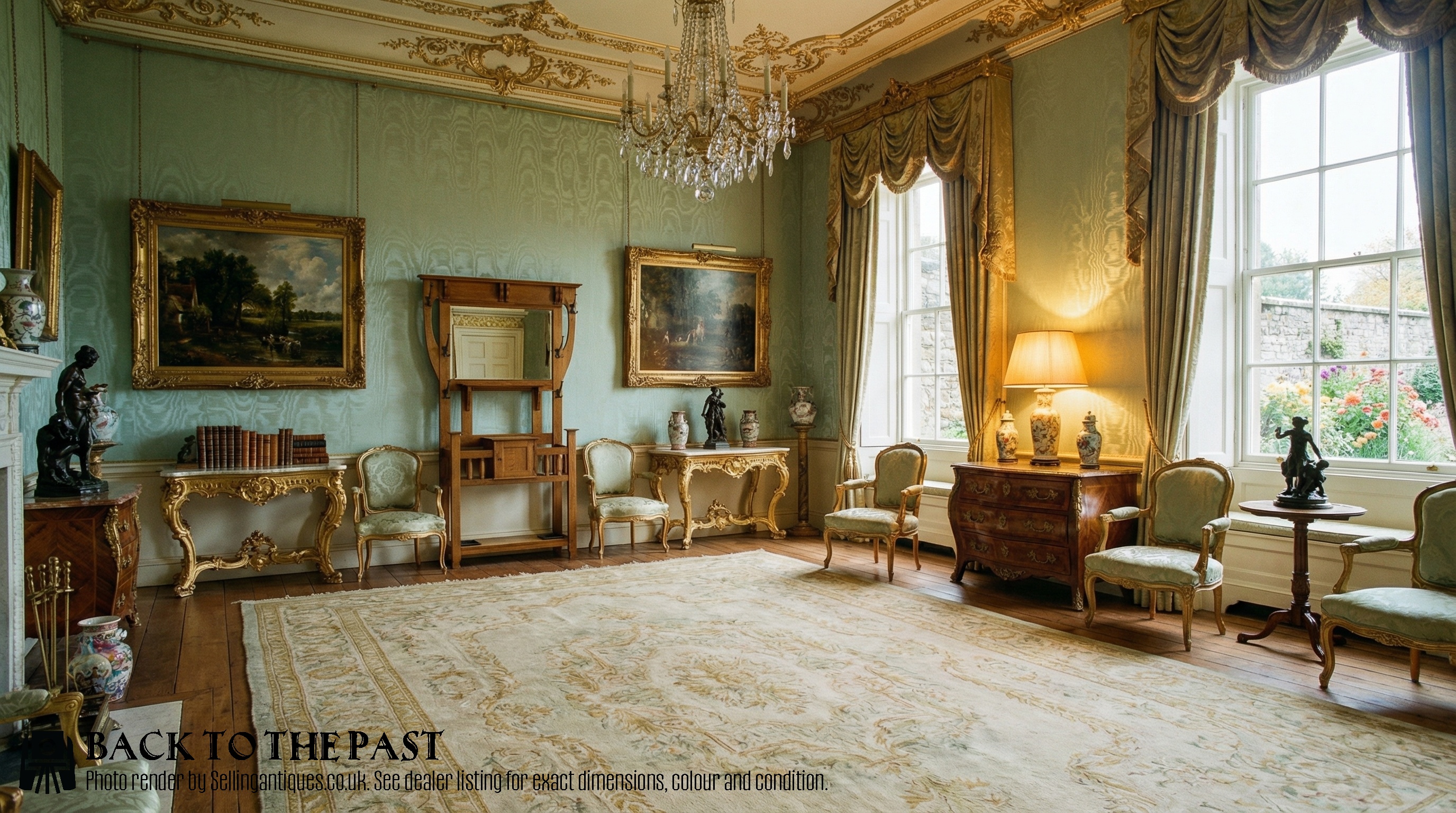
These pieces suit entrance halls, foyers, and large reception rooms where guests arrive and outdoor wear is removed.
The integrated mirror and hooks make them practical for last-minute checks and storing daily coats.
What materials were used?
Construction materials include hardwoods like oak, walnut, mahogany, and pine, alongside cast iron and brass for structural parts and hooks.
Some examples also incorporate glass mirror plates and marble shelves for added utility.