



Victorian Engraved Glass Jug
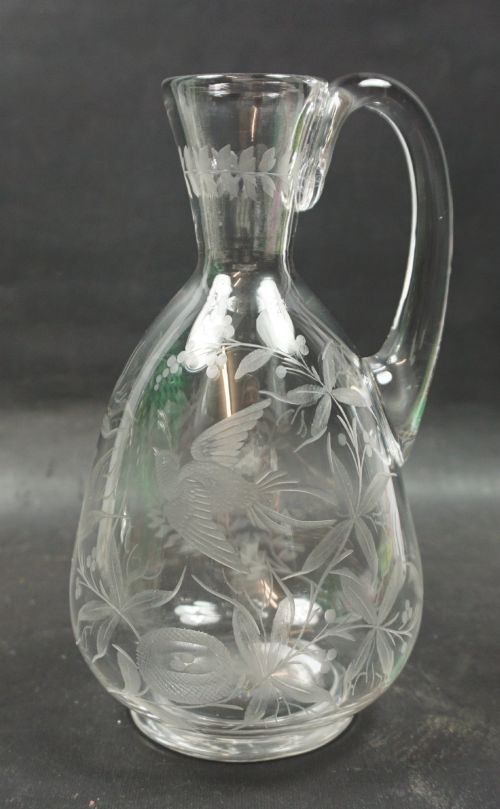
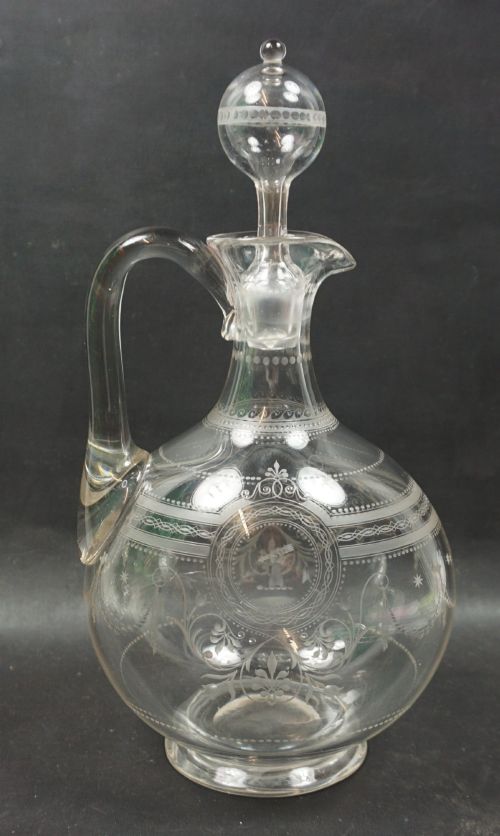
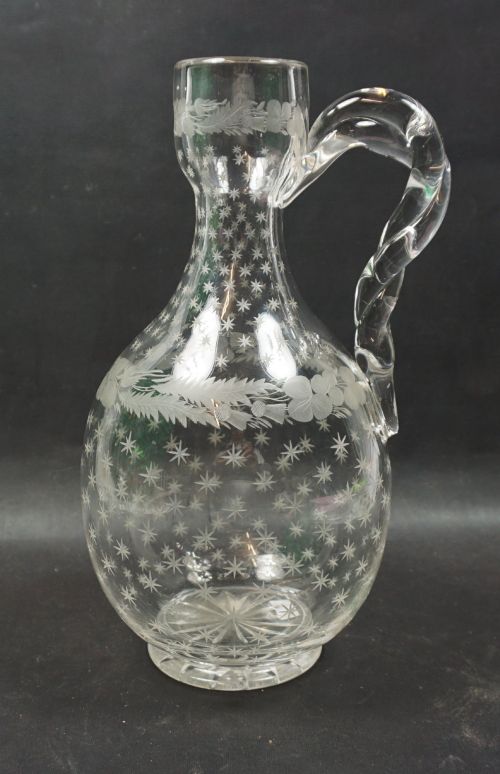
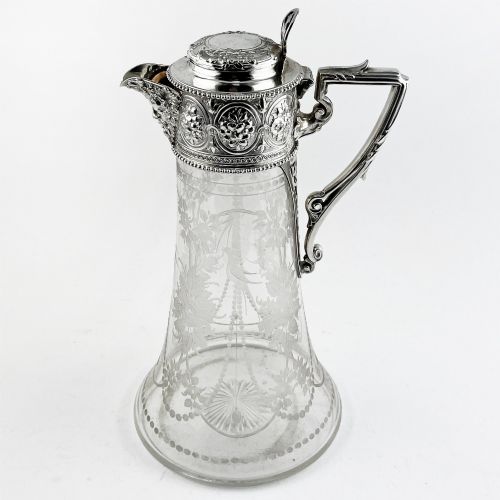
A victorian engraved glass jug brings substantial weight and detailed wheel-cutting to the table, offering a functional vessel for wine and water.
Victorian Engraved Glass Jug
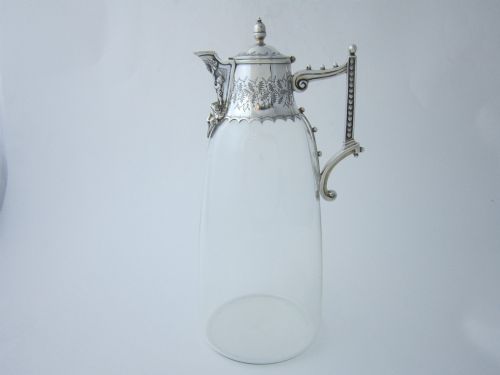
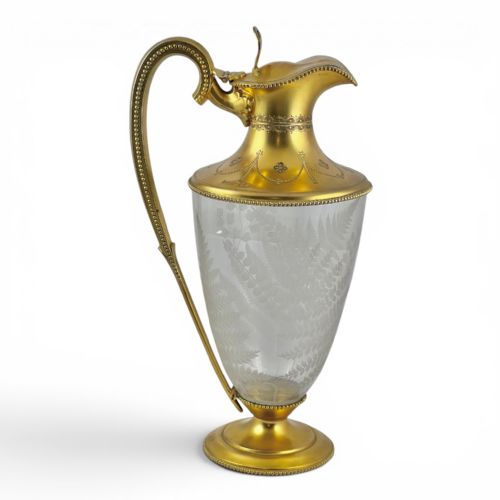
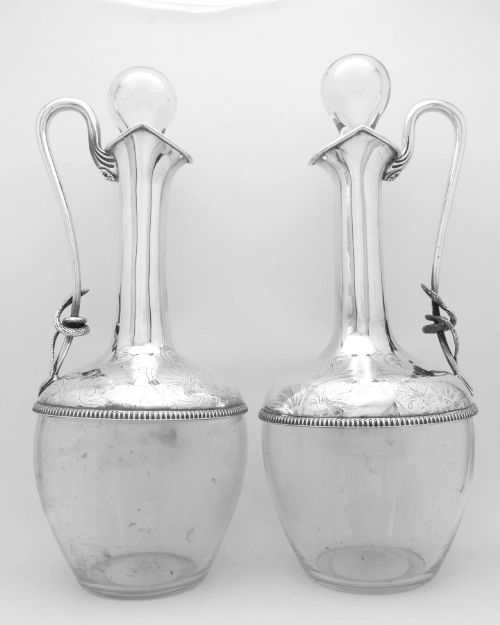
A victorian engraved glass jug typically takes the form of a claret jug, wine jug, or serving ewer used for dining and entertaining. Most examples on this page date from the nineteenth century, stretching from the eighteen-sixties through the Edwardian period, combining clear or coloured crystal with metal mounts.
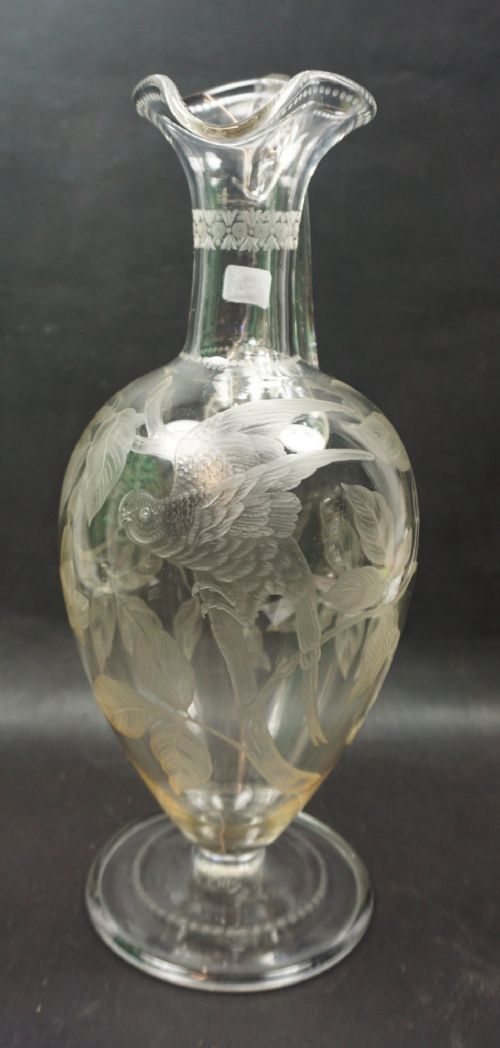
The vessels appear in various capacities, from pint-sized pitchers to large table ewers, often featuring distinct pouring spouts and applied handles. Makers applied wheel-engraving and etching techniques to depict crests, florals, animals, and classical motifs directly onto the glass body.
Materials and construction
The bodies utilise heavy lead crystal or cut glass, shaped by blowing and frequently enhanced with deep wheel-engraving or hand-etching. Coloured variants employ cranberry and red glass formulas to achieve deep hues.
Mounts, handles, and hinged lids are cast in sterling silver, silver gilt, or silver plate, sometimes shaped as serpent handles or Bacchus masks and secured directly to the glass neck.
Victorian Engraved Glass Jug Retail Price Guide 2026
Typical asking prices for victorian engraved glass jug among the pieces listed under this phrase on Sellingantiques today, from the lower quarter to the upper quarter. They describe what is for sale here now, not the wider market.
Several examples feature engraved depictions of the flowers of the Union, alongside surprisingly detailed birds, nests, and eggs.
Assessing the craftsmanship
Quality rests upon the crispness of the wheel-engraving on the glass and the weight of the metal mounts. Fine pieces display sharply defined motifs such as crests, birds, and fruiting vines without surface wobble.
The integration between the glass vessel and the silver or silver-plated collar dictates the structural integrity of the piece, where precision mounting separates standard production from superior work.
William Comyns·Asprey and Co. Ltd·Stevens and Williams·Richardsons
The Victorian Engraved Glass Jug Glossary
- Claret jug
- A specialised pouring vessel designed specifically for serving red wine at the dining table. These pieces often feature elaborate silver or silver-plated mounts.
- Wheel engraving
- A meticulous glass decoration technique executed by holding the vessel against rotating small copper or stone wheels. This method produces deep, tactile incisions with rounded profiles.
- Silver plate
- A base metal foundation coated with a thin layer of pure silver through electroplating or older Sheffield plating techniques. It provides the appearance of solid silver without the heavier metal cost.
- Cranberry glass
- A rich red-pink transparent glass created by adding gold chloride to the molten batch. It gained popularity during the nineteenth century for decorative tablewares.
Victorian Engraved Glass Jug: Frequently Asked Questions
What is a victorian engraved glass jug used for?
These vessels served primarily for decanting and pouring wine, claret, lemonade, or water during formal nineteenth-century dining.
They functioned as both practical tableware and decorative centrepieces on the sideboard.
How do I clean an antique glass jug?
Wash the vessel gently by hand using warm water and mild soap, avoiding abrasive scrubbers that might scratch the surface.
Keep silver or silver-plated mounts dry and polish them separately with a soft cloth to protect the metal.
Are the mounts solid silver or plated?
Mounts on these pieces appear in both sterling silver bearing hallmarks and silver-plated white metal.
Examining the collar for hallmarks helps determine whether the metal is solid silver or plated over a base metal.
How can I date a glass jug?
Dating relies on a combination of glass weight, cutting style, engraved motifs, and any metal hallmarks present on the collar.
Nineteenth-century pieces often display distinct Victorian stylistic traits, ranging from Gothic Revival elements to later Art Nouveau curves.