





Victorian Engraved Glass Goblets
Victorian engraved glass goblets bring heft and meticulous wheel-work to the table, offering a tangible link to nineteenth-century toasts and gatherings.
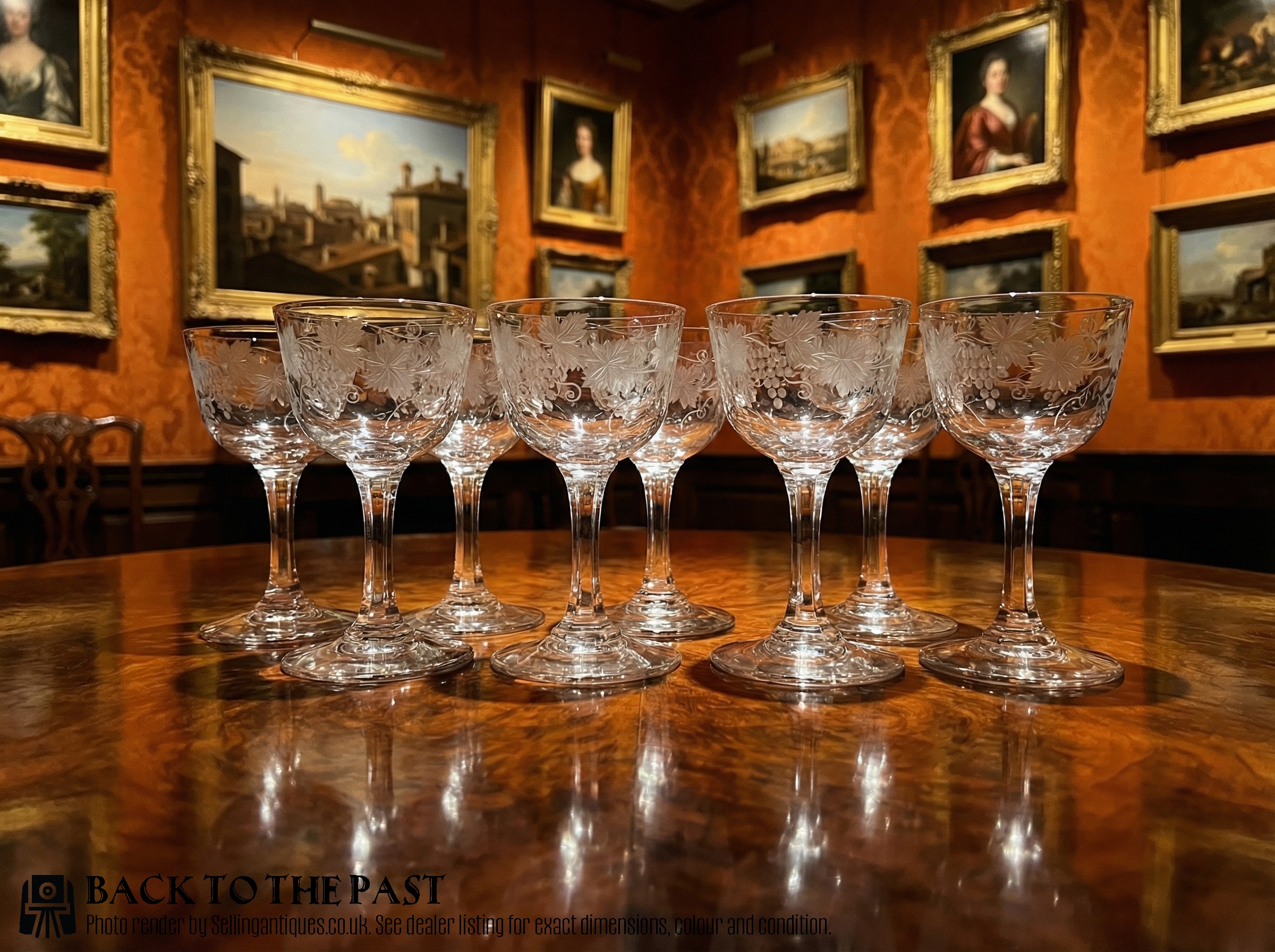
Victorian Engraved Glass Goblets
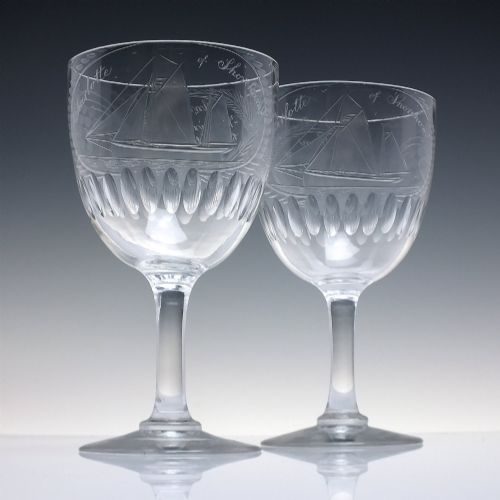
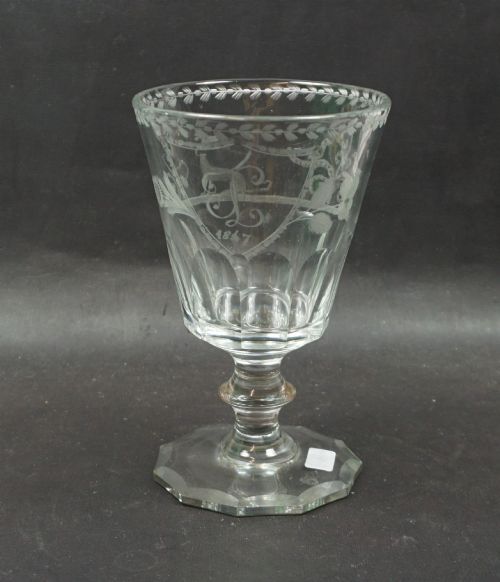
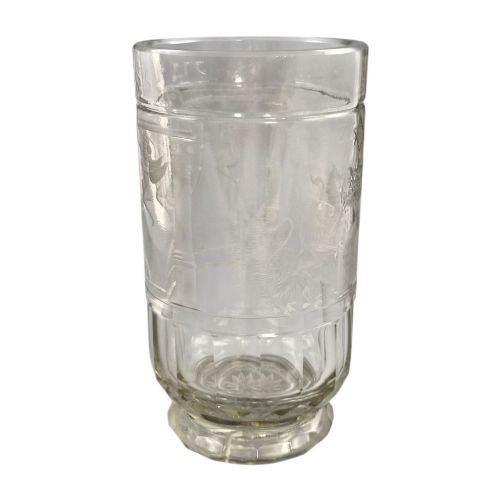
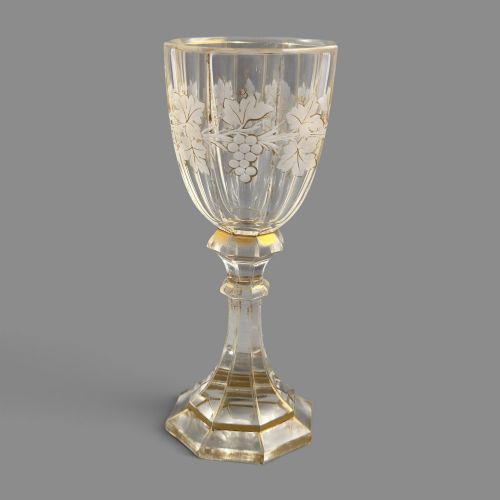
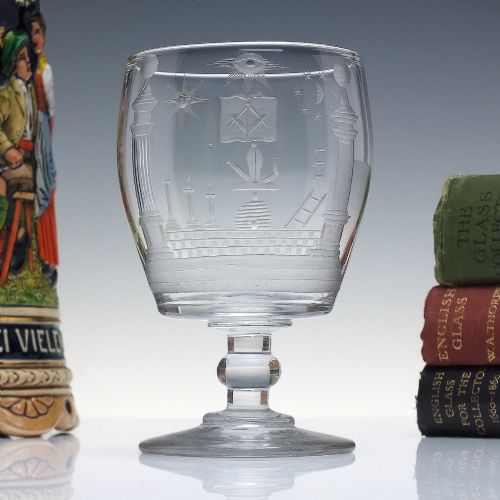
Victorian engraved glass goblets encompass substantial drinking vessels produced across the nineteenth century, ranging from large ceremonial beakers to rummers and stemmed wine glasses. The examples met on this page frequently date from the middle and latter decades of the Victorian era, particularly the eighteen-eighties and eighteen-nineties.
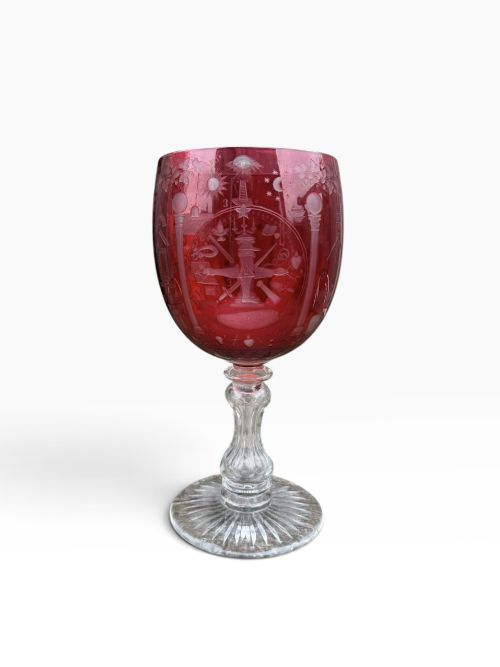
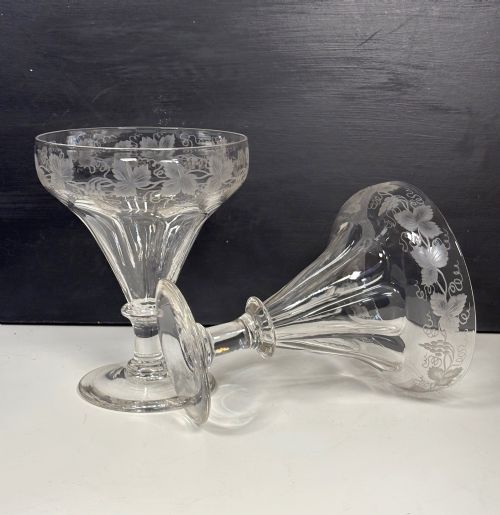
Makers in regions such as Bohemia and England shaped these pieces from heavy materials, applying wheel-engraving, etching, and cutting to display elaborate motifs. Collectors encounter both clear lead crystal and richly coloured glass bodies, often finished with gilding or specific commemorative decoration.
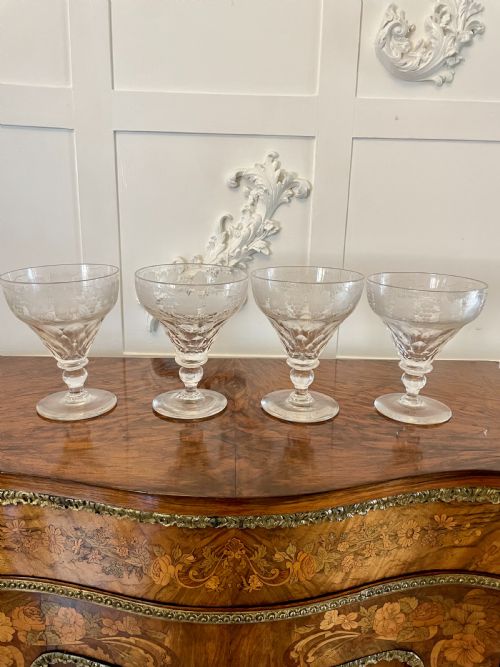
Forms vary from wide-bowled rummers designed for heavy use to tall, ornate Römer styles intended for display. Sets of matching dessert wine glasses and large ceremonial beakers also appear, reflecting the diverse domestic and social drinking customs of the period.
What varies in quality
The clarity and weight of the glass establish the baseline of a piece, with heavy lead crystal offering superior refraction compared to standard pressed or blown metal. Purity of colour in amber and cranberry examples also dictates desirability among collectors.
The precision and depth of the wheel-engraving separate standard production from masterwork output, as crisp detailing requires exceptional control by the artisan. Preservation of surface gilding and the absence of heavy rim wear further distinguish the finest specimens.
Victorian Engraved Glass Goblets Retail Price Guide 2026
Typical asking prices for victorian engraved glass goblets among the pieces listed under this phrase on Sellingantiques today, from the lower quarter to the upper quarter. They describe what is for sale here now, not the wider market.
Object forms documented in the archive range from individual wine glasses and rummers to large centrepiece bowls and sets.
Moser
The Victorian Engraved Glass Goblets Glossary
- Rummer
- A large, wide-bowled drinking glass common in the nineteenth century, typically featuring a short stem and heavy foot. These pieces were used for ale, wine, and punch.
- Römer
- A traditional Germanic or Bohemian stemmed drinking vessel with a large rounded bowl, often made in green or amber glass with a decorated conical foot. They frequently display elaborate wheel-engraved ornamentation.
- Lead crystal
- A high-clarity glass containing metallic oxides that increase weight and refractive brilliance. It provides a superior surface for deep cutting and engraving.
- Intaglio
- A technique where the design is carved into the surface of the glass rather than raised in relief. This method creates a sunken, detailed pictorial effect.
- Cranberry glass
- A rich pinkish-red glass produced by adding gold chloride to the molten batch. It gained immense popularity during the Victorian period for decorative tableware.
Victorian Engraved Glass Goblets: Frequently Asked Questions
What were victorian engraved glass goblets used for?
These vessels served functional roles at the dining table for wine, ale, and punch during formal meals and celebrations. Larger ceremonial beakers and Masonic glasses also marked specific fraternal or public events.
Over time, many transitioned from daily utility to display pieces, prized for their decorative wheel-cut motifs and coloured glass bodies.
How can I tell the age of these glasses?
Examine the base for pontil marks where the glassblower's iron was detached, noting whether the scar has been ground and polished flat. Match the stylistic motifs, such as specific floral or Masonic designs, to documented periods of production.
Consider the weight, material composition, and depth of the engraving, as nineteenth-century manufacturing techniques leave distinct tactile and visual signatures.
What is the difference between etched and engraved glass?
Etched glass relies on acid to eat away the surface exposed through a protective ground, creating a shallow, frosted design. This technique allowed for rapid pattern replication on Victorian tableware.
Engraved glass involves mechanical cutting with a rotating copper or stone wheel held against the glass. This method produces deeper, crisper lines with varied dimensional shadows.