


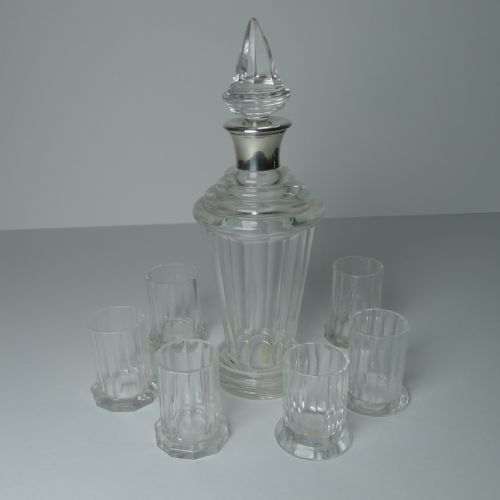
Aperitif Glass Set
An aperitif glass set brings together matched drinking vessels designed for pre-dinner drinks, offering the collector a functional slice of period dining elegance.
Aperitif Glass Set
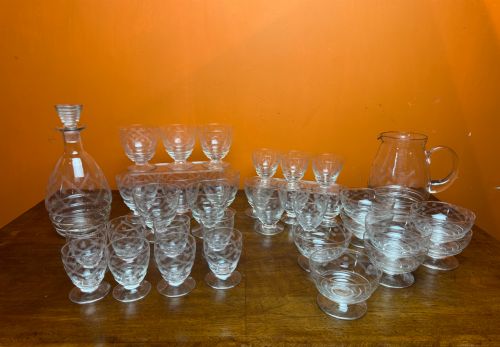
An aperitif glass set comprises matched groups of small-scale glassware intended for pre-dinner wine, liqueur, sherry, and cordials. You find these sets in configurations ranging from intimate pairs up to extensive suites exceeding thirty drinking vessels.
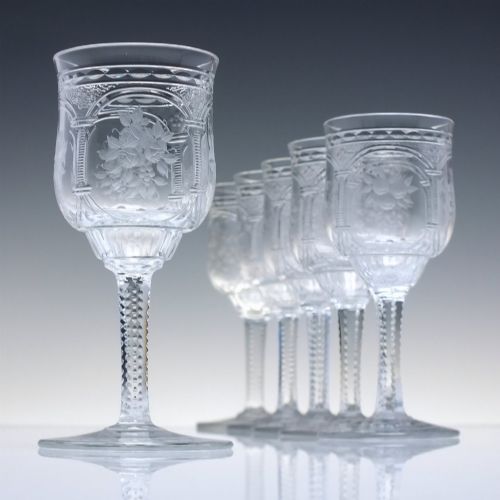
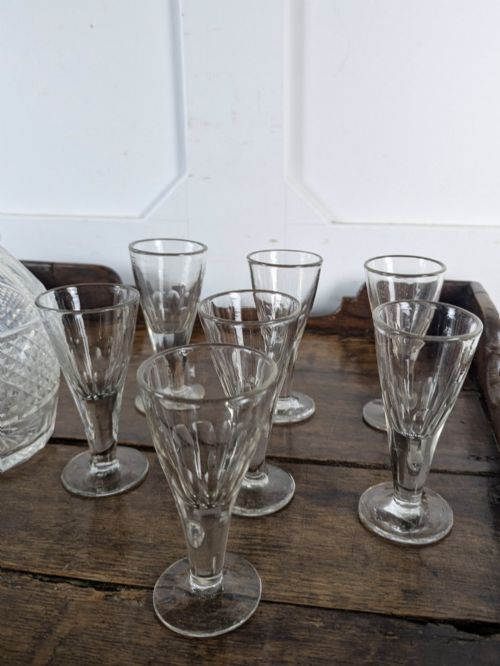
The pieces appearing on this page span several distinct periods, reaching from Victorian examples through Edwardian designs into the 1920s and 1930s Art Deco era. Forms include stemmed wine flutes, cordial glasses, and decanter sets complete with matching glassware.
Origin points across the evidence include English, French, Austrian, and Czech workshops, displaying regional preferences in cutting, etching, and enamel decoration. The Victorian and Edwardian examples sit alongside geometric Art Deco suites and hand-enamelled pieces.
How they were made
The manufacturing process relies primarily on glass and lead crystal, shaped into stems, flutes, and decanters. Makers applied techniques such as thumb-cutting, wheel engraving, and acid etching to pattern the glass surfaces.
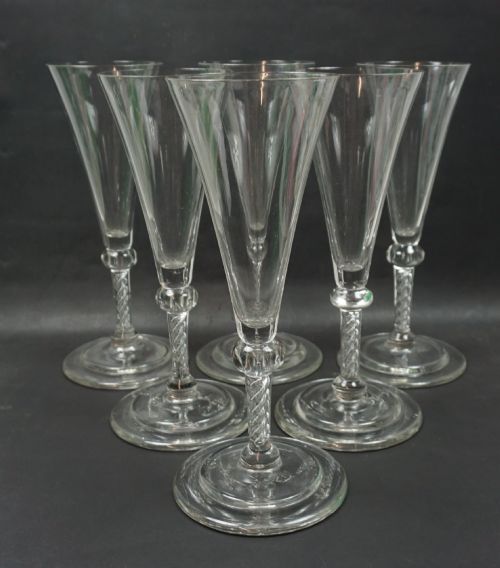
Decoration extended to hand-enamelled motifs and the application of twenty-four carat gold leaf. Certain examples incorporate air twist stems within the glass structure, alongside combinations of crystal and silver mounts.
Listings feature lead crystal and clear glass treated with enamel, gold leaf, and engraving across Victorian and Art Deco periods.
What varies in quality
Quality in an aperitif glass set rests on the crispness of the cutting, the depth of the engraving, and the purity of the crystal. Sets featuring uniform hand-enamelling or integrated precious metal leaf exhibit higher levels of artisan execution.
The completeness of the suite and the consistency across all individual glasses govern desirability. Retaining a matched set of eight, twelve, or more undamaged pieces with matching decorative motifs distinguishes superior survivals.
Karl Palda·Saint Louis·Theresienthal·Moser Glass
The Aperitif Glass Set Glossary
- Thumb-Cut
- A glass cutting technique characterised by small, concave, rounded depressions resembling the print of a thumb. This style provides both grip and visual texture on Victorian stemware.
- Air Twist
- An optical effect within the stem of glassware created by trapping elongated bubbles of air inside the molten metal during drawing and twisting. It is a signature of skilled manipulation.
- Etched Glass
- Glass decorated by applying an acidic substance to eat away exposed areas of the surface, leaving a frosted design. This technique allows for delicate botanical or geometric patterns.
- Lead Crystal
- A heavy glass variety containing metallic lead oxide, which increases brilliance, weight, and clarity. It permits sharper facet cutting than standard soda-lime glass.
- Cordial Glass
- A small-capacity drinking vessel specifically proportioned for strong, sweet liqueurs served after a meal. These form a frequent component of antique beverage suites.
Aperitif Glass Set: Frequently Asked Questions
How were aperitif glasses used historically?
These vessels were employed to serve fortified wines, spirits, and herbal liqueurs immediately before or after formal meals. Their compact capacities were proportioned to strong drinks served in modest quantities.
Hosts utilised matched suites to maintain a uniform table setting during dining rituals. The individual glasses accommodated everything from sherry and port to specialised digestifs.
How do I date an antique glass set?
Dating relies on observing the silhouette, the cutting style, and the manufacturing technique recorded in the piece. Victorian examples often display heavy thumb-cutting or colourful enamel, while 1930s sets favour geometric crystal.
Comparing the form against documented period styles helps narrow the decade of production. Examining pontil marks and rim smoothness also provides clues to the era of manufacture.
Can I use antique glassware for daily dining?
Many collectors choose to utilise their sets for special occasions, treating the physical interaction with the glass as part of the dining experience. Hand washing is essential to protect delicate stems and applied gold leaf.
Avoiding thermal shock by keeping hot liquids away from antique lead crystal prevents cracking. Proper storage in dedicated cabinets safeguards the rims from chipping.
What defines an Art Deco aperitif set?
Art Deco sets from the interwar years lean towards geometric forms, sharp angles, and stylised engraved patterns. They frequently originate from Czech or French glasshouses operating during the 1920s and 1930s.
The aesthetic departs from floral Victorian ornamentation in favour of streamlined silhouettes. Decanters in these sets often feature matching faceted stoppers and minimalist coordination.