



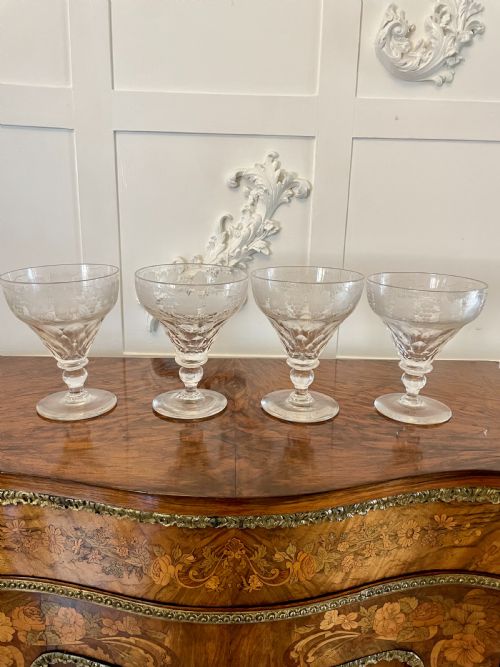


Crystal Glass Dessert Glasses
Crystal glass dessert glasses bring sparkle to the table, and this selection spans Georgian jelly glasses to Victorian finger bowls and Art Deco sets.
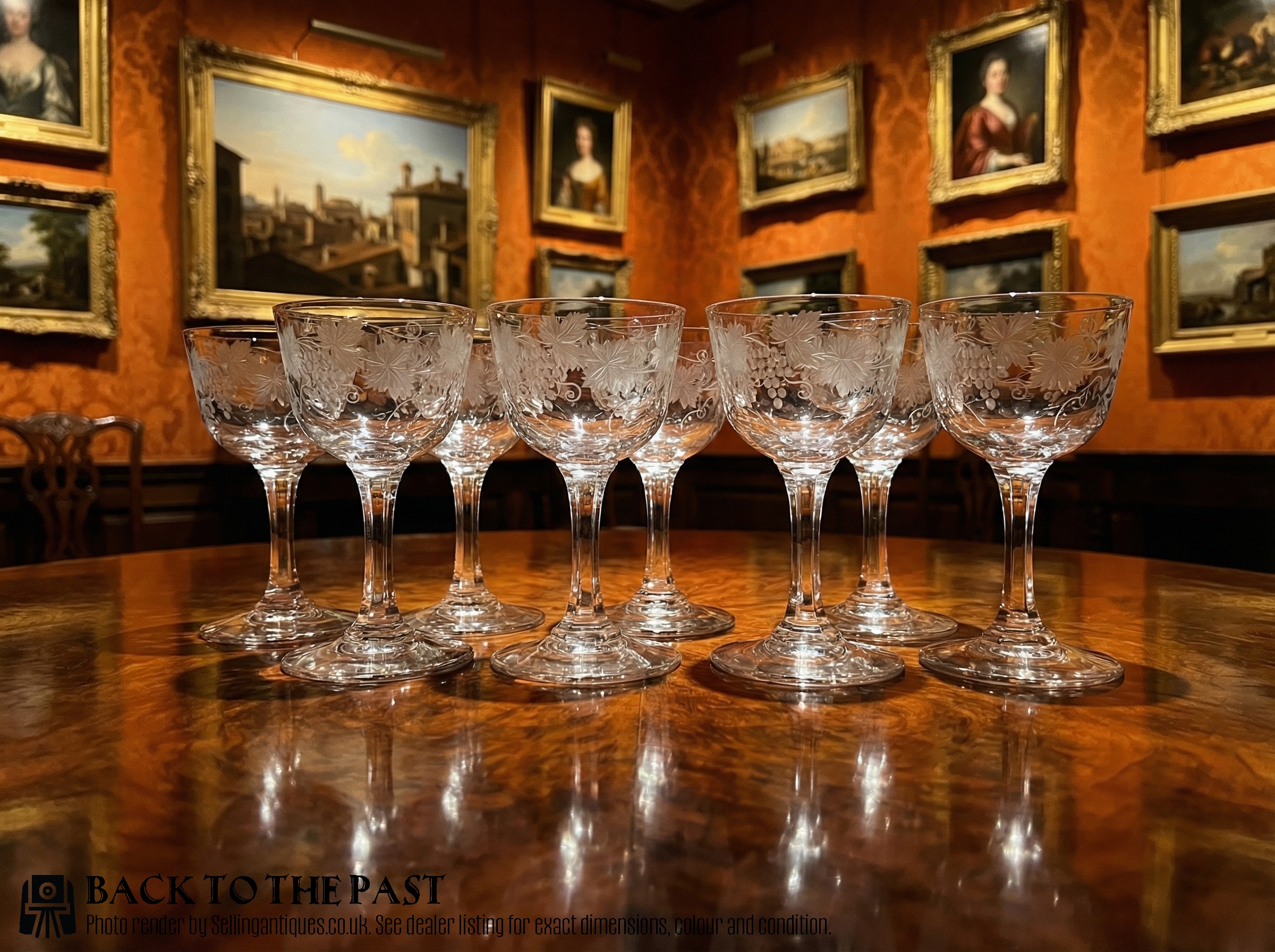
Crystal Glass Dessert Glasses
Crystal glass dessert glasses cover a range of tableware designed for the end of a meal, from jelly glasses and dessert wine glasses to finger bowls and ice plates. When searching for crystal glass dessert glasses, buyers encounter table glass shaped for serving sweet courses, custards, and wines across several distinct periods.
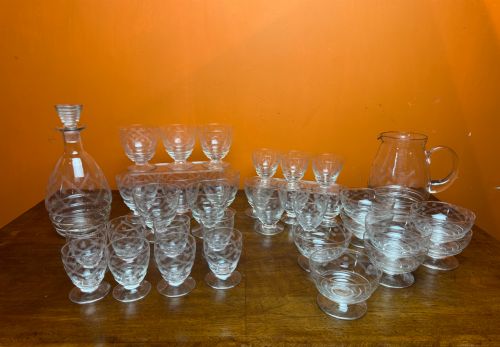
The pieces listed on this page reach back to the eighteenth century with Georgian jelly glasses, move through the Victorian era with etched and cut finger bowls, and extend to twentieth century French Art Deco drinking glasses. Forms vary from simple dish top jelly glasses to large suites and matching sets with engraved decoration.
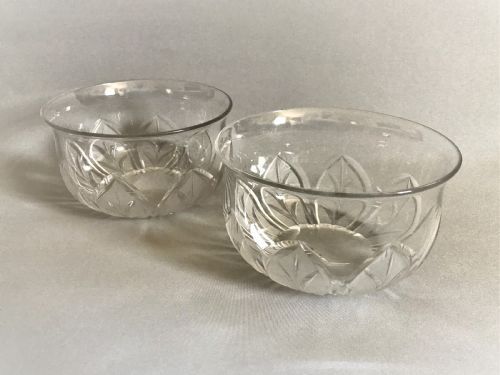
Victorian examples feature prominently among these items, often decorated with Greek key motifs, frosted finishes, or fruiting vines. Alongside these sit Georgian double handled vessels and English over crystal pieces that show the changing fashions of dessert service through the nineteenth century.
Materials and construction
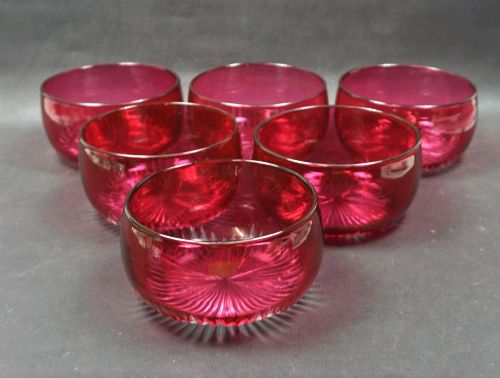
These items are shaped from clear glass, lead glass, and lead crystal, sometimes enhanced by ruby or yellow over crystal layers. Artisans utilised free blown techniques and heavy cutting to form the bowls, plates, and jugs.
Decoration on these pieces relies on wheel engraving, etching, and frosting to create patterns such as fruiting vines and Greek key borders. Some objects combine glass with silver plate components for serving ewers and dessert wine jugs.
Crystal Glass Dessert Glasses Retail Price Guide 2026
Typical asking prices for crystal glass dessert glasses among the pieces listed under this phrase on Sellingantiques today, from the lower quarter to the upper quarter. They describe what is for sale here now, not the wider market.
Victorian diners required specialist glass ice plates just to keep their sorbets from melting too quickly on warm drawing room tables.
Judging quality in antique table glass
Quality in these items rests upon the crispness of the cutting, the depth of the engraving, and the uniformity of a matched set. Hand cut facets catch the light sharply on better pieces, whilst engraved motifs show deliberate control and fine detail rather than shallow scratching.
The weight and clarity of the metal distinguish superior lead crystal from simpler glass. Consistency across a suite of glasses or plates indicates the care taken during production in Georgian and Victorian workshops.
The Crystal Glass Dessert Glasses Glossary
- Jelly glass
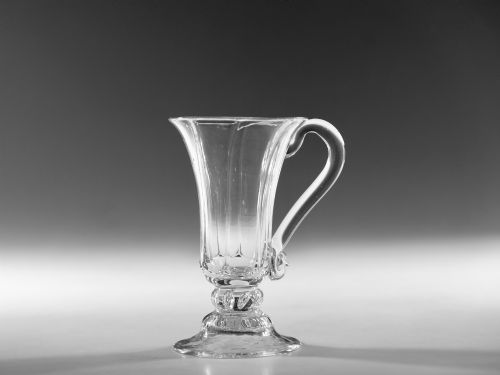
- A small vessel used in the eighteenth and nineteenth centuries for serving jellies or syllabubs at the table. These often feature thick bases or double handles.
- Finger bowl
- A small bowl filled with scented water placed before a guest at the end of a meal for rinsing fingers. Victorian examples frequently display etched or cut decoration around the rim.
- Tazza
- An ornamental shallow cup or plate mounted on a stem and foot, used for serving fruit or small sweet dishes. They appear in coloured and clear crystal.
- Champagne coupe
- A shallow, broad bowled glass traditionally used for sparkling wines and desserts. Nineteenth century versions often feature engraved bowls and matching feet.
- Over crystal
- Glass made with a clear or coloured outer layer of crystal cut away to reveal a contrasting layer beneath. This technique creates vivid colour effects on tazze and coupes.
Crystal Glass Dessert Glasses: Frequently Asked Questions
What were jelly glasses used for?
Jelly glasses served individual portions of jellies, custards, and sweet creams during eighteenth and nineteenth century dining. Guests ate the contents directly from these small, stable vessels.
Their thick bases and sometimes double handles kept the tall glasses steady on crowded tables laden with dessert courses.
How do I care for antique crystal?
Wash antique crystal gently by hand in warm water using a mild detergent, supporting the base rather than the stem. Avoid sudden temperature changes to prevent thermal shock.
Dry them immediately with a lint free linen cloth to maintain their clarity and prevent water spots from forming on the cut surfaces.
Can I use finger bowls today?
Finger bowls adapt well to modern dining as decorative table elements or for serving small desserts, sorbets, and fresh fruit. Their etched and cut patterns look striking when placed on matching glass plates.
Handle them with care during meals, as antique lead glass benefits from gentle treatment compared to modern toughened tableware.
How do I date cut glass?
Dating cut glass involves looking at the style of the cutting, the shape of the vessel, and the characteristics of the metal itself. Georgian pieces tend to have heavier metal with simpler, deeper facet cutting.
Victorian and later items introduce more varied motifs like frosting, machine assisted etching, and coloured over crystal layers that reflect changing nineteenth century tastes.