




Nineteenth Century Etched Glass
Nineteenth century etched glass brings tactile pattern and period atmosphere to a room, combining clear and coloured materials with detailed surface work.
Nineteenth Century Etched Glass
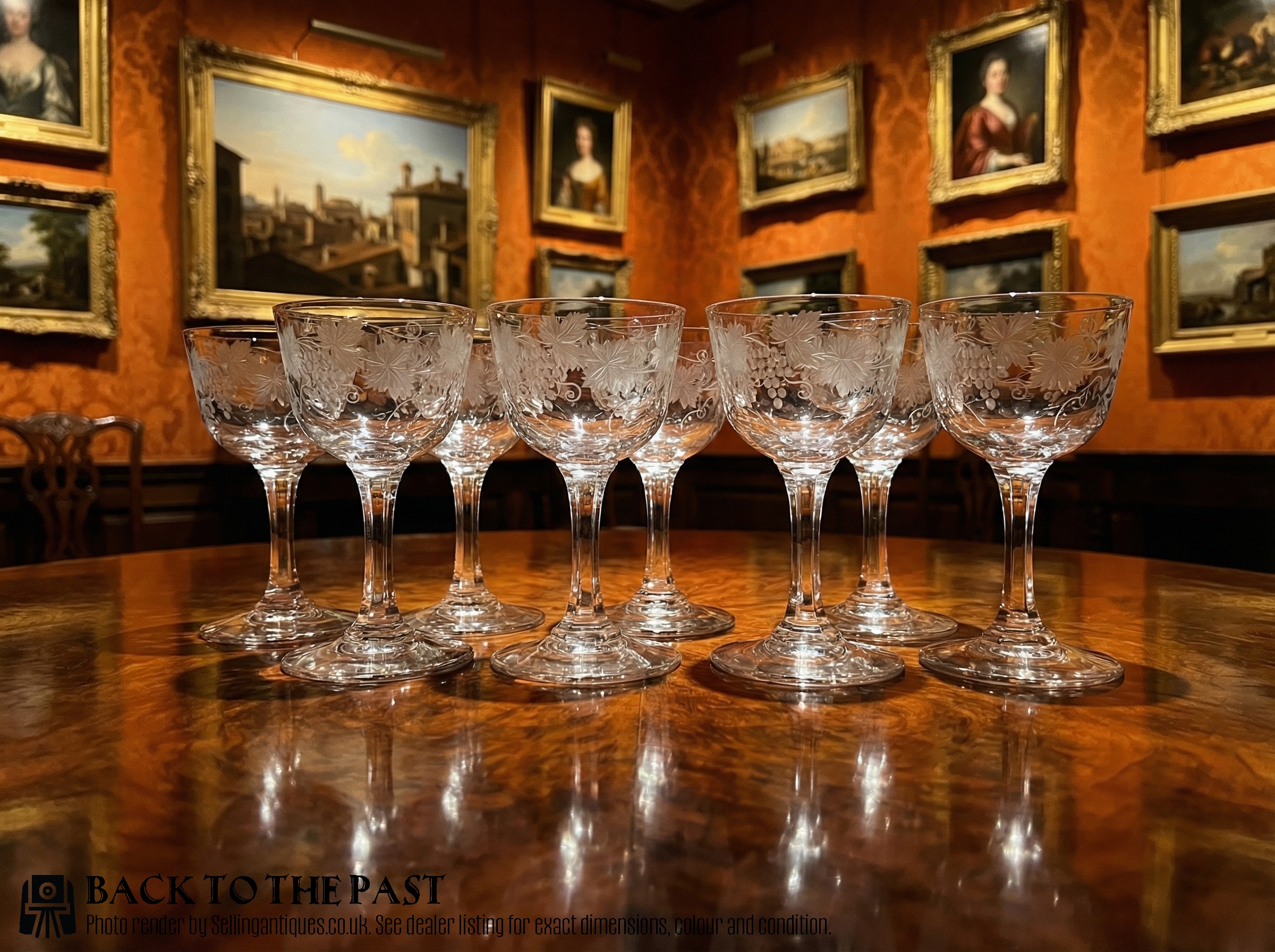
Nineteenth century etched glass encompasses items such as wine glasses, dessert wine glasses, tumblers, decanters, and hock decanters originating from the Victorian era and the years spanning 1860 to 1880.
Buyers seeking nineteenth century etched glass encounter varied forms, including cranberry glass, ruby glass, and colour over crystal pieces that display distinct period ornamentation.
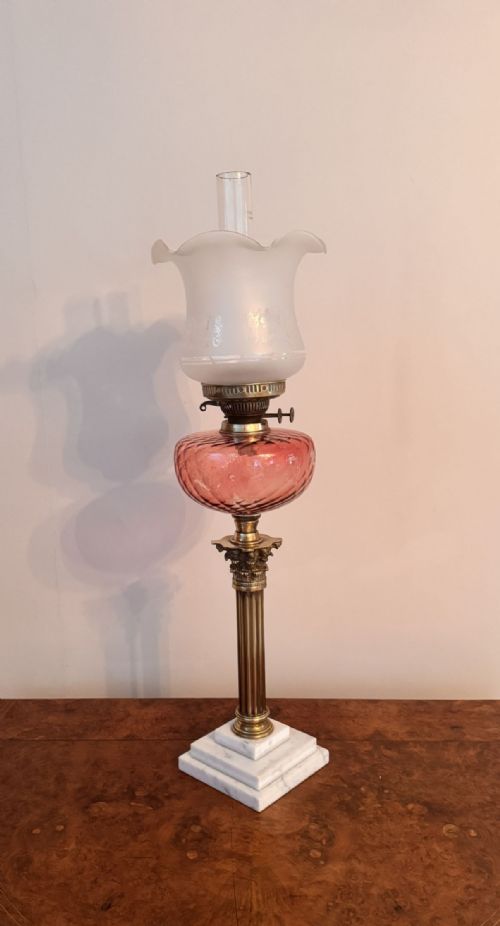
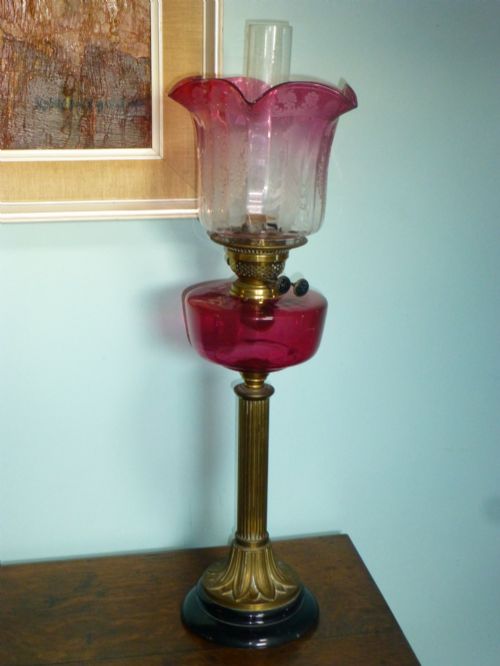
The selection frequently includes table glassware alongside related items incorporating glass components, such as oil lamps and mirrors from the same decades.
Materials and construction
Makers utilised clear glass, crystal, ruby glass, and cranberry glass, often layering colours over crystal to achieve depth when cutting and engraving the surface.
Production combined traditional glassblowing with engraving, acid etching, and cutting techniques, frequently pairing the finished glass with brass, bronze, or silver-plated mountings.
Nineteenth Century Etched Glass Retail Price Guide 2026
Typical asking prices for nineteenth century etched glass among the pieces listed under this phrase on Sellingantiques today, from the lower quarter to the upper quarter. They describe what is for sale here now, not the wider market.
Harlequin wine glass sets bring mismatched Victorian colours to the table because nobody ever wanted identical hues.
Assessing quality and execution
Quality rests on the crispness and depth of the engraving or etching upon the glass, alongside the balance of the vessel and the clarity of the material used.
Pieces that combine colour over crystal or integrate substantial silver-plated and brass mounts demonstrate greater complexity in execution than plain examples.
The Nineteenth Century Etched Glass Glossary
- Cranberry glass
- A rich pinkish-red glass coloured with gold chloride, frequently utilised for Victorian tableware and oil lamps. This material creates a warm glow when lit.
- Colour over crystal
- A manufacturing technique where a thin layer of coloured glass is applied over a clear crystal base before being cut away to reveal the contrasting layer beneath. It produces sharp graphical patterns.
- Hock decanter
- A tall decanter traditionally designed for German white wine, often featuring colour over crystal glass from the 1870 period. These vessels have slender necks and decorated bodies.
- Overmantel mirror
- A large mirror designed to hang above a fireplace mantel, often featuring an arched top and an ornate frame. Nineteenth century versions incorporate etched glass elements.
Nineteenth Century Etched Glass: Frequently Asked Questions
What is nineteenth century etched glass?
Nineteenth century etched glass comprises decorative and functional vessels produced during the Victorian era, including wine glasses, tumblers, and decanters.
These pieces feature surface decoration created through engraving or acid techniques on clear, ruby, cranberry, or layered crystal glass.
How do I identify Victorian etched glass?
Victorian etched glass can be identified by characteristic 19th-century forms, specific material types like cranberry and ruby glass, and period design motifs.
Stylistic markers and manufacturing techniques from the 1860 to 1880 decades help separate these items from later reproductions.
How were etched glass decanters used?
Etched glass decanters and hock decanters served to store and pour wine during formal dining and entertaining in the 19th century.
Their decorative surfaces added visual interest to dining tables alongside matching sets of wine glasses and dessert glassware.
How should I clean etched glass?
Etched glass requires gentle hand washing in lukewarm water with mild detergent to protect the delicate surface patterns and coloured layers.
Harsh abrasives and sudden temperature changes must be avoided to preserve the integrity of the antique material.