



Etched Clear Glass Stemware
These etched clear glass stemware pieces bring patterned brilliance to the table, ranging from eighteenth century rimmers to Art Deco suites.
Etched Clear Glass Stemware
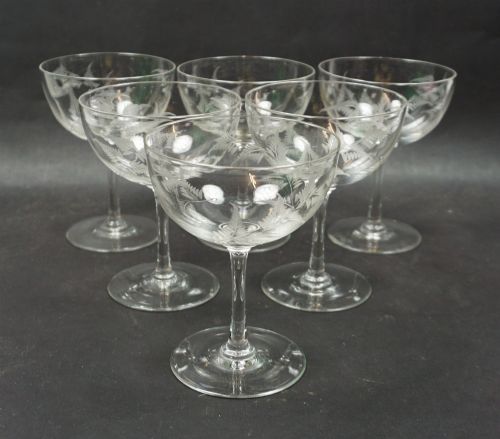
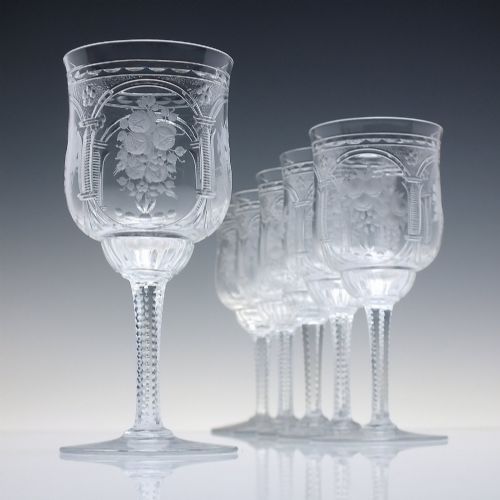
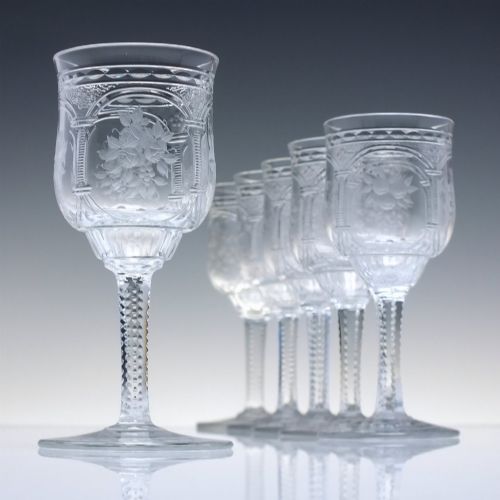
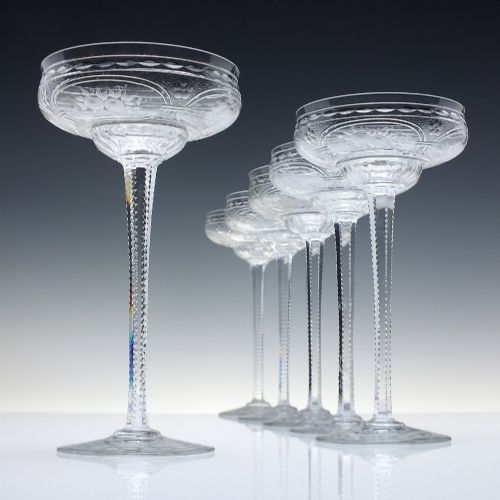
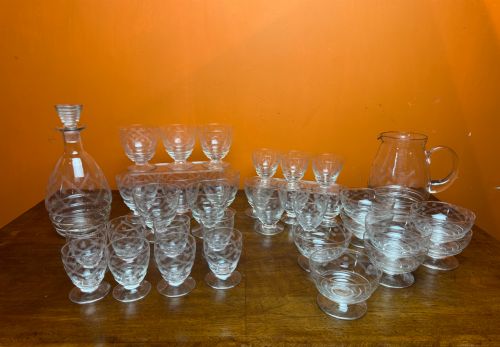
Buyers seeking etched clear glass stemware encounter a variety of drinking vessels, wine glasses, champagne glasses, and rummers spanning Georgian, Victorian, and 1930s periods. The selection includes individual dessert wine glasses, large dining suites, and decorative champagne coupes.
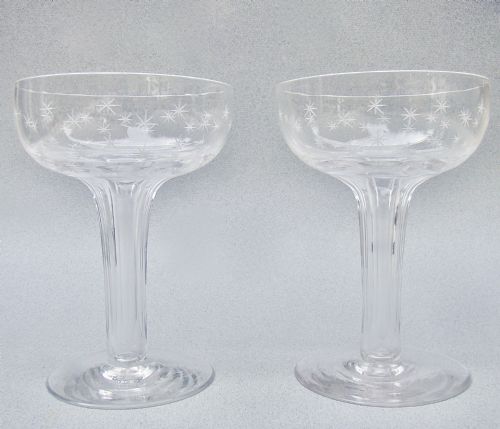
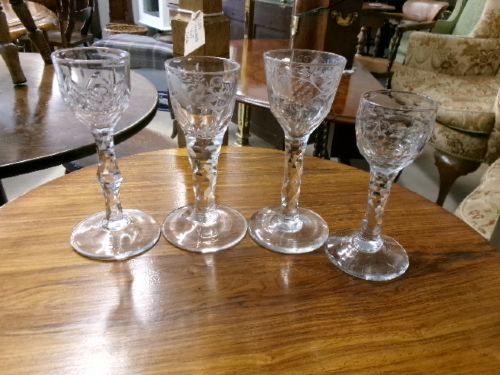
Victorian examples dominate the offerings, frequently featuring star-etched hollow stems or delicate floral bowl decoration. Alongside these sit Georgian faceted glasses, robust rummers, and French Art Deco drinking vessels with engraved patterns.
Forms extend beyond standard wine glasses to encompass gin glasses, rinsers, and chalices. The range spans simple naive tavern pieces to large formal suites intended for dining service.
How they were made
The material composition relies upon clear glass, lead glass, and crystal, shaped through hand-blowing techniques. Molten metal is gathered, blown into form, and joined to stems and wide foot bases.
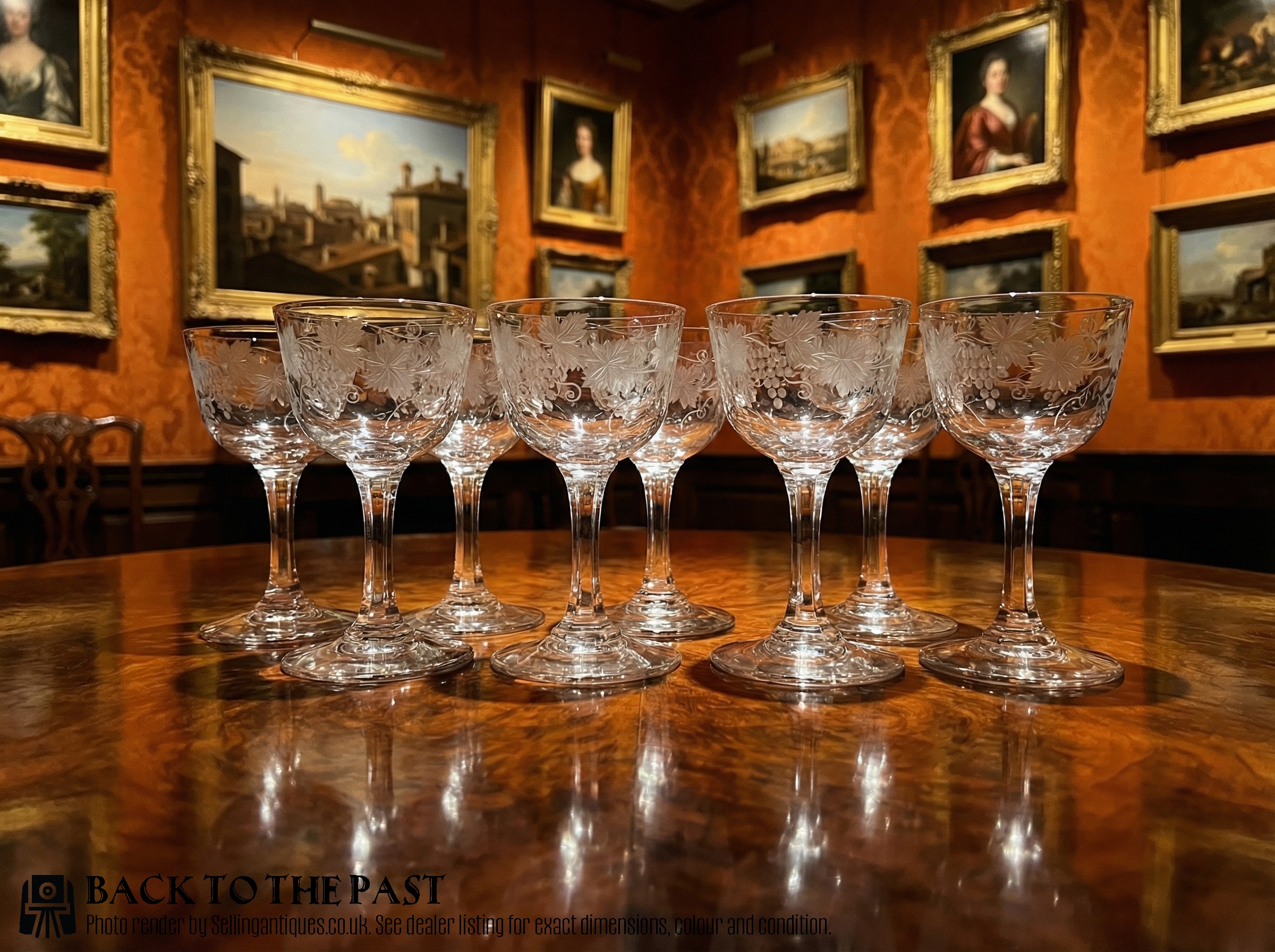
Decoration is achieved through wheel engraving, acid cutting, and surface etching. Artisans apply motifs ranging from hunting scenes and botanical patterns to geometric Art Deco lines directly onto the clear vessel walls.
Etched Clear Glass Stemware Retail Price Guide 2026
Typical asking prices for etched clear glass stemware among the pieces listed under this phrase on Sellingantiques today, from the lower quarter to the upper quarter. They describe what is for sale here now, not the wider market.
Materials across these listings include lead crystal, clear glass, and gold leaf, spanning the Georgian, Victorian, and Art Deco periods.
What varies in quality
Quality rests upon the clarity of the metal, the precision of the facet cutting, and the crispness of the etching. Superior pieces display smooth, unblemished glass bodies with deeply carved or finely acid-etched details that retain sharp definition.
The weight and balance of the stemware influence the grade, alongside the symmetry of the foot base and bowl. Complete matching suites demonstrate higher consistency across multiple items than assembled harlequin sets.
Stevens and Williams·Riihimaki·Adelbert Niemeyer
The Etched Clear Glass Stemware Glossary
- Rummer
- A heavy, short-stemmed drinking glass popular in the eighteenth and nineteenth centuries. It was typically used for ale, wine, or punch.
- Air twist
- A decorative stem enclosing spiral threads of air trapped inside the glass during manufacture. This technique requires considerable skill from the glassblower.
- Rinser
- A bowl-shaped glass vessel used at the table for cleaning wine glasses between courses. Examples often feature a fluted rim to support the glass edge.
- Coupe
- A shallow, broad-bowled glass traditionally used for champagne. The wide design allows bubbles to dissipate quickly.
- Acid cut
- A decorative method using acid to eat away the surface glass around a resist pattern. This creates a frosted design against clear glass.
Etched Clear Glass Stemware: Frequently Asked Questions
How do I clean antique stemware?
Wash pieces by hand in warm soapy water using a soft cloth, avoiding abrasive pads or harsh detergents.
Dry them immediately with a lint-free linen cloth to prevent water spots and protect the delicate glass surface.
Can I use these glasses for daily dining?
These historical glasses handle normal table use if treated with care, though hand washing is essential.
Stored securely away from edge hazards, sturdy Victorian and Georgian examples withstand regular dinner party service.
How do I identify a Georgian glass?
Georgian pieces often exhibit thicker lead metal, heavy foot bases, and hand-blown pontil marks on the underside.
Decoration tends toward simple facet cutting, air twists, or naive wheel engraving rather than uniform factory patterns.
What is a harlequin set?
A harlequin set consists of individual glasses that share a general period or style but differ in minor details.
Such collections were often assembled over time rather than purchased as a single factory suite.