



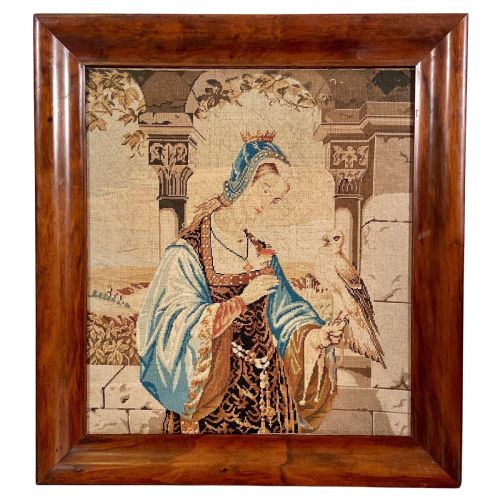
Victorian Embroidery Art
Victorian embroidery art brings nineteenth-century needlework into modern rooms through framed woolwork, silk panels and samplers.
Victorian Embroidery Art
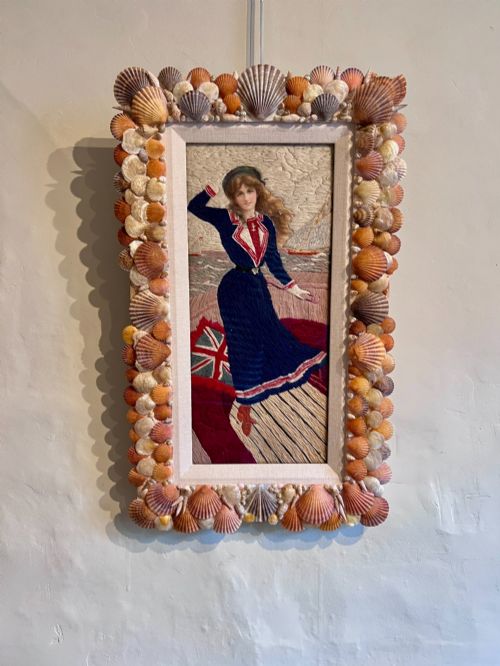
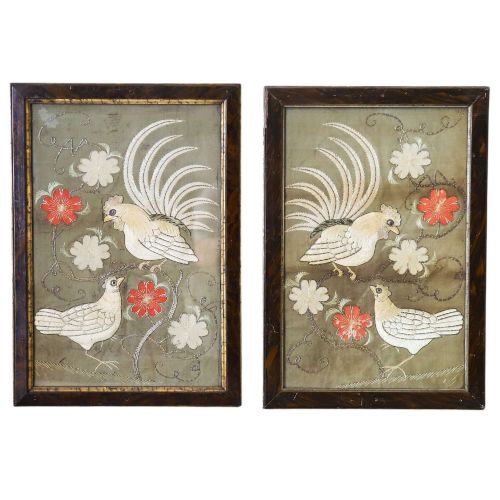
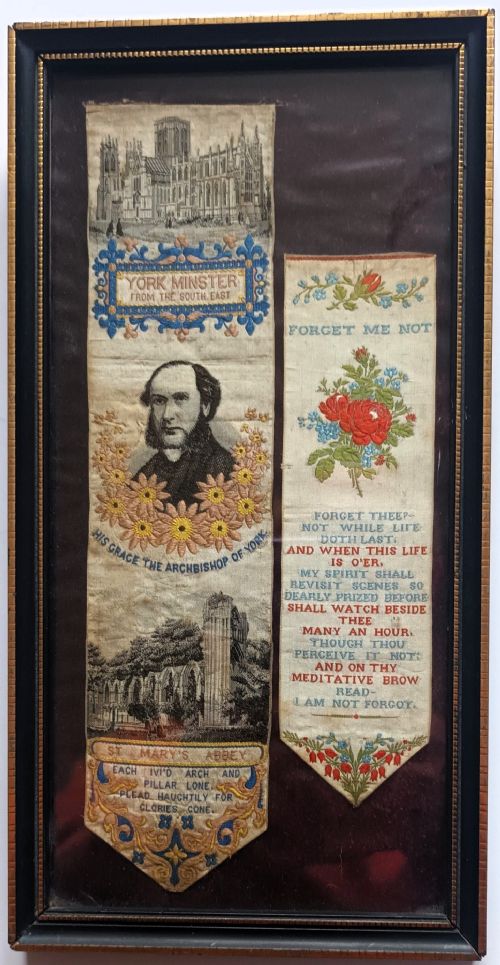
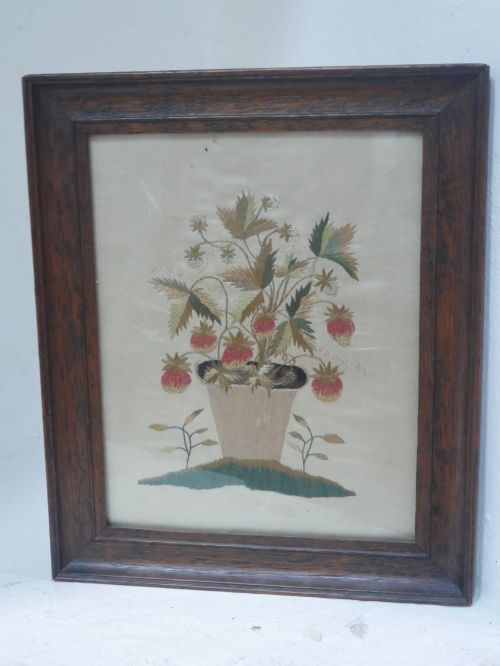
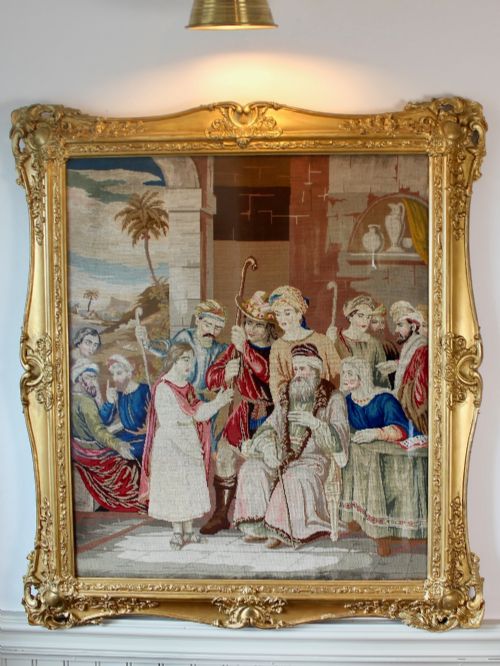
Victorian embroidery art encompasses framed textile works produced across the nineteenth century, ranging from instructional samplers to large pictorial woolworks. Buyers searching this phrase meet framed pieces designed for wall display, including Berlin woolwork, silk bookmarkers and woolie pictures made by sailors.
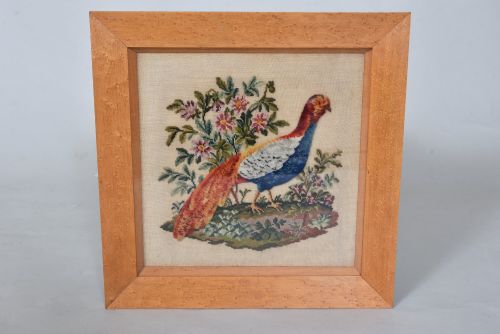
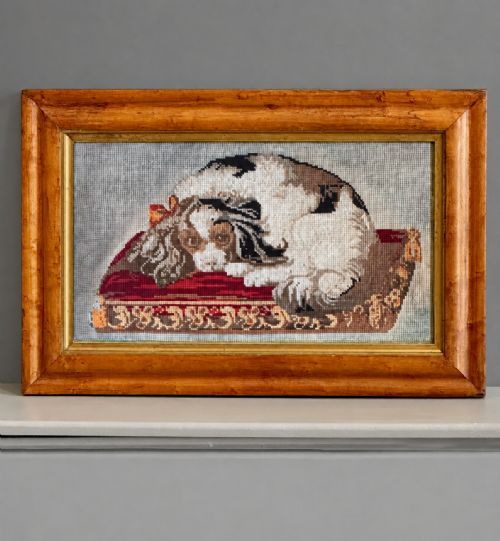
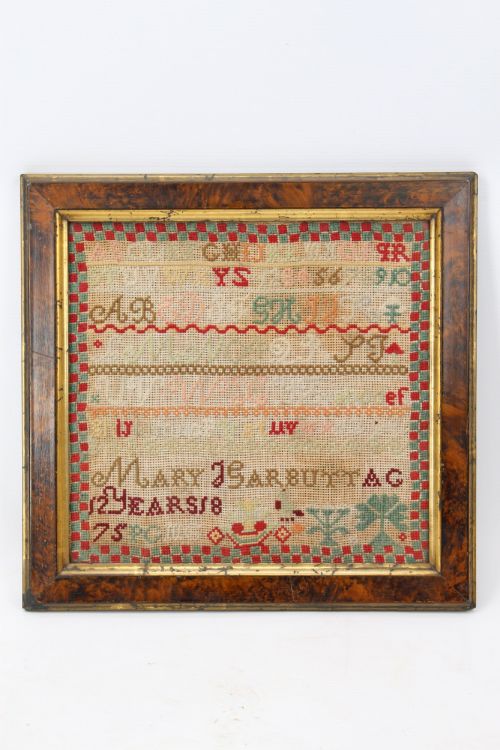
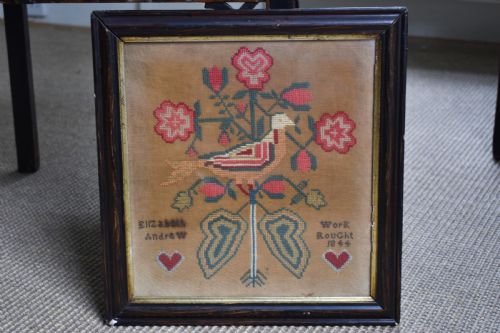
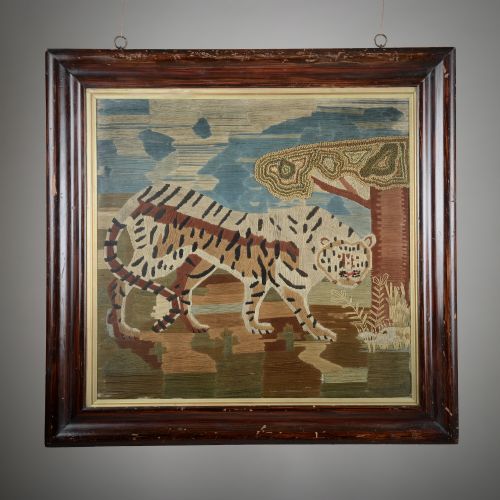
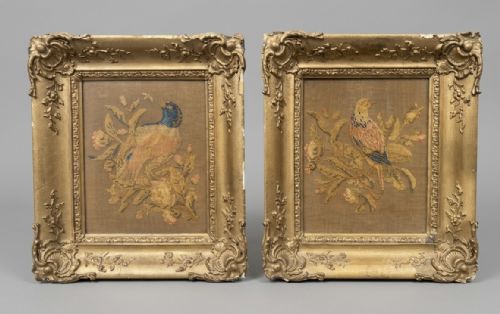
The material record includes needlework samplers dated by young makers alongside classical portraits, sporting scenes and depictions of animals such as pheasants and spaniels. Pieces arrive in period frames of burr maple, giltwood and faux tortoiseshell.
English country house aesthetics and French Napoleon III influences appear frequently among the listings, alongside specific formats like wool work panels and gros-point tapestries. The selection relies heavily on nineteenth-century craftsmanship preserved behind glass.
Factors of quality
Execution and detail separate the finest examples from standard domestic work, visible in the precision of the stitching and the shading of the wool or silk threads. Pictorial depth in complex subjects like historical scenes or animal portraits indicates superior needlework skill.
The integrity of the original frame and the preservation of the fabric behind glass heavily influence the standing of a piece. Original burr maple or giltwood frames that house the textile securely without altering the composition elevate the overall retention of the object.
Listings feature textiles spanning the nineteenth century, incorporating wool, silk, canvas, glass and giltwood frames.
Stevens of Coventry
The Victorian Embroidery Art Glossary
- Berlin work
- A style of needlepoint embroidery worked on canvas from printed colour-gridded charts that gained immense popularity in the nineteenth century. It allowed makers to create intricate pictorial designs using bright wool yarns.
- Sampler
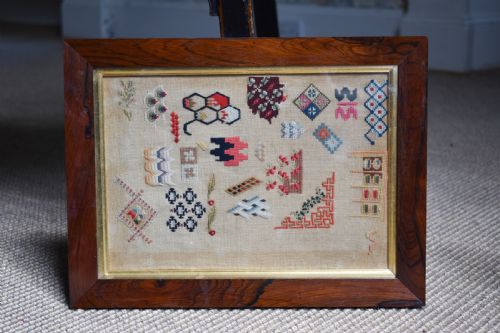
- A piece of needlework produced to demonstrate skill in various stitches and alphabets, frequently signed and dated by young makers with their age. These textiles serve as primary records of domestic education.
- Woolie
- A form of embroidered textile art created by nineteenth-century sailors, typically depicting naval ships using wool yarns. They reflect maritime folk art traditions of the period.
- Gros-point
- A coarse needlepoint stitch executed on canvas that produces a durable, textured surface suitable for pictorial wall art. It appears often in nineteenth-century figurative panels.
Victorian Embroidery Art: Frequently Asked Questions
What is Victorian embroidery art?
Victorian embroidery art comprises nineteenth-century needlework created on canvas, linen or silk, intended primarily for wall display. The category includes samplers, wool work pictures, silk panels and maritime woolies.
These pieces reflect both domestic handwork and professional framing traditions, utilising materials like wool threads, glass covers and wood frames.
How were samplers used?
Samplers served as educational exercises where children demonstrated proficiency in stitches, alphabets and numerical sequences. They functioned as permanent records of a maker's age and date of completion.
Once finished, these textiles were mounted in frames to decorate domestic interiors or preserve family milestones.
How do I care for framed textiles?
Framed needlework requires placement away from direct sunlight to prevent the fading of wool and silk threads. Maintaining stable indoor humidity prevents moisture damage to the fabric and the wooden frame.
Glass fronts protect the delicate fibres from dust and atmospheric grime without requiring direct contact with the textile.
How are periods identified?
Periods are determined through a combination of dated inscriptions, material types and framing styles characteristic of the nineteenth century. Samplers often bear explicit years and the age of the maker.
Stylistic cues, such as the use of Berlin work charts or specific framing materials like burr maple, help contextualise undated panels.