

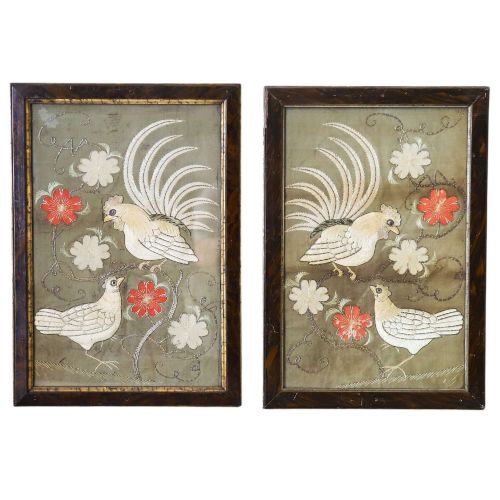


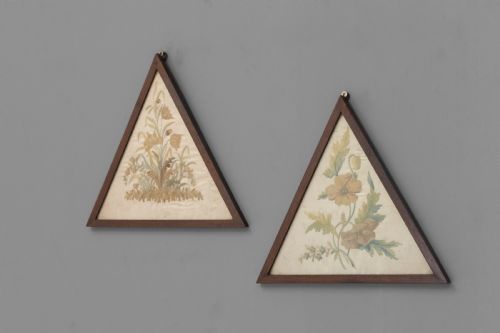


Victorian Embroidered Panel
A victorian embroidered panel brings tactile warmth to a room, offering centuries-old needlecraft mounted as wall art or set within functional furniture.
Victorian Embroidered Panel
A victorian embroidered panel typically presents as a framed textile, wall art, or a mounted insert within functional household furniture.
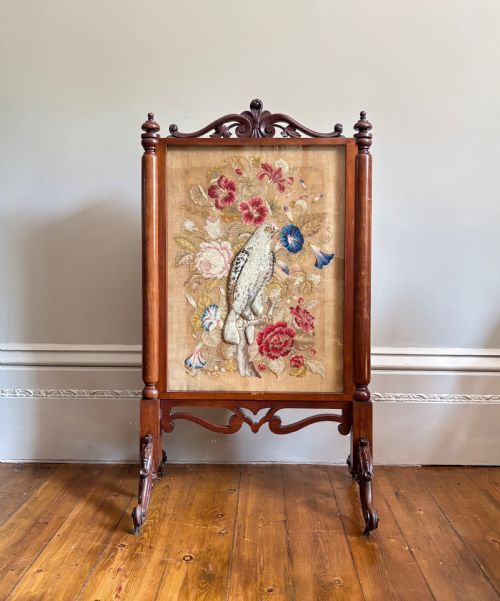
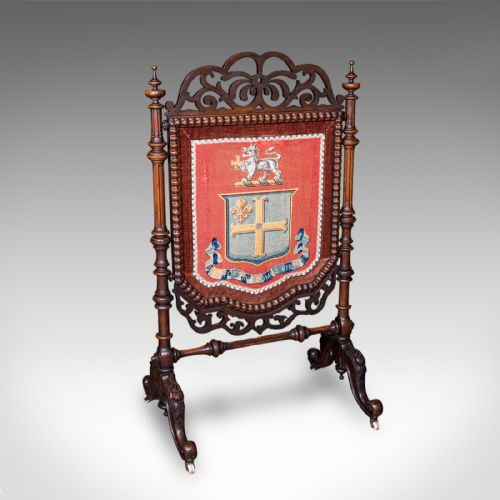
The version most frequently encountered on this page is the needlework or Berlin work fire screen, alongside framed silk pictures and samplers.
Pieces span the nineteenth century, with origins ranging from English country houses to French and Japanese workshops.
Materials and Techniques
Needlework and tapestry panels combine wool, silk, and cotton threads worked onto canvas, linen, or woolen foundations.
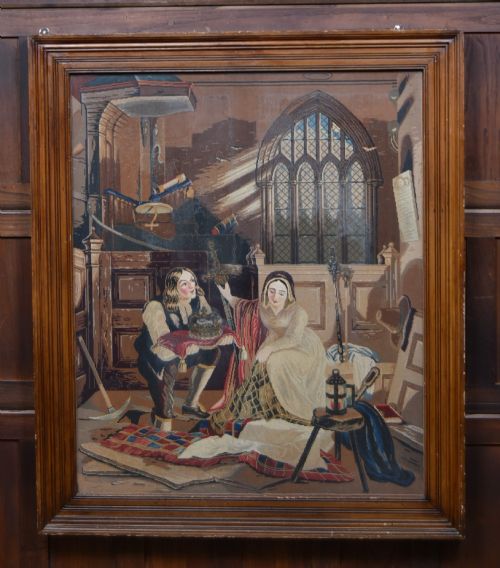
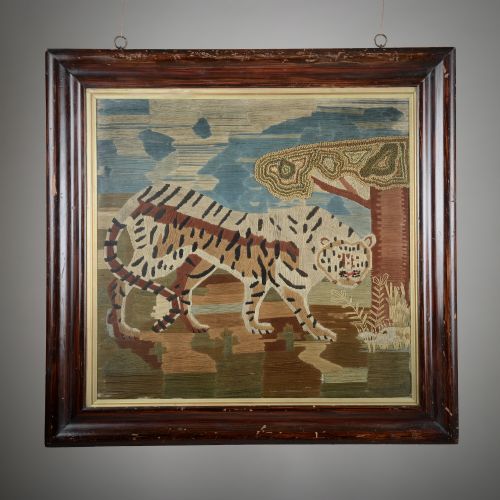
Needlework panels preserve surprisingly fierce domestic tigers alongside gentle depictions of Little Red Riding Hood.
Evaluating Craftsmanship
Quality rests in the precision of the needlework, where tightly executed stitches create depth, expression, and distinct tonal shading in figurative or floral subjects.
The integrity of the supporting frame, whether a carved wooden pole screen or a glazed wall hanging, dictates the overall coherence and preservation of the piece.
Iida Takashimaya Company
The Victorian Embroidered Panel Glossary
- Berlin Work
- A style of nineteenth-century canvas embroidery worked from printed and hand-coloured point paper grids. This method allowed makers to create complex geometric and pictorial designs.
- Gros-Point
- A coarse needlepoint stitch executed on canvas using wool yarn. It provides durability and a bold texture suited to larger upholstery and screen inserts.
- Sampler
- A piece of needlework demonstrating a maker's skill in alphabets, numbers, and decorative motifs. These works frequently record the name and age of the young maker.
- Pole Screen
- A vertical firescreen featuring an adjustable sliding panel mounted on a turned wooden shaft and tripod base. It protected sitters' faces from the radiant heat of an open hearth.
Victorian Embroidered Panel: Frequently Asked Questions
How were fire screens used?
Fire screens stood before open hearths to shield people from intense radiant heat and protect facial complexions from melting wax cosmetics.
Servants adjusted the height or angle of the needlework panel throughout the evening as the fire burned down.
What is a sampler?
Samplers served as practice pieces where young makers demonstrated their mastery of various stitches, alphabets, and numeric sequences.
Many examples record the age of the maker and the date of completion, preserving personal histories in thread.
How should I hang textile art?
Textile panels require protection from direct sunlight to prevent the fading of natural wool and silk dyes over time.
Mounting works behind glass with adequate spacing prevents the fabric from pressing directly against the surface.
Can I use a pole screen today?
Pole screens function effectively as room dividers or decorative focal points in modern interiors without needing an active fireplace.
The adjustable mechanism allows the embroidered panel to be positioned at different heights.