


Victorian Ecclesiastical Chair
A victorian ecclesiastical chair brings heavy architectural timber and pointed arches straight from the vestry into the domestic hall.
Victorian Ecclesiastical Chair
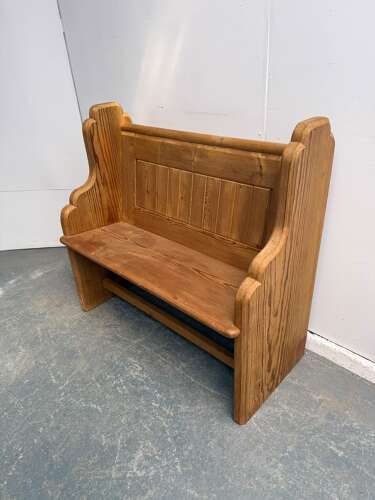
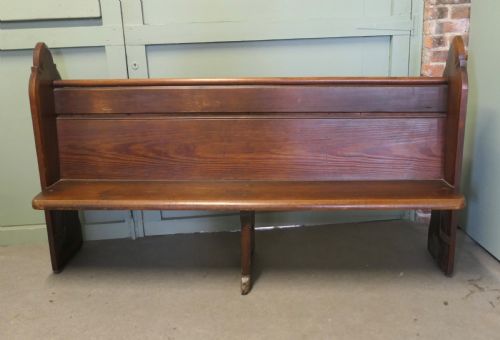
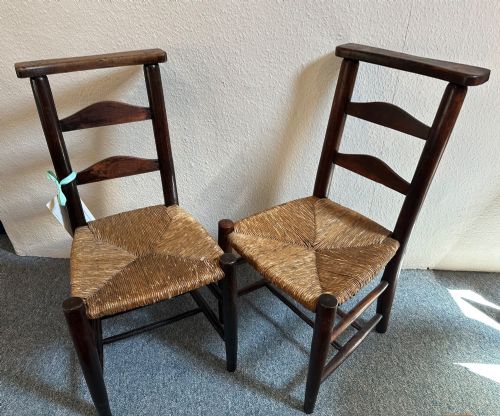
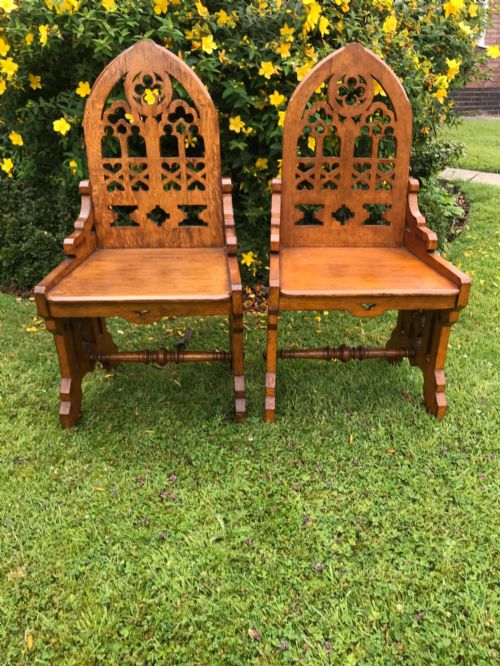
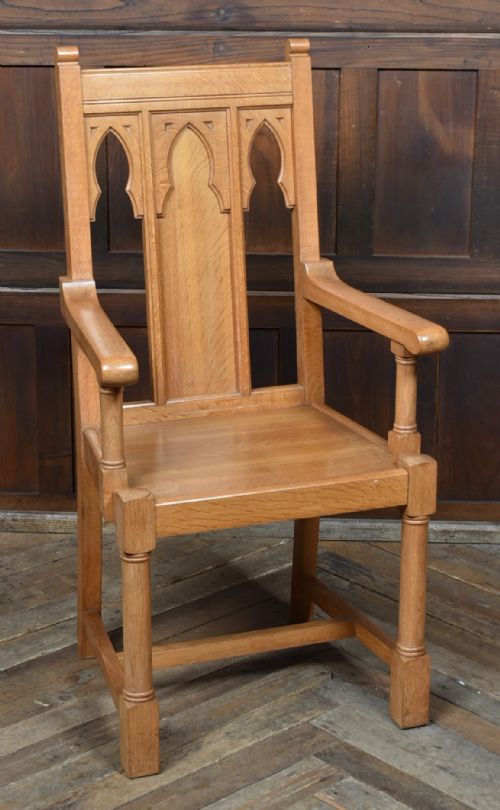
A victorian ecclesiastical chair encompasses robust seating created for chapel, church and monastic use during the nineteenth century. The examples found here range from substantial oak throne chairs and pitch pine pews to lower prayer seats designed for private devotion.
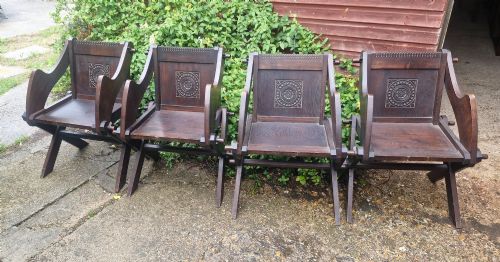
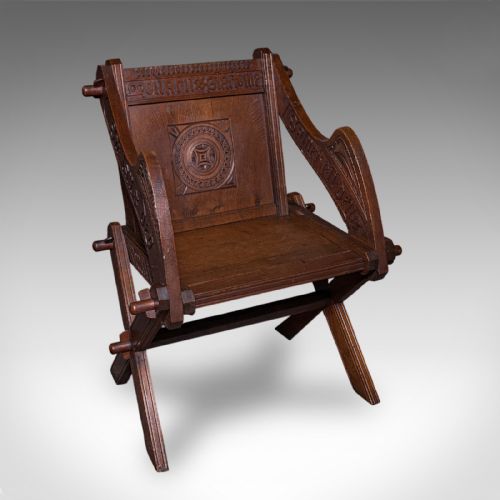
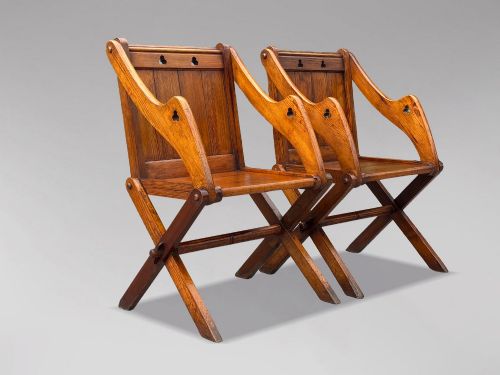
The Glastonbury armchair dominates this selection, recognisable by its X-framed folding base, broad arms and panelled back. Alongside these sit side chairs, hall chairs and benches originating from English, Welsh and Scottish churches.
Most pieces date from the Victorian period and the late nineteenth century, though Regency prayer chairs and later Arts and Crafts interpretations also appear. They serve today as commanding armchairs or hallway seats that bring structural timber grain into living spaces.
Materials and construction methods
Makers relied heavily on native hardwoods and softwoods, predominantly oak and pitch pine, selected for structural endurance and dense grain. Walnut, rosewood and pine appear in specific forms, while brass plates, inscriptions and wax finishes accent the timber surfaces.
Joinery techniques followed traditional architectural carpentry, utilising pegged mortise and tenon joints to bear heavy loads. Glastonbury chairs were constructed with interlocking members that allowed the X-frame to support wide elbow rests and inscribed back panels.
Upholstery on prayer chairs and prie-dieu seats involved padded fabric, velvet and tapestry secured over sturdy frames. Painted finishes also occur on late Victorian iterations, modifying the raw wood appearance.
A metamorphic library chair turns swiftly into a set of steps for reaching high theological volumes.
Distinctions in standard and execution
Quality rests upon the integrity of the timber selection and the depth of the architectural carving. Heavy oak and pitch pine structures with crisp tracery and intact original joinery sit at the higher end of the scale.
Provenance elevates certain pieces significantly, particularly those marked with institutional stamps, cathedral associations or contemporary engraved plaques. Anonymous workshop items made from plain pine lack the architectural presence of documented chapel furniture.
The retention of original surface treatments, whether a waxed finish or early upholstery, maintains the integrity of the piece. Heavy alterations or stripped surfaces diminish the historic character established by the nineteenth-century maker.
The Victorian Ecclesiastical Chair Glossary
- Glastonbury chair
- An X-framed wooden armchair with a sloping panelled back and broad armrests. This form derives from medieval designs associated with Glastonbury Abbey.
- Prie-dieu
- A devotional prayer chair featuring an upper rest for the arms or books and a lower ledge for kneeling. These items were designed for private or institutional worship.
- Gothic Revival
- An architectural and decorative style drawing inspiration from medieval pointed arches, trefoils and tracery. It defines the aesthetic of nineteenth-century church furnishings.
- Pitch pine
- A resinous softwood sourced primarily from North America and heavily utilised in Victorian church pews and institutional furniture. It displays a prominent growth ring pattern.
- Throne chair
- A high-backed, imposing seat intended for clergy use within a chancel or chapel. These substantial chairs command attention through scale and carved detail.
Victorian Ecclesiastical Chair: Frequently Asked Questions
Where were these chairs used originally?
These chairs originated in churches, cathedrals, chapels and monastic foundations across Britain. They served clergy, choristers and parishioners during services and private prayer.
Some specific examples were commissioned for major institutions such as St Paul's Cathedral, while others furnished smaller country parish churches.
Can I use an ecclesiastical chair at a dining table?
Side chairs, hall chairs and certain narrow chapel chairs fit comfortably around standard dining tables. Their sturdy wooden construction suits daily domestic use.
Armchairs and throne chairs require more floor space and work better as standalone accent pieces in hallways or studies.
How do I care for nineteenth-century church pitch pine?
Maintain pitch pine surfaces by applying traditional wax sparingly and buffing with a soft cloth. Avoid placing these timber pieces near direct heat sources to prevent the wood from splitting.
Protect upholstered prayer seats from strong sunlight to preserve the fabric and tapestry colours.
What is the difference between a prayer chair and a hall chair?
A prayer chair, or prie-dieu, incorporates a raised shelf or upper rest designed for kneeling and devotional reading. They often feature upholstered panels and compact proportions.
A hall chair is a rigid wooden seat with a decorative back, intended for occasional seating in an entranceway rather than religious devotion.