


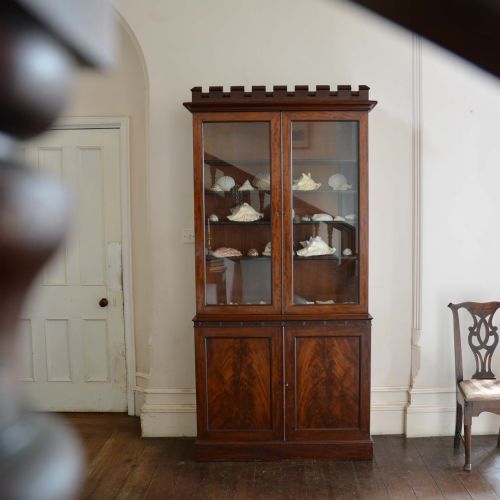


English Gothic Revival Furniture
English gothic revival furniture brings ecclesiastical grandeur and medieval architecture into the domestic interior through heavy timber and pointed arches.
English Gothic Revival Furniture
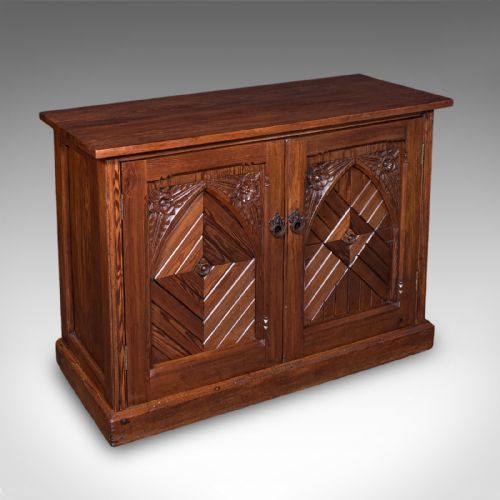
The selections available here range from seating such as benches, settles, throne chairs, armchairs like the Glastonbury pattern, to large case pieces including bookcases, display cabinets, wardrobes, and wall cabinets.
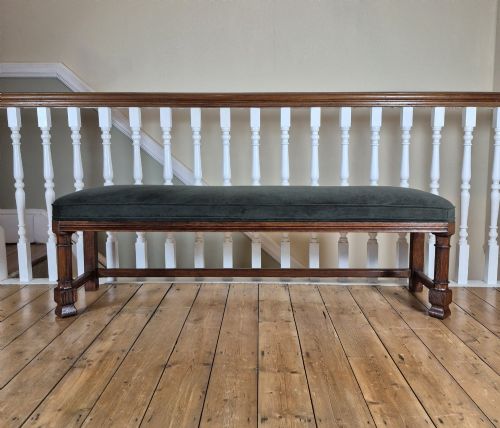
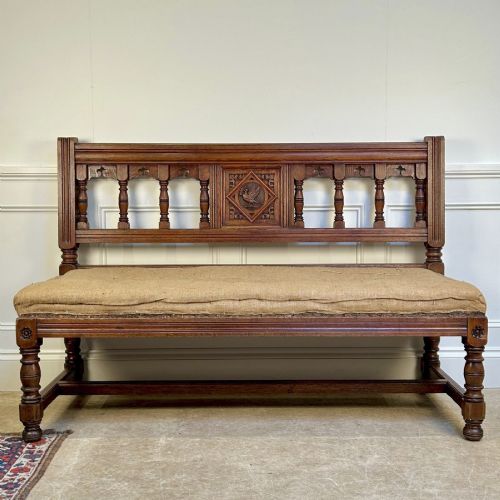
The dominant forms are hall benches and country house bookcases, reflecting the Victorian taste for baronial styling in domestic entrance halls and libraries.
Materials and construction
The primary timber utilised is solid oak, complemented by mahogany, walnut, and pitch pine, providing the structural mass required for architectural forms.
Decoration relies heavily on deep relief carving, crenelated cornices, and applied brass hardware, while seating often incorporates upholstery in velvet, hessian, and leather.
Certain pieces integrate glass panels within bookcases and display cabinets, and select items feature delicate applications of gold leaf.
Listings feature nineteenth-century pieces alongside a pre-sixteenth century ecclesiastical throne, constructed primarily in oak, mahogany, and walnut.
Evaluating the standard
Quality resides in the architectural fidelity of the design and the depth of the timber carving, distinguishing simpler vernacular pieces from sophisticated cabinet work.
The reputation of the maker influences standing, with documented workshop attribution elevating a piece above anonymous country house furniture.
The integrity of the structural timber and the retention of original surface finishes determine the enduring presence of these ecclesiastical and domestic forms.
GIllows·James Winter & Sons
The English Gothic Revival Furniture Glossary
- Glastonbury chair
- A traditional X-framed wooden armchair with a sloping panel back and flat armrests, revived during the nineteenth century in gothic tastes. It draws inspiration from ancient ecclesiastical seating.
- Crenelated cornice
- A decorative top moulding shaped with alternating solid blocks and indentations, resembling the battlements of a medieval castle. This detail crowns bookcases and tall cabinets.
- Settle
- A high-backed wooden bench with solid arms and a storage box beneath the seat, often heavily carved with gothic tracery in nineteenth-century interpretations.
- Ecclesiastical
- Pertaining to the Christian church and clergy, describing early pre-reformation thrones and church furniture that inspired later secular revival designs.
- Aesthetic period
- A late nineteenth-century artistic movement focused on beauty and art for art's sake, which occasionally intersected with gothic and vernacular revival furniture forms.
English Gothic Revival Furniture: Frequently Asked Questions
What is an English gothic revival settle?
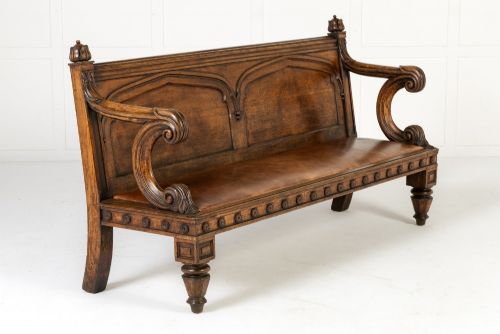
An English gothic revival settle is a high-backed wooden bench designed with medieval architectural details like pointed arches and panel tracery. These pieces were built for the halls of country houses to evoke a baronial atmosphere.
They often incorporate hinged seats concealing storage space below. The heavy oak construction and carved decoration set them apart from standard domestic seating.
Where were hall benches used?
Hall benches were placed in the entrance halls and reception rooms of large nineteenth-century residences. They provided seating for visitors and guests waiting to be greeted.
Their heavy timber frames and architectural carving established an immediate impression of antiquity and status upon entering the home. Many incorporate storage beneath the bench seat.
What defines a crenelated cornice?
A crenelated cornice is a decorative upper moulding cut to resemble the battlements of a medieval castle wall. It appears frequently along the top edge of gothic revival bookcases, wardrobes, and display cabinets.
This architectural detail connects domestic storage furniture with medieval masonry and fortifications. It adds vertical emphasis and historic character to large case pieces.