



Carved Tracery Cupboard
A carved tracery cupboard brings medieval architectural geometry into domestic interiors through rhythmic woodwork.
Carved Tracery Cupboard
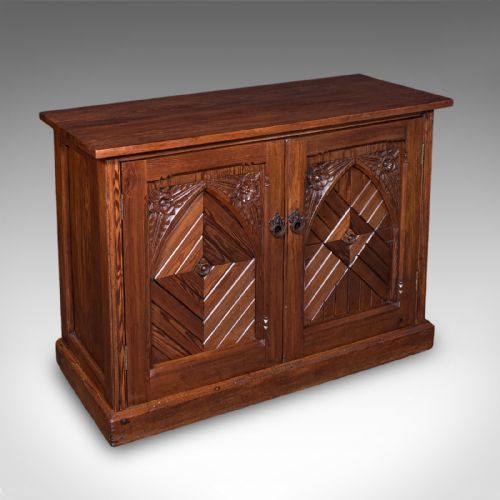
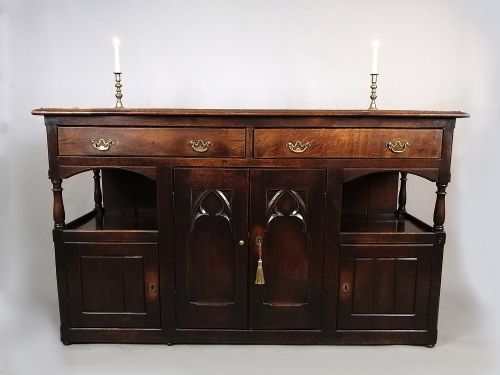
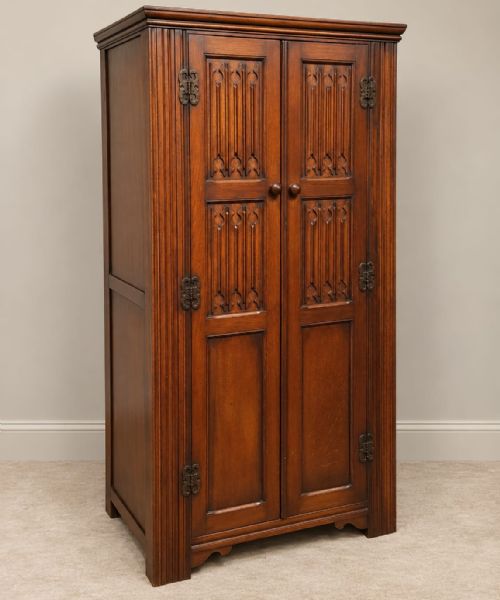
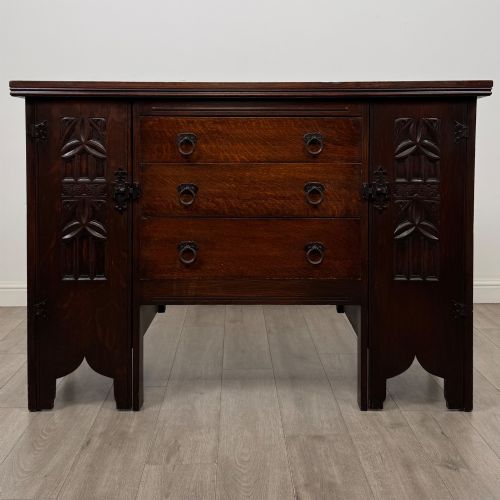
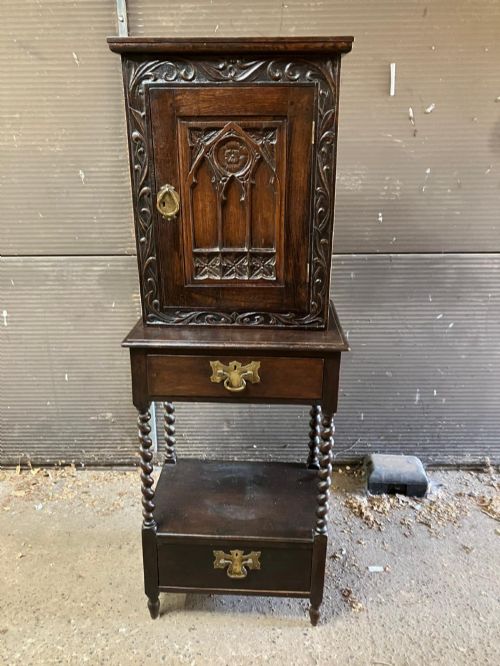
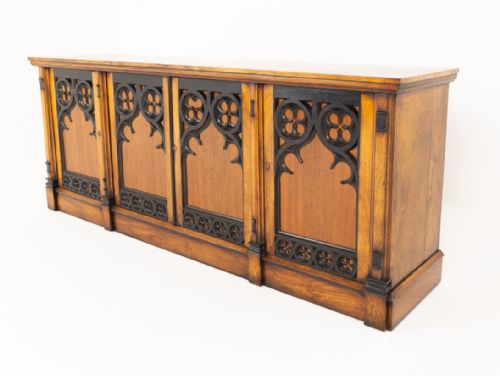
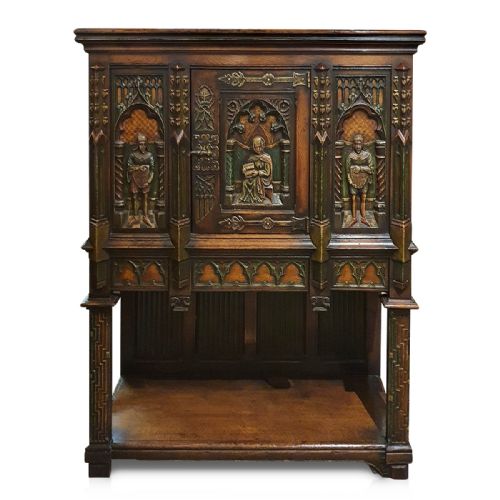
A carved tracery cupboard applies stone-carving motifs to timber furniture, translating ecclesiastical window patterns into domestic storage. These pieces take forms ranging from tall hall cabinets and wardrobes to sideboards, dressers, and breakfront bookcases.
The versions most commonly met on this page span the eighteenth and nineteenth centuries, leaning heavily into Gothic Revival aesthetics. Oak is the primary medium, anchoring the architectural weight of the pointed arches, cusps, and blind tracery carved across the doors and panels.
How they were made
Construction relies predominantly on solid oak, chosen for its structural stability and ability to hold crisp, deep relief carving. Artisans fashioned panels using traditional frame-and-panel methods to accommodate seasonal wood movement without splitting the intricate surface patterns.
Metalwork played a functional and decorative role, incorporating iron hinges, brass handles, and wrought iron mounts that echoed ecclesiastical ironmongery. Ebonised wood and walnut also appear occasionally to accent the primary oak structures.
Listings feature pieces spanning from the sixteenth century through the Edwardian era, predominantly constructed in oak with occasional walnut and ebonised wood.
What varies in quality
Quality rests in the depth and precision of the chisel work within the tracery, where sharp, undercut cusps separate master execution from mechanical production. The rhythm of the repeated architectural motifs must align precisely across the doors and drawers without awkward spacing.
The choice of timber grain significantly alters the visual presence of the piece, with quartersawn oak displaying distinctive medullary rays that enhance the medieval aesthetic. Superior examples maintain structural integrity in their hinges and locks, ensuring the heavy doors hang true without sagging.
The Carved Tracery Cupboard Glossary
- Tracery
- Openwork or relief patterns in stone or woodwork, typically consisting of intersecting ribwork that divides windows or panels into geometric shapes.
- Gothic Revival
- An architectural and decorative style beginning in the mid-eighteenth century that revived medieval forms, pointed arches, and ecclesiastical motifs.
- Blind tracery
- Architectural patterns carved onto a solid wooden surface rather than pierced through, creating decorative relief without openings.
- Breakfront
- A piece of furniture whose central section projects forward from the flanking sections, creating depth and shadow across the facade.
Carved Tracery Cupboard: Frequently Asked Questions
Where should I place a carved tracery cupboard?
These substantial pieces anchor high-ceilinged entrance halls, dining rooms, or libraries where their architectural woodwork can command the room. They require sufficient wall space and neutral surroundings to let the complex shadows of the carved panels register clearly.
Avoid placing them in direct sunlight or beside active heat sources, as dry conditions cause ancient oak to shrink and split. Stable interior humidity preserves the movement of the heavy timber doors.
What is the difference between Georgian and Victorian Gothic Revival?
Georgian Gothic Revival pieces, such as those from the Strawberry Hill movement, often blend classical symmetry with playful medieval motifs. They possess a lighter, experimental charm compared to later nineteenth-century interpretations.
Victorian iterations prioritize archaeological accuracy and heavier, darker oak construction. These later examples lean into solemn ecclesiastical grandeur with deeply recessed panels and robust iron hardware.
Can these cupboards hold modern items?
Interior depths vary considerably across these pieces, with some older wardrobes and sideboards offering ample clearance for contemporary storage needs. Shelving layouts often reflect historical utility rather than standardised modern dimensions.
Verify interior measurements carefully if you intend to store bulky modern electronics or large books. Many pieces serve best for displaying tableware, linens, or specialised collections.