


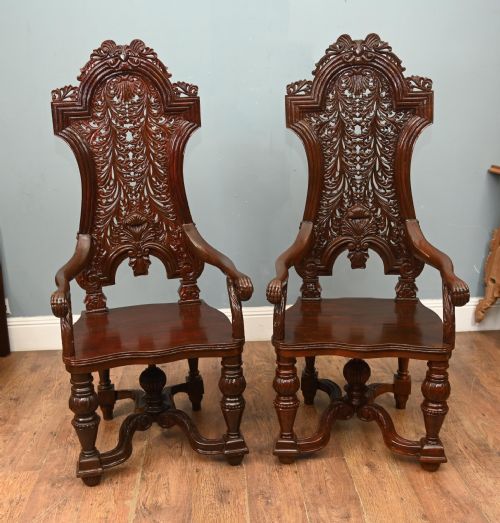


Gothic Style Armchair
A gothic style armchair brings commanding architectural presence and solid timber construction into a room, drawing on medieval and ecclesiastical forms.
Gothic Style Armchair
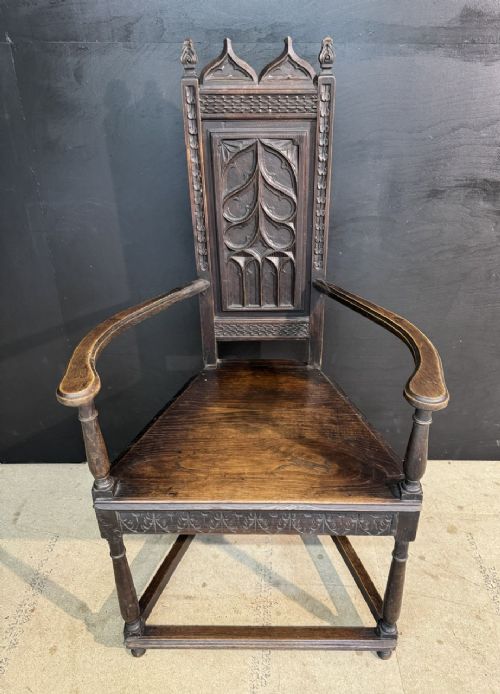
A gothic style armchair draws heavily on medieval ecclesiastical architecture, featuring pointed arches, tracery, and robust proportions. Buyers searching this phrase meet nineteenth-century revivals most frequently, alongside occasional early twentieth-century examples.
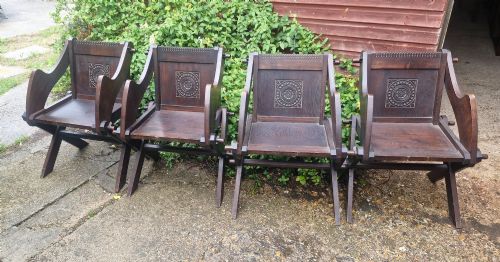
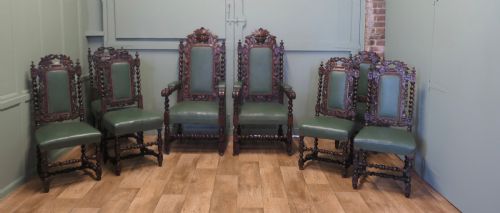
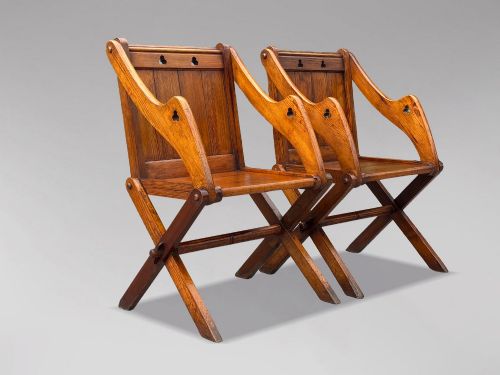
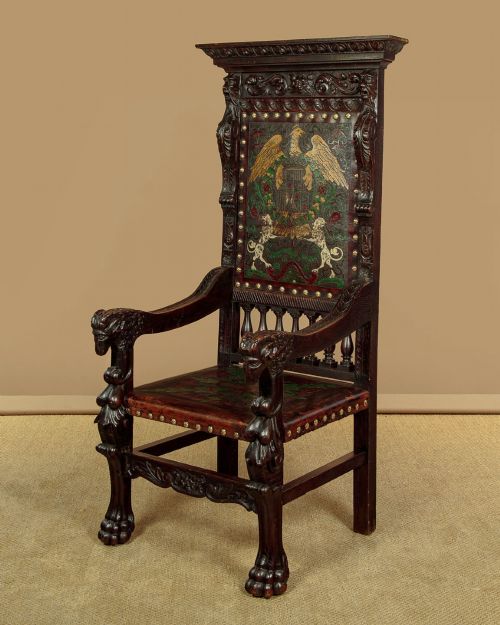
The selection ranges from ecclesiastical pitch pine throne chairs and Glastonbury chairs to heavy oak wainscot seats and French Renaissance revival armchairs.
Makers of the nineteenth century frequently turned to earlier Tudor and seventeenth-century motifs, blending Gothic Revival principles with Jacobean or Arts and Crafts sensibilities.
Materials and Construction
Solid oak, pitch pine, and mahogany form the structural backbone of these seats, joined with traditional mortise and tenon methods to endure heavy daily use. Turnings, spindles, and cross-frames provide rigid support without concealing the natural grain of the timber.
Carving is executed directly into the solid wood rather than applied as separate moulding, giving depth to linenfold panels, tracery, and crockets. Upholstery, where present, relies on buttoned leather or heavy woven fabric secured with brass tacks.
Several armchairs are recorded as apprentice pieces, suggesting an ambitious woodworker testing complex linenfold carving before the master.
Assessment of Quality
Depth and crispness of the hand-carving separate standard production pieces from exceptional workshop commissions. Sharp lines in tracery and well-defined relief work indicate a skilled hand at the bench.
The choice of timber grain and the integrity of the original joints dictate structural longevity. Golden oak and finely figured pitch pine retain their visual impact far better than secondary softwoods finished to imitate age.
Gillows·Bruce James Talbert·A.W.N. Pugin
The Gothic Style Armchair Glossary
- Glastonbury chair
- A folding armchair with an X-frame base, sloping arms, and a panelled back, popular during the Gothic Revival. Original examples trace their pattern back to the sixteenth century.
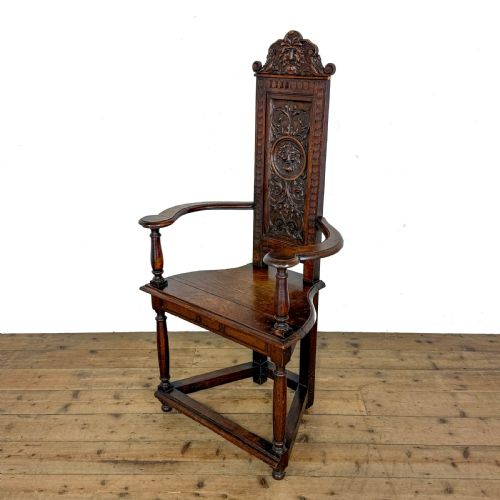
- Wainscot chair
- A heavy wooden armchair constructed primarily from panelled oak, sitting low on robust turned legs. This form dates back to domestic interiors of the Tudor and Jacobean periods.
- Curule
- An ancient X-shape structural form adapted for nineteenth-century revival seating. It provides crossing supports beneath the armrests.
- Linenfold
- A style of wood carving that imitates vertical folds of fabric, frequently seen on the back panels of ecclesiastical seating. It is carved directly into the solid timber.
- Tracery
- Architectural stonework patterns of intersecting ribs adapted into wooden screenwork and chair backs. It defines the Gothic aesthetic.
Gothic Style Armchair: Frequently Asked Questions
How do I identify a true gothic style armchair?
Look for architectural elements such as pointed arches, tracery, crockets, and linenfold panels carved directly into solid oak or pitch pine.
Proportions are typically heavy and upright, reflecting medieval and ecclesiastical seating rather than domestic comfort.
What is a Glastonbury chair?
A Glastonbury chair is a distinct ecclesiastical armchair featuring a folding X-frame base, a sloping panelled back, and downward-sloping armrests.
This form was heavily reproduced during the Victorian era in pitch pine and oak for both churches and domestic studies.
How do I live with a heavy oak armchair?
These substantial seats work best as focal points in studies, hallways, or spacious living rooms where their architectural timber frames can command the space.
Pair them with simple surroundings to let the deep carving and dark wood grain stand out.