


Victorian Ebonised Sofa
These nineteenth-century seats combine dark timber surfaces with upholstered forms, bringing distinct historical character to a room.
Victorian Ebonised Sofa
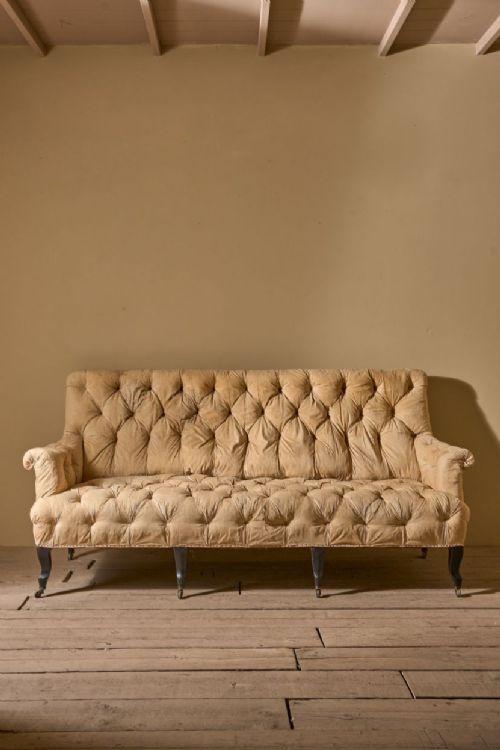
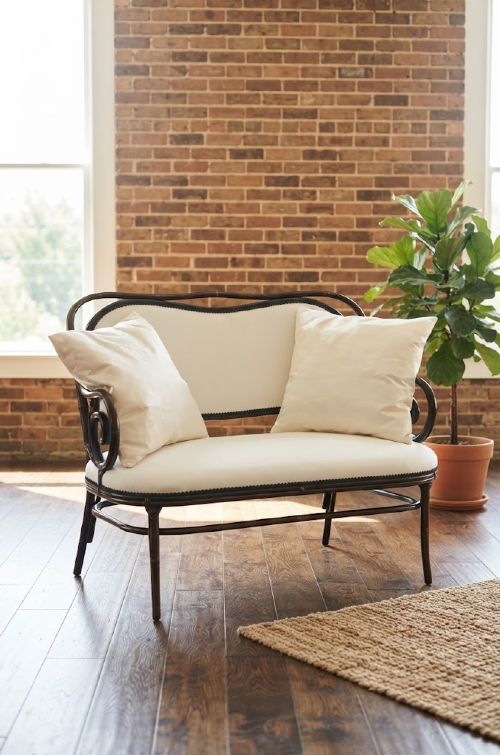
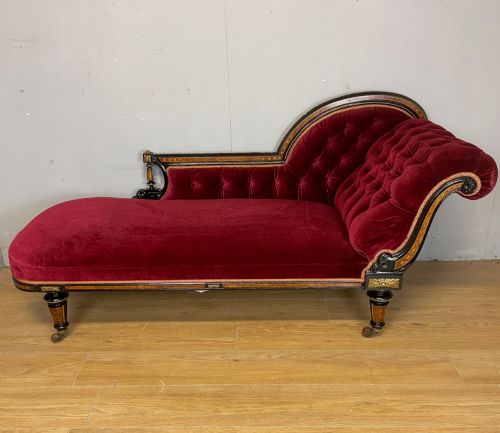
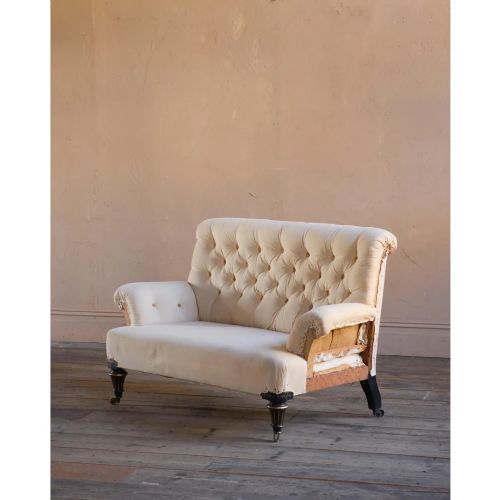
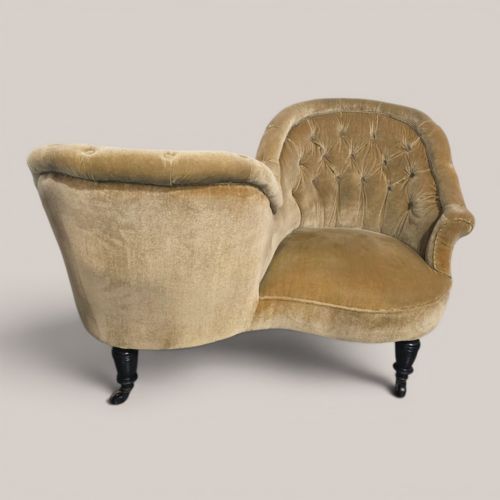
A victorian ebonised sofa is a nineteenth-century seating piece built with dark-finished wood, commonly appearing in Victorian, Aesthetic Movement, and Napoleon III styles. These pieces range from buttoned-back settees and chaise longues to two-seater salon sofas and curved frames.
The evidence shows examples linked to makers such as Holland & Sons, Jackson and Graham, Jas / James Shoolbred, and Howard & Sons. Alongside standard sofas, listings include miniature versions, settees with sunflowers, and chaises longues with inlaid walnut panels or ormolu decoration.
Makers produced these items across the nineteenth century, with specific dates recorded from 1870, 1880, 1890, 1900, and general nineteenth-century periods. They serve as functional seating and decorative centrepieces reflecting the design priorities of the period.
Materials and construction
Craftsmen built the frames using wood, specifically applying ebonised finishes to mimic ebony, alongside walnut, burr walnut, mahogany, and amboyna. Structural and decorative additions included brass mounts, ormolu, and porcelain plaques.
Upholstery materials recorded in the evidence comprise velvet, silk-like fabrics, and specific decorative elements such as tufted buttons, tassels, and painted motifs like sunflowers or Chinoiserie designs.
Recorded materials span ebonised wood, velvet, burr walnut, brass, and porcelain plaques across items dated between 1870 and 1920.
Evaluating quality in ebonised seating
Quality rests in the crispness of the ebonised finish and the integrity of the underlying wood frame, whether walnut or mahogany. Intricate details such as hand-carved elements, inlaid marquetry panels, and gilt accents separate standard production from superior workshop output.
The refinement of the upholstery work, including period-appropriate fabric choices, buttoning, and tassel trims, dictates the visual success of the piece. Attribution to recorded makers like Howard & Sons or Shoolbred elevates the standing of a specific sofa.
Holland & Sons·A Jackson and Graham·Jas / James Shoolbred·Howard & Sons
The Victorian Ebonised Sofa Glossary
- Ebonised wood
- Timber treated with a dark stain or paint finish to imitate solid ebony. This technique was popular in nineteenth-century furniture to create stark visual contrast against gilt or bright upholstery.
- Chaise longue
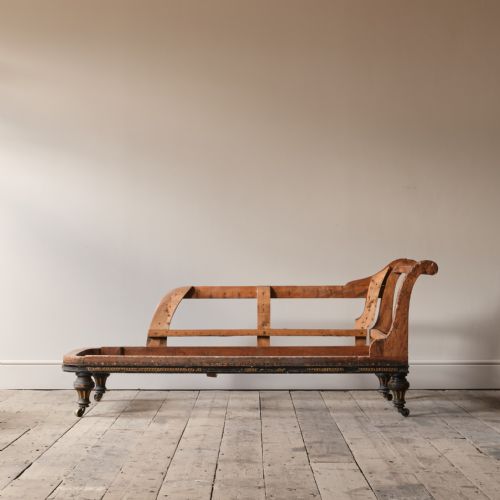
- An upholstered long chair or day bed designed for reclining. Nineteenth-century examples often feature scrolled ends and exposed ebonised frames.
- Ormolu
- Gilt bronze ornamentation applied to furniture mounts and details. It appears on Napoleon III and Victorian pieces alongside inlaid wood panels.
- Aesthetic Movement
- A late nineteenth-century design style focusing on art for art's sake, often incorporating Japanese-inspired motifs, sunflowers, and ebonised surfaces. Furniture from this period emphasises linear structure and artistic ornamentation.
- Marquetry
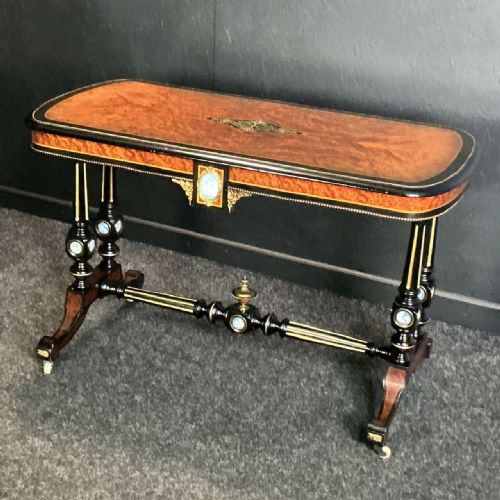
- Decorative veneer patterns formed by small pieces of wood, ivory, or shell fitted into wood panels. It is seen on tables and companion pieces associated with these seating groups.
Victorian Ebonised Sofa: Frequently Asked Questions
What is an ebonised finish?
An ebonised finish is a dark stain or coating applied to timber to replicate the appearance of solid ebony wood.
This technique was widely used on nineteenth-century furniture to provide a dramatic dark surface that highlighted gilt details and bright upholstery.
How do I identify an Aesthetic Movement sofa?
Aesthetic Movement sofas typically feature ebonised wood frames, clean structural lines, and decorative motifs such as sunflowers or Japanese-influenced details.
These pieces date from the late nineteenth century and reflect a shift toward artistic design in domestic interiors.
Were these sofas used in bedrooms?
Nineteenth-century ebonised seating was primarily placed in formal reception rooms, salons, and drawing rooms rather than bedrooms.
They served as conversational seating and decorative accents for entertaining guests in Victorian homes.
What is the difference between a settee and a chaise longue?
A settee is a wide, two or three-seater bench with a backrest and arms designed for sitting upright.
A chaise longue is an elongated seating form intended for reclining, featuring a backrest at one end and sometimes a single scrolled arm.