


Buttoned Velvet Chaise
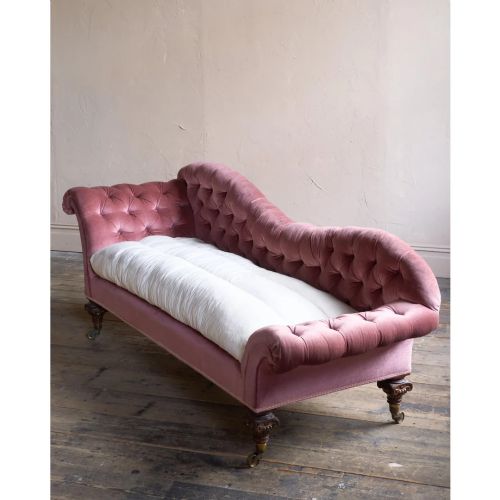
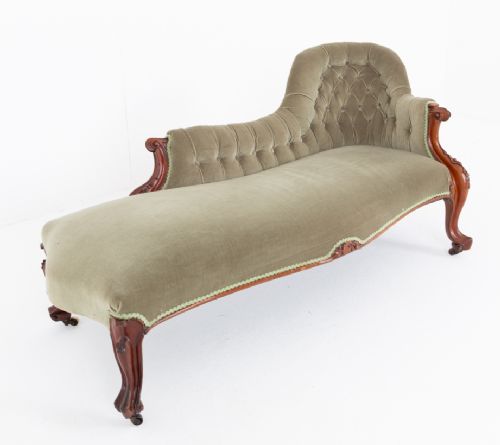
A buttoned velvet chaise is a decadent nineteenth-century day bed designed for reclining in comfort, offering both elegance and deep-cushioned support.
Buttoned Velvet Chaise
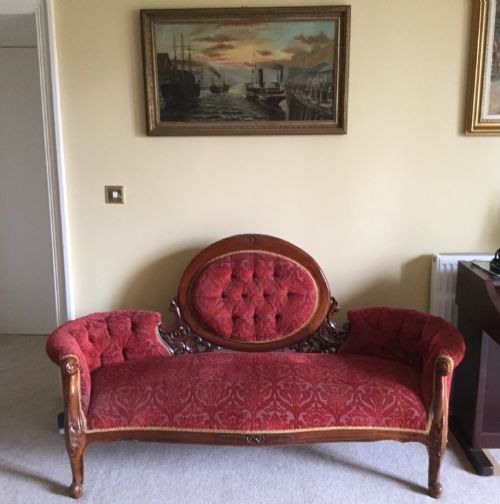
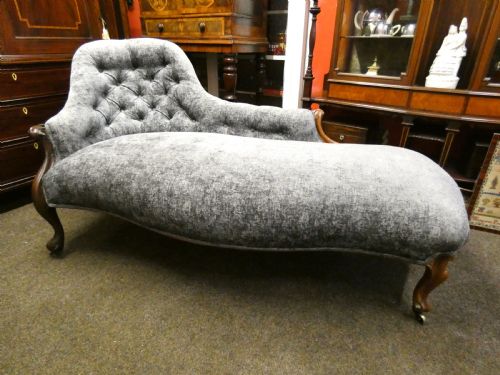
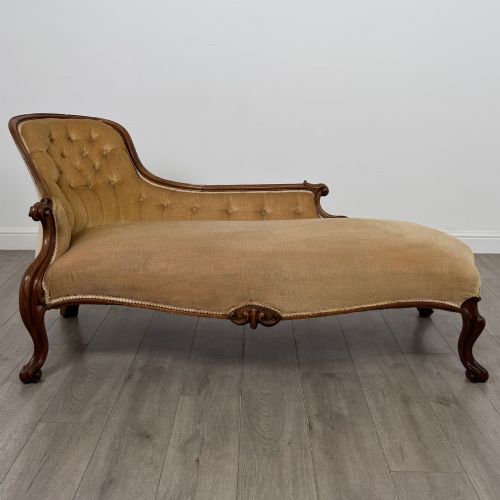
A buttoned velvet chaise combines nineteenth-century day bed forms with luxurious upholstery, appearing primarily as Victorian and Regency seating pieces. These single-ended or double-ended frames invite reclining, functioning as both decorative statement items and functional living room furnishings.
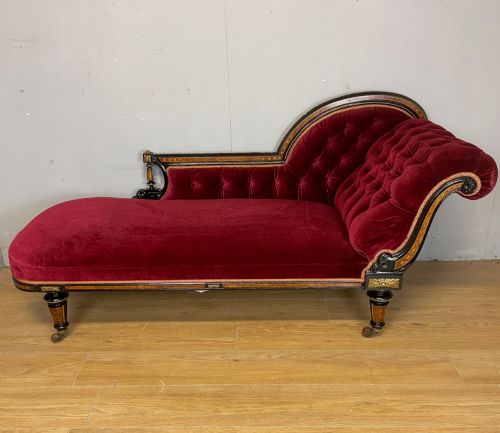
The versions most commonly met on this page span the Victorian and Regency eras, constructed in woods like mahogany, rosewood, walnut, and ebonised timber. They frequently feature carved frames, exposed wooden rails, and characteristic buttoned upholstery.
Alternative forms sharing this lineage include kidney sofas, conversation seats, and double spoon back settees alongside traditional day beds. Each variation retains the characteristic low backrest and extended seat designed for horizontal relaxation.
Materials and construction methods
Makers built the structural frames using dense hardwoods including mahogany, rosewood, walnut, and ebonised timber, often enriching them with carved details, inlaid walnut panels, or ormolu decoration. These robust woods provided the necessary strength to support lengthy reclining platforms and substantial sprung settee bases.
Upholstery relied on sumptuous textiles such as deep pile brocade and velvet, secured with traditional buttoning techniques to create characteristic tufted surfaces. Brass elements, including castors or decorative mounts, frequently completed the assembly of these nineteenth-century pieces.
Listings feature items spanning the Regency and Victorian periods, constructed from mahogany, rosewood, walnut, and ebonised wood with velvet or brocade upholstery.
Distinctions in craftsmanship and design
The distinction between standard examples and the finest pieces rests upon the crispness of timber carving, the selection of premium woods like figured rosewood or walnut, and the sophistication of decorative additions such as ormolu mounts or inlaid panels. Elaborate details like Ionic column legs or intricate barley twist frames elevate certain models above simpler counterparts.
Structural integrity and the fidelity of the upholstery work also dictate distinction, where original or historically sympathetic fabric choices and robust sprung bases demonstrate superior manufacturing standards. The harmony between the exposed wooden framework and the tufted velvet upholstery defines the visual success of each individual piece.
Howard and Sons
The Buttoned Velvet Chaise Glossary
- Chaise Longue
- A long chair for reclining, literally translating from French as long chair. These seating forms combine the backrest of a sofa with the seat length of a day bed.
- Buttoned Upholstery
- A technique where buttons are pulled tight through the padding to secure the fabric and create a distinctive diamond pattern. This method adds both structural tension and visual texture to velvet surfaces.
- Ormolu
- Gilded bronze ornamentation applied to furniture frames during the nineteenth century. It provides metallic contrast against dark woods like ebonised timber or mahogany.
- Barley Twist
- A turning technique resembling a spiralling rope carved into wooden furniture legs or structural supports. This decorative detail frequently appears on Victorian frames.
- Double Ended Sofa
- A seating configuration featuring raised backrests or scrolled ends at both sides rather than a single headboard end. This symmetrical design allows a person to recline comfortably facing either direction.
Buttoned Velvet Chaise: Frequently Asked Questions
What is a buttoned velvet chaise used for?
These nineteenth-century pieces were designed for daytime resting, reading, and reclining in drawing rooms and boudoirs. Their elongated seats and partial backrests allowed users to stretch out without retiring to a bed.
Today, they serve as striking statement seating in living rooms, bedrooms, or grand hallways, functioning both as sculptural furniture and comfortable places to lounge.
Are these day beds comfortable for daily use?
Many nineteenth-century examples feature traditional sprung bases and deep padding that provide substantial support for sitting or lying down. Their ergonomic reclining angles were specifically engineered for extended relaxation.
Comfort levels depend on the condition of the internal webbing and springs, meaning pieces with restored or well-maintained upholstery offer a supportive experience suited to modern living.
How do I care for antique velvet upholstery?
Velvet requires gentle maintenance to preserve its pile and rich colour. Regular light brushing with a soft-bristled brush helps prevent dust accumulation and keeps the fibres aligned properly.
Keeping these pieces away from direct sunlight prevents the velvet and underlying timber from fading, ensuring the fabric retains its depth and luxurious texture over time.