
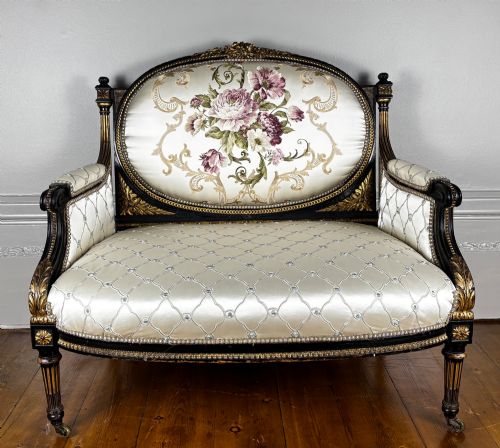


French Ebonised Sofa
These pieces of french ebonised sofa are dark-finished seating, built for formal reception rooms and nineteenth-century parlours.
French Ebonised Sofa
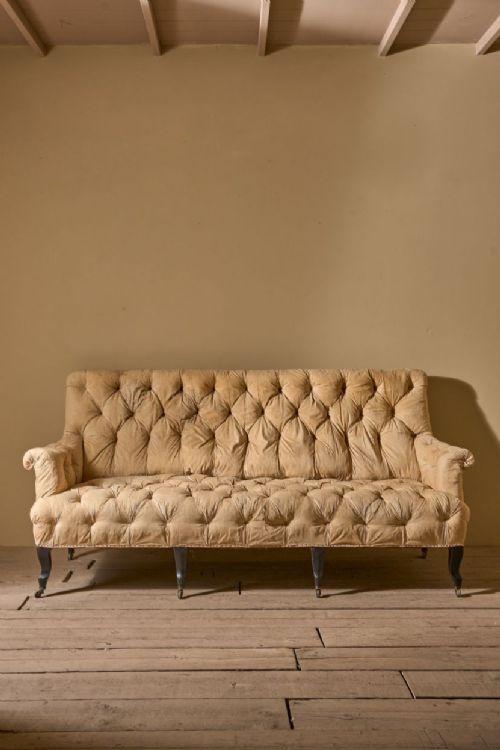
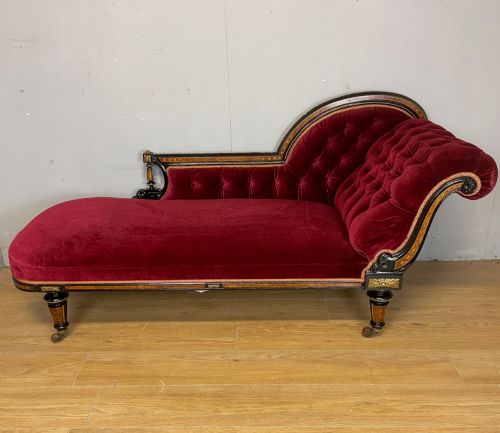
A french ebonised sofa represents nineteenth-century seating built with dark wood finishes and revival styling. These pieces range from Napoleon III buttoned back models to chaise longues and canape settees.
The versions most commonly met on this page date to the nineteenth century, drawing on Napoleon III and Louis XV revival aesthetics. They incorporate upholstered seats and backs alongside timber frames.
Makers produced these sofas for formal interiors, utilising styles that echo earlier French court furniture. They survive as salon pieces, daybeds and multi-seat settees.
How they were made
Workshops built these frames from timber, applying dark ebonised finishes to mimic costly ebony wood. Many examples incorporate parcel gilt or brass details to highlight the carved contours.
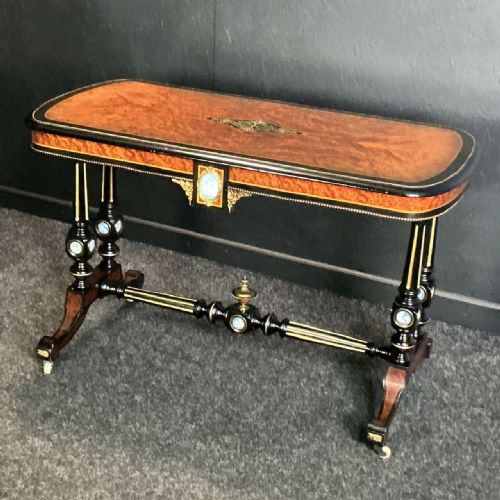
Upholstery techniques involved buttoned backs and sprung seats covered in materials such as velvet, linen or leather. Some variants include inlaid panels of walnut, amboyna or burr birch alongside ormolu mounts.
Some nineteenth-century makers even added porcelain plaques to their tables, ensuring your tea tray had a ceramic audience.
What varies in quality
The refinement of the carved wooden frame and the precision of the ebonised finish set finer pieces apart. Superior examples display crisp parcel gilt highlights and high-grade ormolu mounts rather than plain timber mouldings.
Upholstery execution dictates the standard of the piece, with deep buttoning and traditional stuffing marking out better construction. The choice of secondary woods like amboyna or walnut panels also elevates the work.
The French Ebonised Sofa Glossary
- Ebonised wood
- Timber stained or painted black to imitate genuine ebony. This dark finish was popular during the nineteenth century for formal revival furniture.
- Napoleon III style
- A nineteenth-century French design movement reviving Louis XIV, Louis XV and Louis XVI aesthetics. It favours ornate upholstery, dark woods and gilt highlights.
- Ormolu
- Gilded bronze applied as decorative mounts to furniture frames. It provides metallic contrast against dark ebonised wood.
- Chaise longue
- An elongated upholstered chair designed for reclining. Nineteenth-century versions often feature scrolled backs and ebonised legs.
- Canape
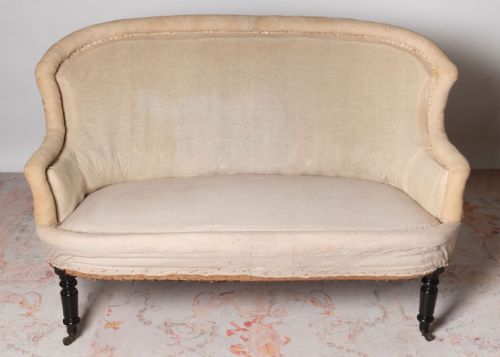
- An antique settee or sofa featuring an exposed wooden frame and upholstered back and seat. Continental examples often display revival carving.
French Ebonised Sofa: Frequently Asked Questions
What periods do these sofas date from?
The available pieces date primarily from the nineteenth century, with specific examples recorded around 1870, 1880 and 1890.
They reflect the revival styles popular during the reign of Napoleon III and the Victorian era.
How were these sofas used originally?
These pieces served as formal seating in nineteenth-century salons, drawing rooms and parlours. Canapes and settees accommodated multiple guests, while chaise longues provided places for reclining.
Their dark ebonised finishes and decorative ormolu suited the wealthy reception rooms of the period.
How do I care for ebonised wood?
Keep ebonised timber surfaces away from direct sunlight and excessive moisture to protect the dark finish. Dust regularly with a soft, dry cloth.
Avoid harsh modern chemical sprays that can degrade the historic surface sheen.
What is the difference between a sofa and a chaise longue?
A sofa provides multi-seat upright or buttoned-back seating for a room. A chaise longue is built for a single person to recline upon, featuring an extended seat and a partial backrest.
Both share the ebonised wood frames and revival upholstery styles common in nineteenth-century seating.