
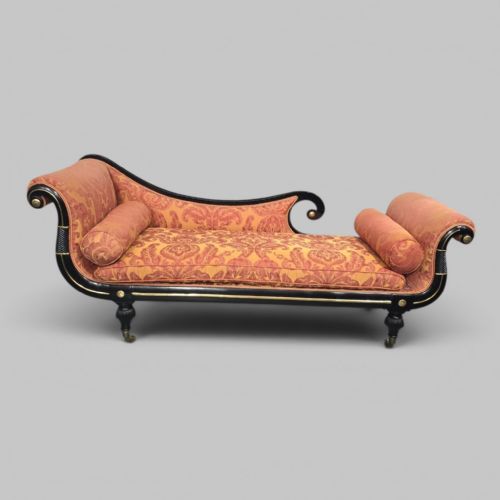


Antique Ebonised Daybed
An antique ebonised daybed brings architectural darkness and sculptural repose to a room, offering a dramatic place to lie down.
Antique Ebonised Daybed
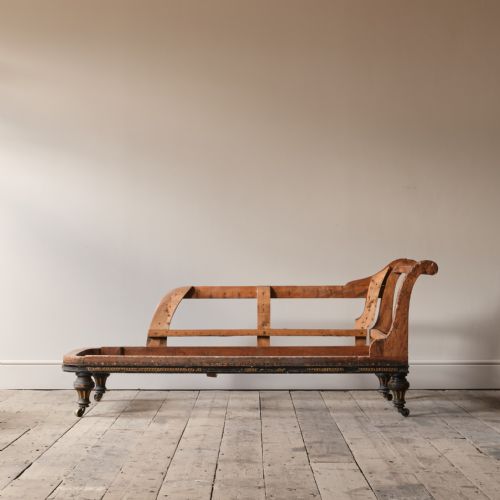
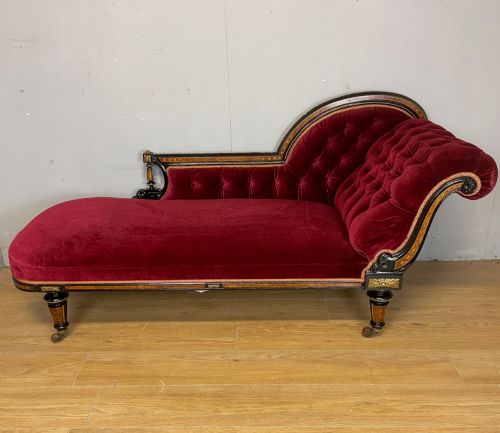
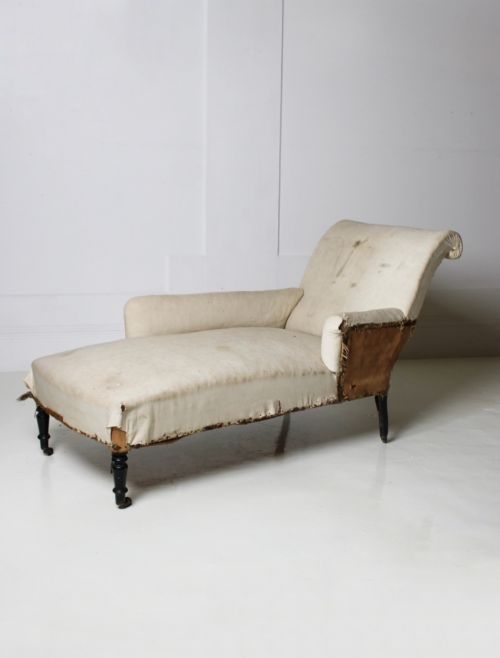
An antique ebonised daybed encompasses daybeds, chaise longues, long stools, and sofas finished in dark, light-absorbing surfaces that mimic ebony. The examples here include Regency, Victorian, Napoleon III, and Victorian Chinoiserie pieces alongside miniature furniture and large country house daybeds dating through the nineteenth century.
Buyers most frequently meet nineteenth-century chaise longues and scroll-end sofas constructed from mahogany or walnut beneath the ebonised finish. These pieces combine deep wooden frames with upholstery in calico, velvet, hessian, and fabric, often accented with brass, ormolu, cane panels, or inlaid walnut.
The functional forms vary from substantial resting furniture designed for drawing rooms to compact stools and miniature furnishings. Each piece reflects the historic taste for dark, classical silhouettes spanning the Regency era to the close of the nineteenth century.
How they were made
Cabinetmakers built these frames from solid timbers such as mahogany and walnut, applying ebonisation to achieve a dense, uniform black surface that emulated costly exotic hardwoods. Skilled workshops incorporated decorative details including brass mounts, ormolu enrichments, and inlaid walnut panels directly into the wooden structures.
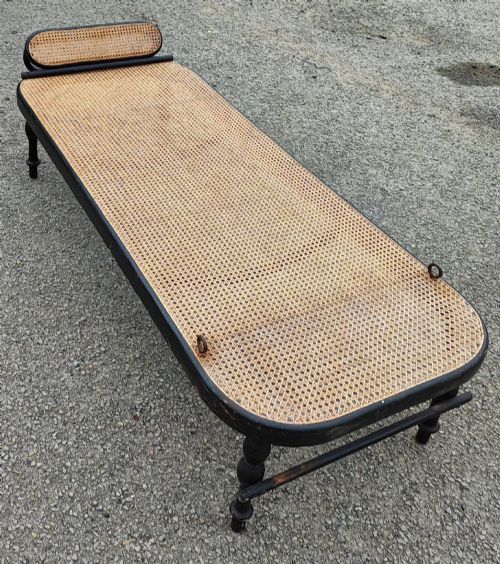
Seating support relied upon traditional upholstery foundations using materials like hessian and calico beneath top coverings of velvet and standard fabric. Artisans also integrated woven cane panels into wooden day bed frames and shaped scrolled ends through steam bending and precise joinery.
What varies in quality
The refinement of the ebonised finish and the crispness of carved scroll ends separate standard utilitarian items from exceptional cabinetwork. Superior pieces display meticulous preparation of the underlying walnut or mahogany and integration of cast metal mounts.
The structural integrity of the timber frame and the retention of original decorative elements such as ormolu decoration and inlaid panels determine the standing of each piece. Maker attribution, visible in documented workshop output, elevates the stature of specific daybeds and chaises.
Holland and Sons·Willian Trotter
The Antique Ebonised Daybed Glossary
- Ebonised
- Wood treated with stain, paint, or chemical processes to imitate the deep black appearance of true ebony. This finish was widely utilised across nineteenth-century seating furniture to create a formal aesthetic.
- Ormolu
- Gilt-bronze mounts applied to furniture for decorative enrichment. These metallic ornaments catch the light against dark ebonised wooden surfaces.
- Calico
- A plain-woven cotton fabric commonly used as a sturdy under-upholstery layer on nineteenth-century seating. It serves as a foundation before decorative top covers are applied.
- Caning
- Woven material made from stripped rattan used to form panels on day beds. This technique provides lightweight structural support within wooden frames.
- Scroll-End
- A furniture arm or terminal shaped into a sweeping, curved scroll. This profile defines the silhouette of many Regency and Victorian daybeds and sofas.
Antique Ebonised Daybed: Frequently Asked Questions
What is an ebonised daybed?
An ebonised daybed is a nineteenth-century resting piece featuring a dark, black-finished wooden frame constructed from timbers like mahogany or walnut.
These versatile forms range from chaise longues and scroll-end sofas to long stools and miniature furniture, often accented with brass, ormolu, or cane panels.
How do I identify a Regency daybed?
Regency daybeds exhibit classical architectural lines influenced by ancient Greek and Roman furniture, typically featuring prominent scroll ends and clean structural profiles.
They frequently employ dark ebonised finishes combined with refined metal mounts or exposed polished wood grain characteristic of the early nineteenth century.
Where were daybeds used?
These pieces occupied principal reception rooms, drawing rooms, and large country house interiors where occupants reclined during daytime hours.
Their substantial presence and upholstered surfaces made them suitable for both formal entertaining and private rest.
How do I care for ebonised wood?
Maintain ebonised surfaces by dusting gently with a dry, soft cloth to prevent particulate buildup on the dark finish.
Avoid placing the furniture in direct sunlight or near heat sources to protect the historic timber, applied polish, and delicate metal or upholstery details.
What styles are included?
The available pieces span Regency, Victorian, Grand Regency, and Victorian Chinoiserie stylistic traditions from the nineteenth century.
Each style brings distinct decorative vocabulary, from classical scrollwork and ormolu mounts to patterned inlay and exotic decorative motifs.