

Victorian Ebonised Seating
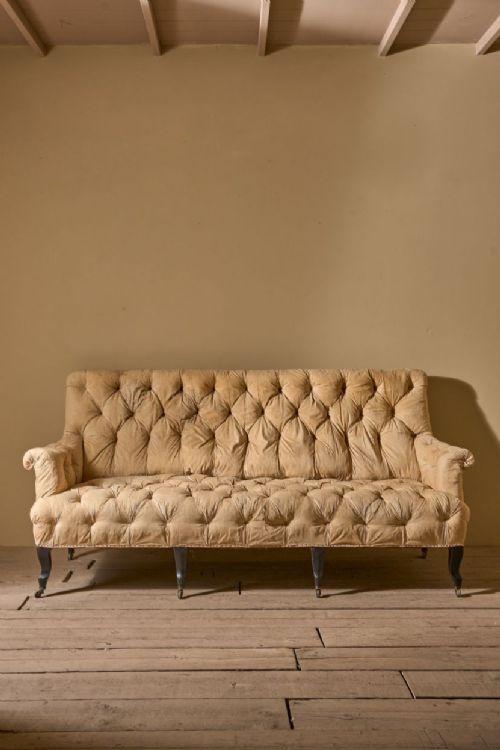
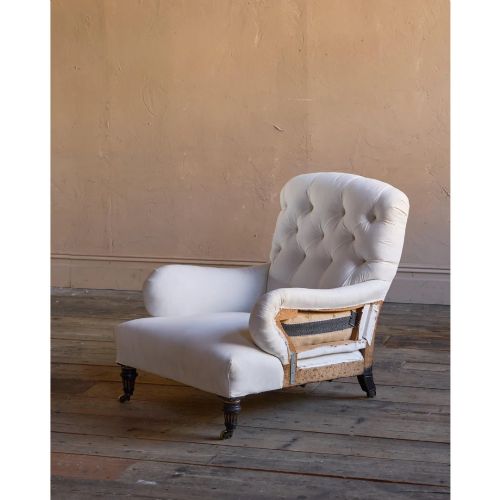
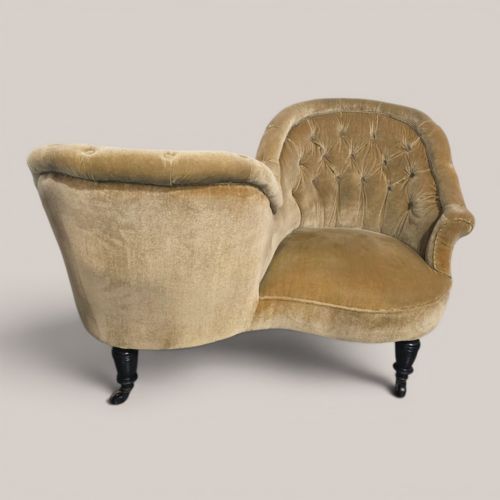
Victorian ebonised seating combines dark timber surfaces with varied upholstery, ranging from simple nursing chairs to large conversational sofas.
Victorian Ebonised Seating
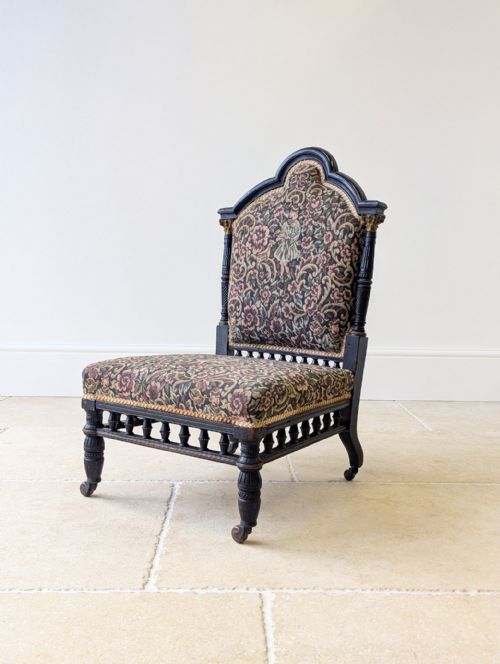
Victorian ebonised seating covers a wide variety of forms designed for nineteenth century drawing rooms, bedrooms and parlours. Buyers searching for victorian ebonised seating encounter everything from dining chairs and armchairs to specialised pieces like nursing chairs, piano stools and chaise longues.
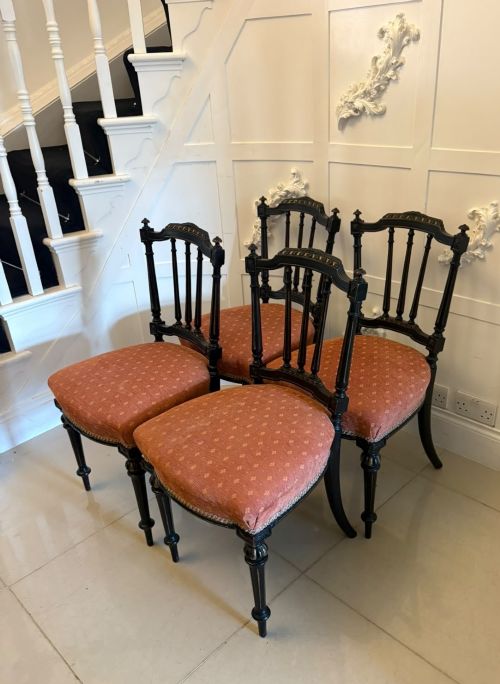
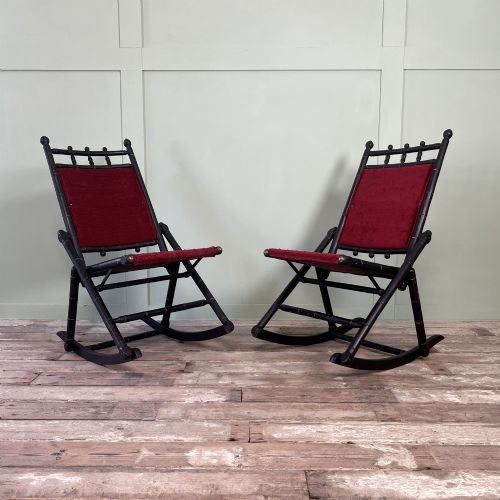
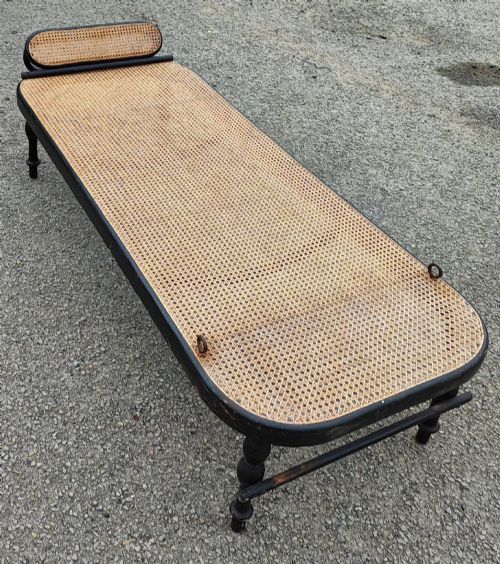
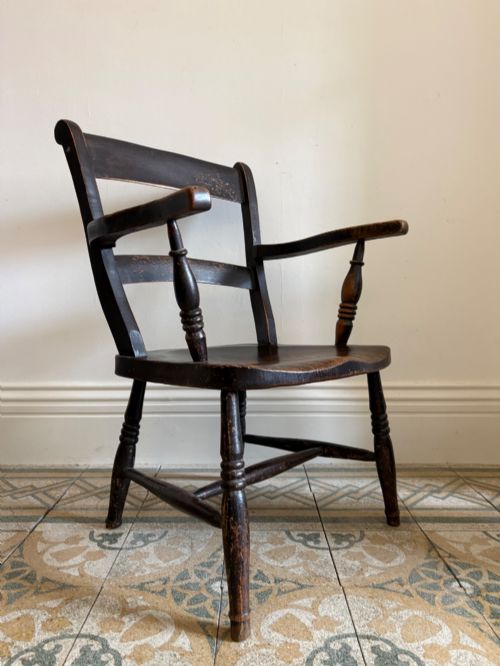
The selection on this page relies heavily on nineteenth century examples reflecting Victorian, Aesthetic Movement and Napoleon III styles. Side chairs and armchairs dominate the offerings, often appearing alongside pairs of folding rocking chairs and day beds.
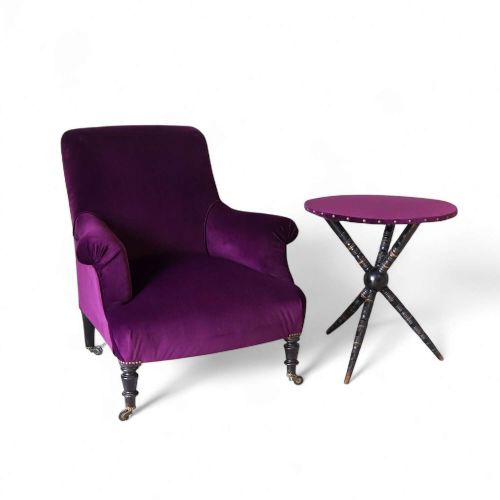
Makers and designers of the period adapted traditional wooden frames into dark, painted or stained finishes that simulated expensive ebony. These seating options suit modern interiors seeking period character through contrasting dark woodwork and patterned velvet or fabric upholstery.
Materials and construction
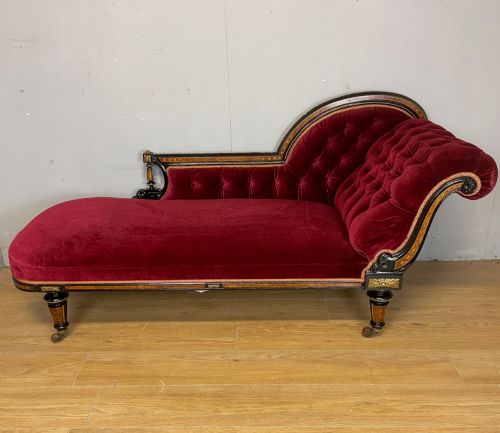
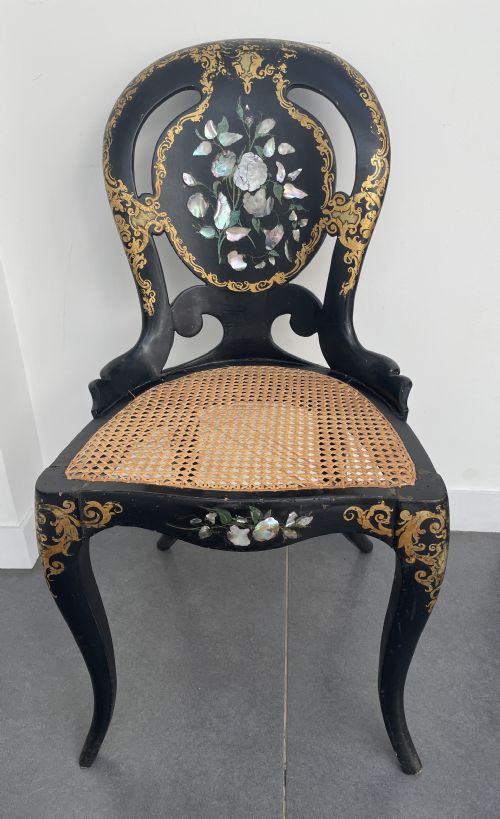
Constructed primarily from timber such as beech, ash or walnut, these pieces received a dark ebonised finish to resemble solid ebony. Artisans enhanced the visual impact by adding gilt highlights, brass mounts, ormolu decoration and inlaid mother of pearl panels.
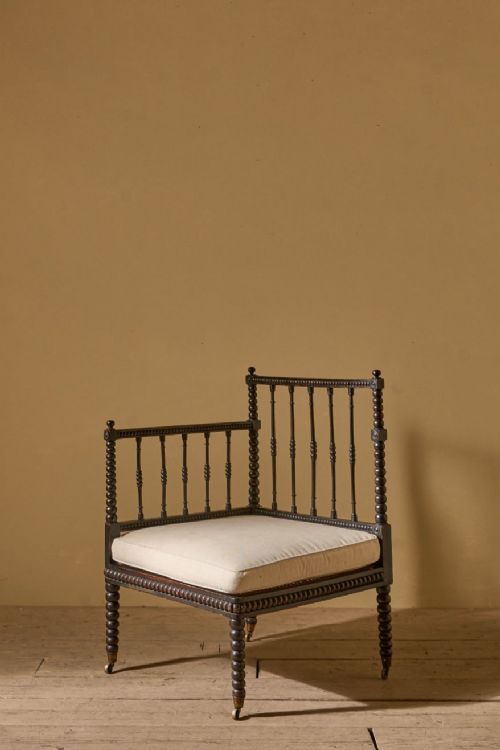
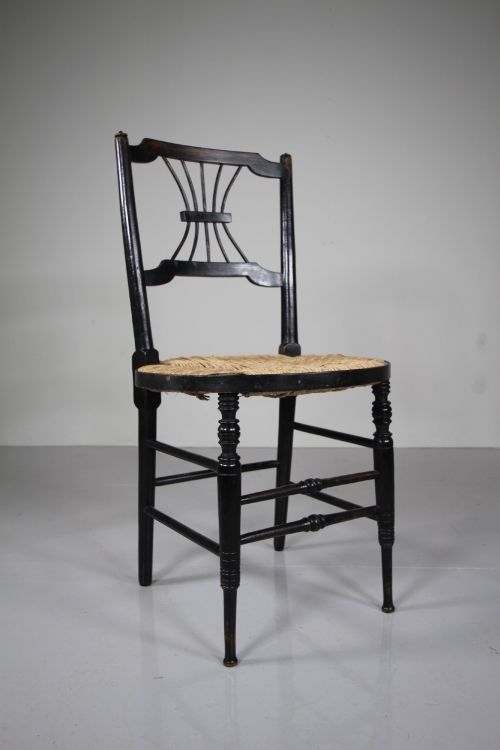
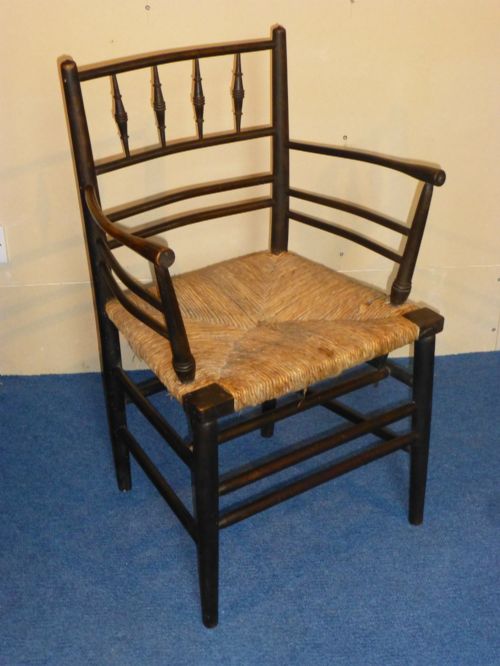
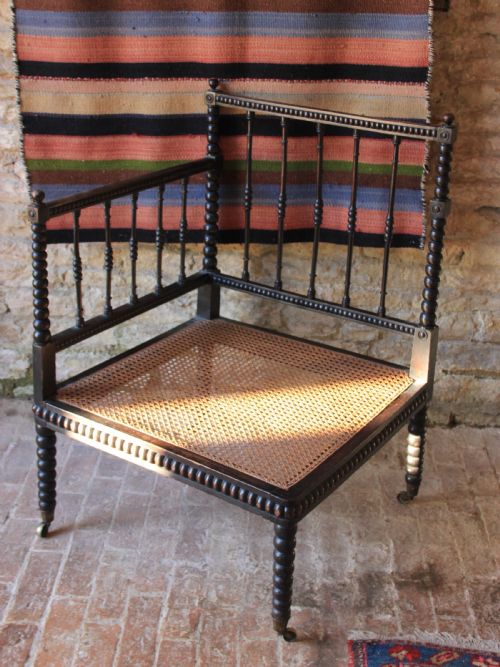
Upholstery played a central role, utilising fabrics, velvet and buttoned padding for drawing room chairs, day beds and sofas. Alternative seating surfaces included woven cane and rush panels fitted into bobbin turned or faux bamboo frames.
Distinctions in quality
Quality in these pieces rests upon the precision of the ebonised finish and the integrity of the underlying woodwork. Superior examples exhibit crisp carving, stable joinery and well executed gilding or inlay work.
The sophistication of the design dictates the upper tier of the range, particularly items associated with prominent aesthetic movement makers or specific stylistic schools. Lesser pieces show simpler turning and standard upholstery without distinctive decorative motifs.
William Morris·Philip Webb·Morris and Co·Gillows·Bruce J Talbert
The Victorian Ebonised Seating Glossary
- Ebonised
- Wood stained or painted black to imitate true ebony. This finish became especially popular during the nineteenth century for drawing room furniture.
- Aesthetic Movement
- A late nineteenth century design style emphasising art for art's sake. Pieces in this style often feature simplified forms, ebonised surfaces and Japanese inspired motifs.
- Bobbin turning
- A method of woodturning that produces a series of rounded spheres resembling beads or bobbins along the length of a chair leg or stretcher.
- Chaise longue
- An upholstered long chair designed for reclining. These typically feature an extended seat and a single raised headrest.
- Ormolu
- Gilded bronze ornamentation applied to furniture. It provides metallic contrast against dark ebonised wood surfaces.
Victorian Ebonised Seating: Frequently Asked Questions
What is ebonised wood?
Ebonised wood is ordinary timber treated with stain or paint to achieve the deep black appearance of genuine ebony.
This technique allowed nineteenth century makers to produce fashionable dark furniture without relying on costly imported exotic hardwoods.
Where were nursing chairs used?
Nursing chairs were kept in Victorian bedrooms and nurseries for feeding and tending to children.
Their low seats and supportive backs provided comfort during long periods spent sitting in private quarters.
How do I identify an aesthetic movement chair?
Aesthetic movement chairs generally display geometric lines, ebonised finishes and Japanese or sunflower decorative details.
These pieces often reject heavy Victorian padding in favor of simpler frames and exposed turned woodwork.
Are these chairs suitable for daily use?
Most nineteenth century ebonised chairs remain sturdy enough for regular seating if the frame and joints are stable.
Buyers should consider whether the historical upholstery or modern replacement fabric best suits their intended living space.