


Victorian Earthenware Tureen
These Victorian earthenware tureen examples bring robust nineteenth-century utility to the table through patterned ceramic service vessels and lidded dishes.

Victorian Earthenware Tureen
A victorian earthenware tureen represents the heavier functional pottery produced across the nineteenth century for dining tables, appearing as lidded vegetable dishes, soup vessels, and specialised game pie containers. These pieces arrive in various styles spanning standard Victorian designs, Victorian Majolica, and earlier Georgian influences carried into the period.
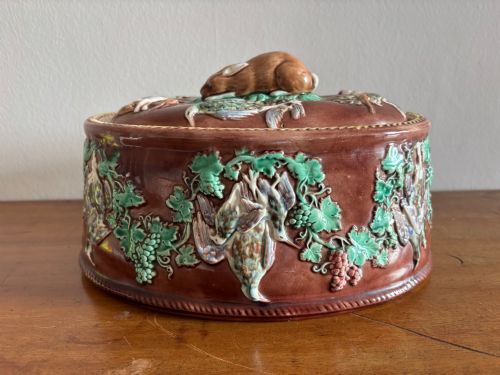
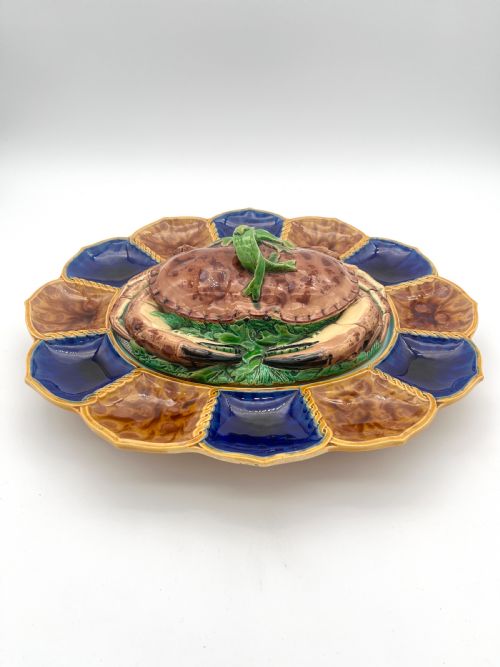
The selection on this page centres primarily on utilitarian earthenware forms, blue and white transfer printed patterns, and moulded animal or bird lidded servers such as hen egg crocks and crab tureens. Makers and potteries from Staffordshire and major English factories produced these items in white earthenware, caneware, and creamware.
Buyers encounter everything from large pedestal dessert tureens with stands to child-sized miniature dinner services and soup ladles. The predominant forms maintain functional service roles, balancing decorative transfer prints or colourful glazes with solid ceramic bodies.
Materials and Manufacture
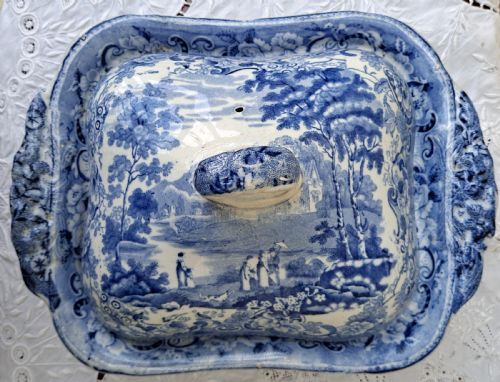
Potters utilised earthenware, creamware, and caneware as the primary ceramic bodies, shaping them through moulding and throwing techniques before applying lead glazes. Many pieces incorporate intricate transfer printing in blue and white, transferring complex pictorial scenes onto the porous clay body prior to firing.
Colour enamels and majolica lead glazes added vibrant palettes to specialised pieces like game tureens and hen egg crocks. Factories combined moulded relief decoration with hand-finishing, creating textured surfaces that mimic natural forms like feathers, crustacea, and wicker baskets.
Listings feature earthenware, stoneware, and terracotta bodies decorated with lead glaze, enamel, and transfer printing across the nineteenth century.
Quality Variations
Quality in these ceramics depends upon the crispness of the moulded relief details and the clarity of transfer-printed scenes on the earthenware body. Superior examples display sharp definition in complex animal forms and botanical motifs without blurring in the glaze.
The sophistication of the glaze application and the preservation of hand-enamelled colours distinguish finer output from standard production. Complete sets retain matching covers, stands, and ladles, preserving the integrity of the original service.
James Wallace and Co·Wedgwood·Minton·Doulton Burslem·Ridgways·Davenport·Copeland and Garrett
The Victorian Earthenware Tureen Glossary
- Earthenware
- A porous ceramic body fired at lower temperatures, requiring a glaze to render it waterproof for food service. It forms the structural basis for the majority of nineteenth-century utilitarian dining vessels.
- Caneware
- A fine, unglazed or lightly glazed earthenware exhibiting a warm buff or yellowish tone resembling bamboo. Potteries utilised this body extensively for moulded game pie dishes.
- Transfer printing
- A decoration technique involving the transfer of an engraved paper design onto ceramic surfaces using metallic oxides. Blue and white patterns achieved widespread popularity through this method.
- Majolica
- A colourful, lead-glazed earthenware characterised by rich, flowing tones applied over moulded reliefs. This technique suited naturalistic animal and vegetable forms.
Victorian Earthenware Tureen: Frequently Asked Questions
How do I use a antique tureen today?
These lidded ceramic vessels serve well for presenting side dishes, vegetables, or soups at the modern dining table. Their sturdy earthenware construction handles warm food service while adding nineteenth-century character to domestic settings.
Collectors also display them on sideboards or open shelving to showcase transfer-printed scenes and colourful majolica glazes. Care requires gentle hand washing to protect historic glazes and ceramic bodies.
How are animal lidded tureens identified?
Animal-form lidded containers, such as hen egg crocks and crab tureens, utilise moulded earthenware to depict creatures resting on nests or baskets. The upper portion functions as a removable lid, concealing the interior cavity used for holding eggs or foodstuffs.
Victorian makers applied detailed feather and shell texturing combined with naturalistic enamel colours to enhance the realism of these serving pieces.
Can complete dinner services still be found?
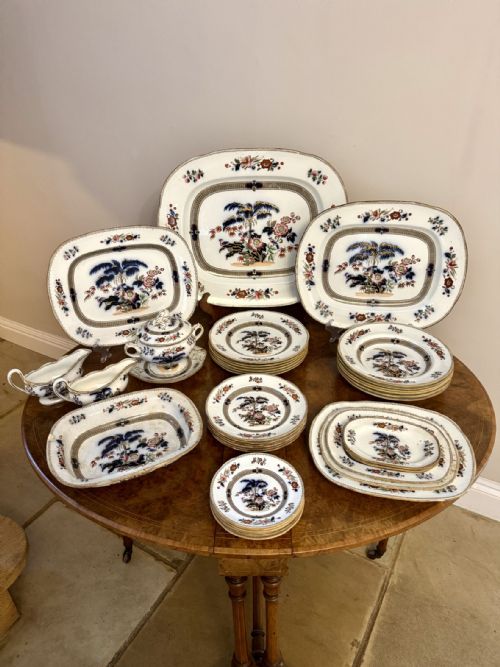
Larger dinner services survive from the nineteenth century, though many listings comprise part services or individual tureens with matching covers and ladles. Complete sets typically include dozens of pieces spanning serving dishes, plates, and sauce tureens.
Individual items and small collections offer accessible entry points for buyers who appreciate Victorian ceramic design without requiring storage space for full services.