




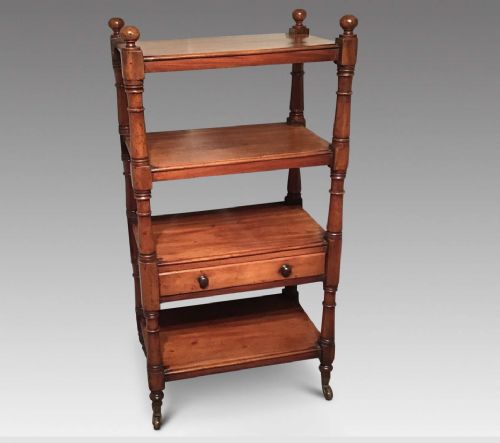


Victorian Dumbwaiter Shelves
Victorian dumbwaiter shelves are tiered wooden serving tables designed for dining rooms, offering practical surface space and period character.
Victorian Dumbwaiter Shelves
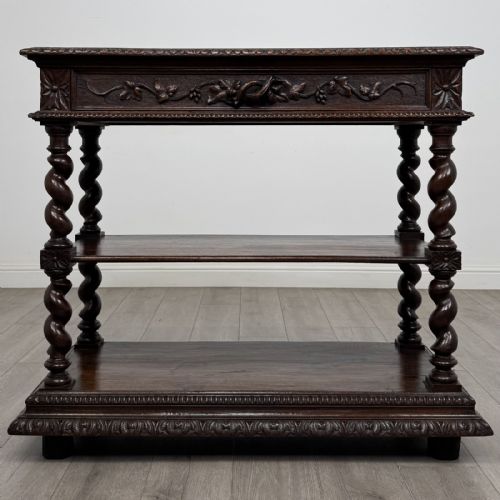
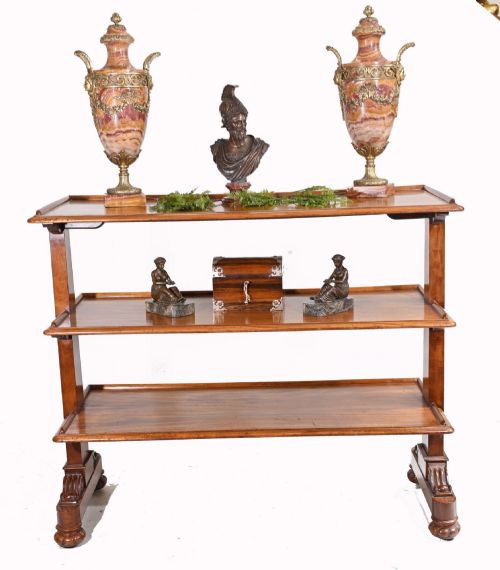
Victorian dumbwaiter shelves comprise multi-tiered wooden furniture pieces functioning as side tables, buffets, and serving stands. These items appear across periods spanning from 1850 to 1880, often categorised under buffet tables or tiered stands.
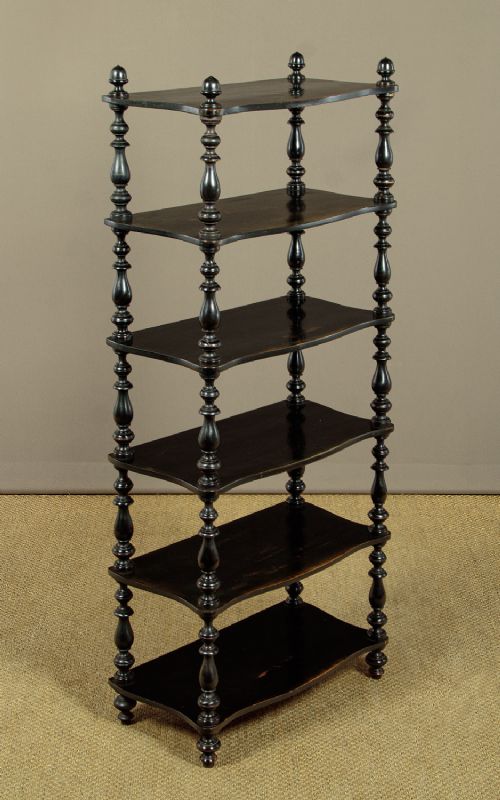
The versions most commonly met on this page are three-tier buffets and multi-tiered stands constructed in woods such as mahogany, walnut, and oak. Forms range from simple side tables to fully adjustable buffets and food trolleys equipped with castors.
How They Were Made
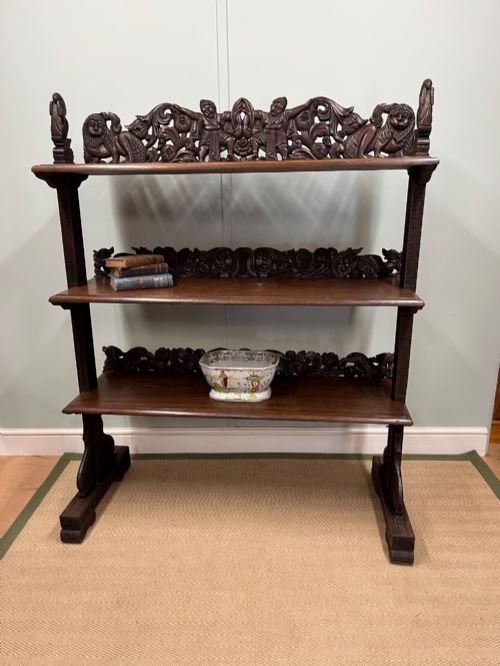
Cabinet makers utilised dense hardwoods like mahogany, walnut, teak, oak, and ebonised wood to build sturdy tier structures capable of holding heavy items. Selected pieces incorporate brass mounts, ceramic elements, or intricate carved padauk wood details.
Makers integrated practical mechanisms such as original castors for mobility and fully adjustable shelving systems to alter the distance between tiers. Surface finishes were polished to highlight the natural grain of the timber.
Victorian Dumbwaiter Shelves Retail Price Guide 2026
Typical asking prices for victorian dumbwaiter shelves among the pieces listed under this phrase on Sellingantiques today, from the lower quarter to the upper quarter. They describe what is for sale here now, not the wider market.
Some versatile Victorian food trolleys double as bookshelves, proving that nineteenth-century hosts loved multi-tasking furniture just as much as we do.
What Varies in Quality
The standard of timber selection and carving depth marks the division between standard utility items and finer examples. Richly grained mahogany, polished walnut, and detailed Burmese carvings demonstrate superior craftsmanship.
The presence of original functional hardware, such as brass mountings and castors, distinguishes pieces that retain their complete period integrity. Adjustability mechanisms and sound structural joinery across multiple tiers further elevate a piece.
The Victorian Dumbwaiter Shelves Glossary
- Buffet
- A side table or serving piece used for food and tableware storage. These often feature multiple tiers in Victorian dining rooms.
- Ebonised Wood
- Timber treated to resemble ebony through a dark staining or finishing process. This technique provides a dense, black surface popular in mid-nineteenth-century furniture.
- Castor
- A small wheel fitted to the base of furniture for ease of movement. Original castors aid the mobility of serving trolleys and heavy buffets.
- Padauk
- A dense tropical hardwood known for its reddish colour and durability. Burmese carved padauk appears on high-end Victorian serving furniture.
Victorian Dumbwaiter Shelves: Frequently Asked Questions
What are Victorian dumbwaiter shelves?
They are tiered wooden serving tables and buffets used during the nineteenth century to hold food, drinks, and tableware in dining rooms.
These pieces feature multiple shelves supported by vertical posts, often fitted with castors so they could be moved around the room easily during service.
How were these shelves used?
Dining rooms utilised these multi-tiered stands to supplement table space by holding dishes, serving utensils, and books.
Servants placed courses and service items upon the tiers to keep them accessible without cluttering the main dining table.
How do I identify the wood types?
Visual inspection reveals distinctive grain patterns and colours associated with nineteenth-century cabinet making. Mahogany and walnut exhibit warm brown tones, while teak and oak display coarser, robust grains.
Ebonised pieces present a uniform black finish, and padauk shows a deep reddish hue.
Where should I place them at home?
Living spaces accommodate these tiered stands well as side tables, bookshelves, or display surfaces for decorative objects.
Their narrow profile allows them to sit against dining room walls or in hallways without occupying excessive floor space.