




Ebonised Wood Etagere
An ebonised wood etagere brings dark tiered display space and striking nineteenth-century contrast to a room.
Ebonised Wood Etagere
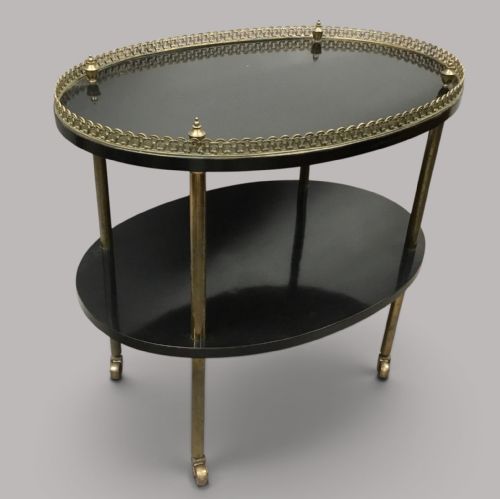
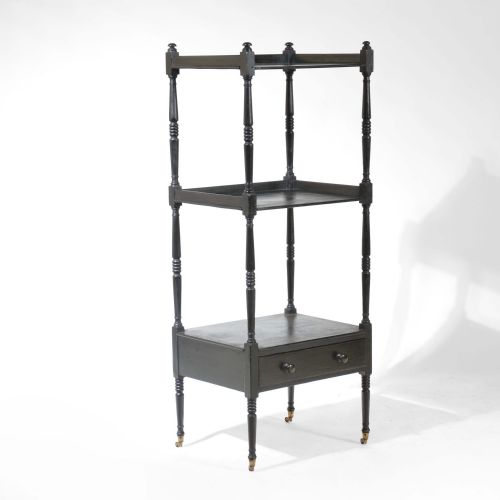
An ebonised wood etagere provides multiple open shelves for display, finished in a dark stain or polish that mimics expensive ebony. Buyers searching this phrase seek tiered furniture designed to hold small decorative objects, porcelain, or books.
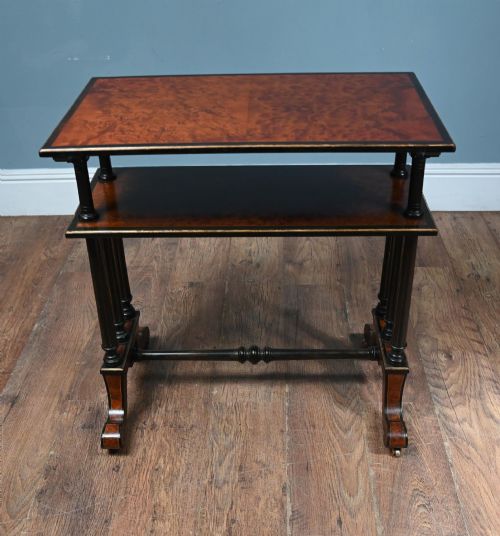
The pieces appearing on this page span several decades of the nineteenth century and into the early twentieth century, incorporating Victorian and Georgian forms as well as related tiered stands and wall shelves. Common variations include corner units, freestanding multitiered shelves, and pieces enriched with parcel gilding or contrasting woods.
Origin and maker styles vary across the selection, reaching from English vernacular and Victorian interpretations to French and Japanese Taisho influences. Each version relies on the dark surface to frame its contents cleanly against a wall or in a corner.
Materials and construction
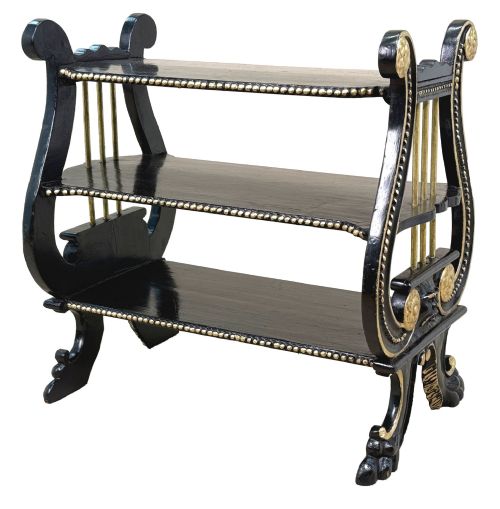
Makers achieved the characteristic dark finish by staining or painting cheaper timbers such as softwood or hardwood to resemble solid ebony, sometimes pairing the dark surface with gilt brass details or parcel gilding.
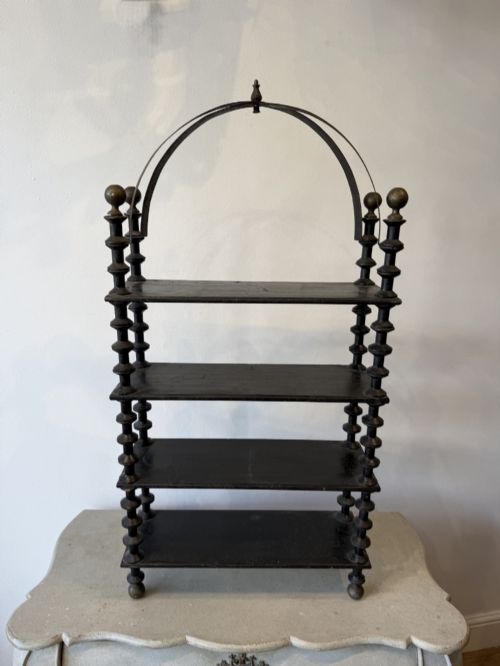
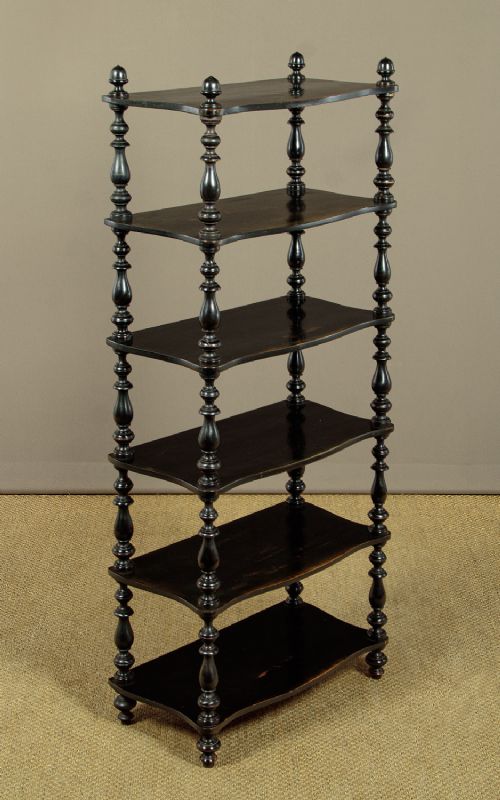
Construction methods range from turned bobbin supports and delicate bracket feet to rigid tiered platforms held by slender uprights, utilising traditional joinery appropriate for multi-shelf display furniture.
Ebonised Wood Etagere Retail Price Guide 2026
Typical asking prices for ebonised wood etagere among the pieces listed under this phrase on Sellingantiques today, from the lower quarter to the upper quarter. They describe what is for sale here now, not the wider market.
Some shelves arrive with bobbin turnings so enthusiastic they resemble a grand collection of wooden spools holding up the afternoon tea.
What separates the fine examples
Quality rests in the crispness of the turning, the depth and evenness of the ebonised finish, and the stability of the tiers under weight. Finer examples show careful attention to structural joints where the uprights meet the shelves.
The presence of secondary decorative elements, such as subtle parcel gilding, delicate fretwork, or complementary brass hardware, elevates a utilitarian display stand into a more considered piece of interior furnishing.
The Ebonised Wood Etagere Glossary
- Ebonised
- Wood treated with stain, paint, or chemical processes to produce a deep black surface resembling ebony. This finish gained immense popularity during the Victorian period for accentuating carved details and turning.
- Etagere
- A piece of furniture consisting of a set of open shelves for displaying small objects or ornaments. The form originated in France and became a staple of nineteenth-century drawing rooms.
- Parcel gilt
- Partially gilded with gold leaf or gold paint, usually to highlight carved motifs, mouldings, or turned elements against a dark background. It creates a striking contrast on ebonised surfaces.
- Whatnot
- A nineteenth-century English term for a tiered stand with multiple open shelves used for storage or display. It shares many characteristics with the etagere and corner shelf.
- Bobbin turning
- A type of furniture turning characterised by a series of rounded, spool-like shapes resembling bobbins on a thread. This decorative woodworking technique appears frequently on nineteenth-century stands and shelves.
Ebonised Wood Etagere: Frequently Asked Questions
What is an ebonised wood etagere used for?
These tiered stands provide open shelving designed specifically for displaying small ornaments, ceramics, books, and decorative collections. They make efficient use of vertical space in reception rooms and hallways.
Historically, they allowed households to exhibit curated collections of curiosities within easy view. Today, they serve a similar decorative function while introducing dark architectural lines to an interior.
How do I care for an ebonised finish?
Keep ebonised wooden furniture out of direct sunlight and away from extreme temperature shifts to prevent the dark finish from fading or cracking. Dust regularly with a soft, dry cloth.
Avoid using harsh chemical polishes or abrasive cleaners, which can strip the surface stain. A gentle application of microcrystalline wax can help protect the polish if necessary.
How can I tell Victorian pieces apart?
Victorian examples often feature characteristic dark ebonised surfaces, turned bobbin supports, or elaborate corner brackets designed to fit domestic spaces of the period. They frequently combine sturdy softwood or hardwood frames with decorative mouldings.
Earlier Georgian precursors tend to exhibit simpler, more restrained architectural proportions. Later pieces from the early twentieth century may incorporate diverse international influences such as Japanese Taisho craftsmanship.
Are these shelves sturdy enough for heavy books?
Most etageres and whatnots were built primarily for display rather than heavy storage, featuring slender uprights and multiple tiered platforms. Placing very heavy volumes on them can strain the joints.
They are best suited for lighter decorative objects, porcelain, small plants, or selected paperbacks. Check the stability of the tier supports before loading any antique shelf.