

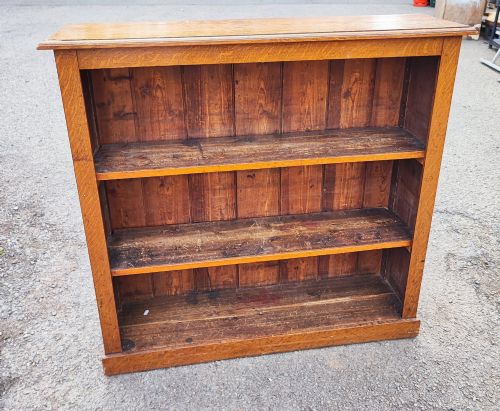
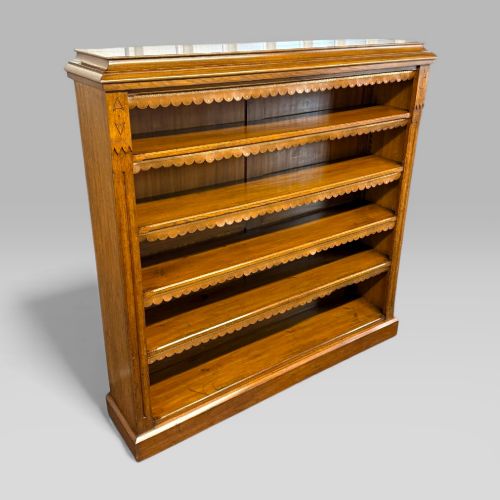
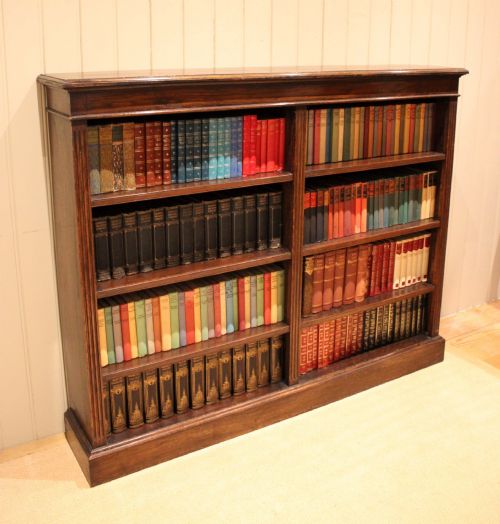
Victorian Open Shelf Bookcase
These pieces provide accessible storage for libraries and studies, bringing practical organisation and period character to domestic rooms.
Victorian Open Shelf Bookcase
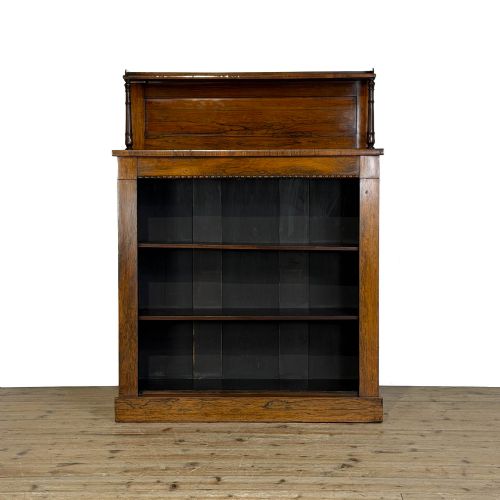
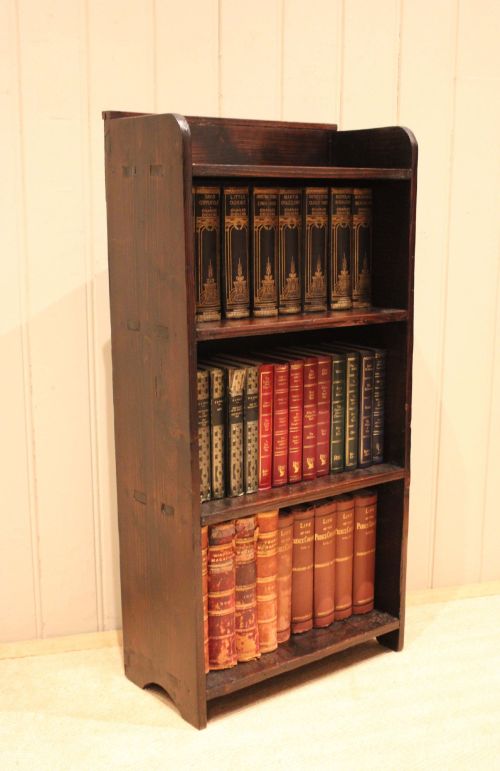
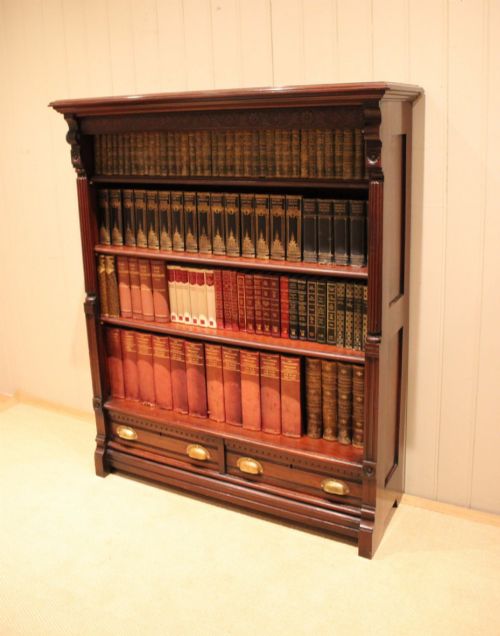
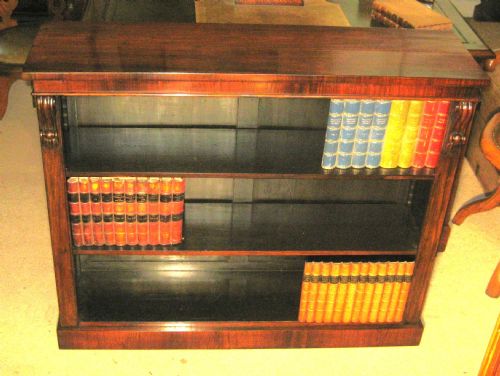
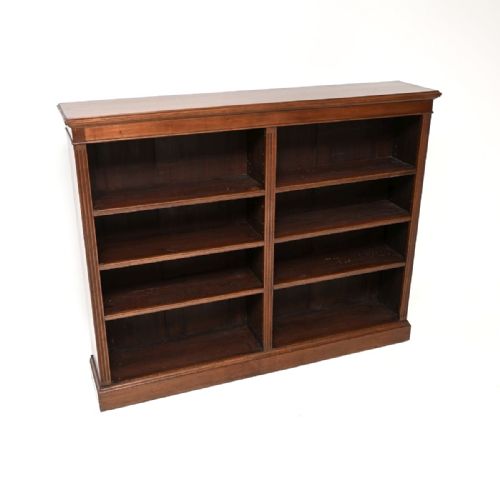
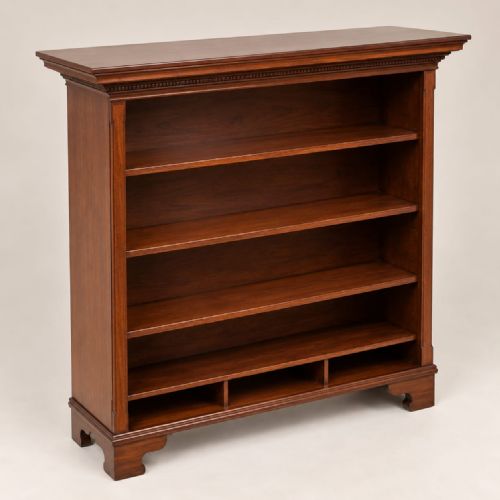
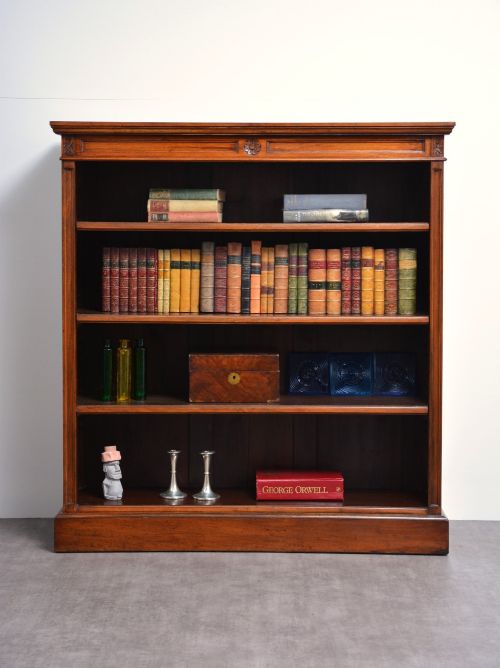
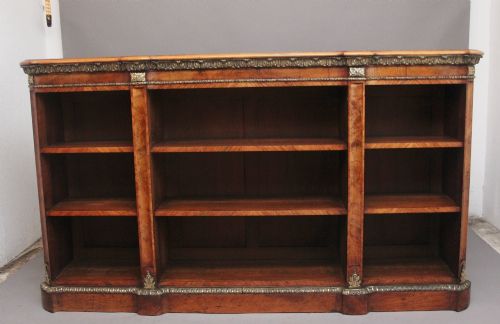
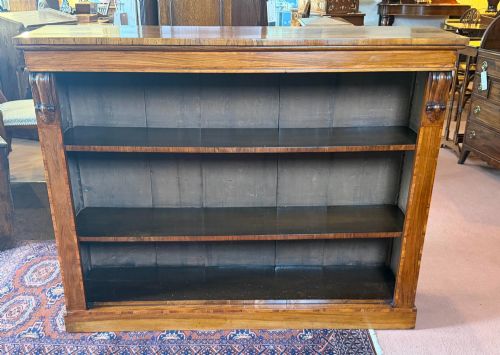
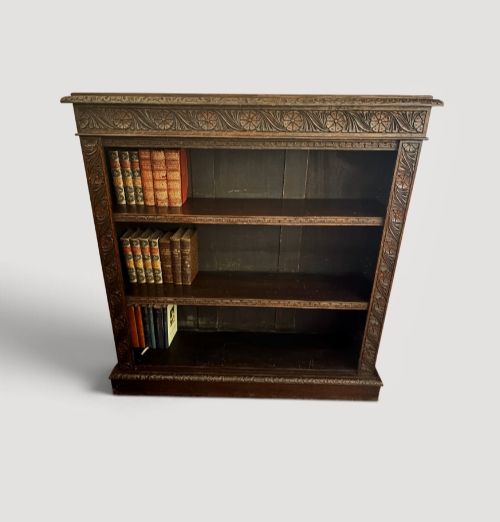
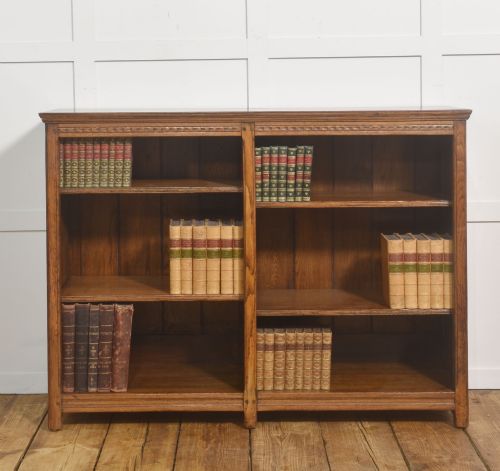
A victorian open shelf bookcase brings visible storage to domestic spaces, taking the form of low dwarf units, tall library furniture, and stepped shelves. The pieces appearing here span the nineteenth century and into the early twentieth century, incorporating related forms such as whatnots, chiffoniers, and music cabinets.
Mahogany and oak dominate the selection, alongside walnut, burr walnut, rosewood, and pine. Many examples utilise adjustable shelves, allowing books of various heights to sit properly within the architectural framework of the unit.
Materials and Construction
Cabinet makers utilised dense hardwoods including mahogany, oak, and walnut, frequently selecting figured veneers like burr walnut or rosewood for primary display surfaces. Secondary timbers such as pine provided internal framing and backing boards.
Joinery methods involved traditional panel construction and carved detailing, sometimes enhanced with brass castors, ormolu mounts, or inlaid contrasting timbers. Open shelf formats relied on sturdy vertical uprights to support the weight of heavy volumes.
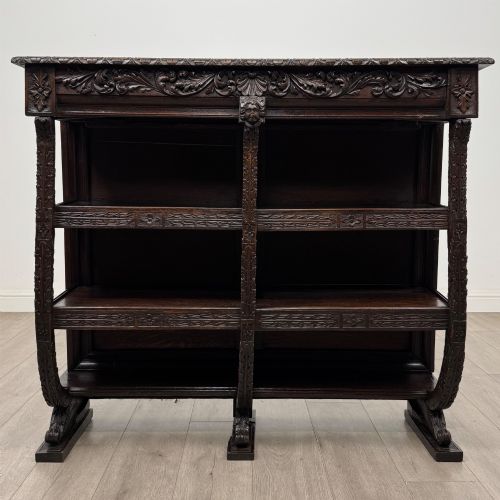
One low dwarf bookcase arrives complete with a carved green man peering out from the woodwork.
Evaluating the Pieces
Depth of carving, timber selection, and overall proportion separate standard utility items from finer parlour furniture. Pieces featuring figured burr walnut veneers, elaborate carved ornamentation, or complex breakfront forms reflect higher ambition in design.
The integration of functional elements, such as smoothly operating adjustable shelf mechanisms and original brass castors, indicates careful original manufacture and consideration for practical use.
Johnstone and Jeanes·Gabriel Viardot
The Victorian Open Shelf Bookcase Glossary
- Waterfall bookcase
- A tiered shelving unit where each successive shelf steps back from the one below it. The design creates a cascading profile popular in the nineteenth century.
- Breakfront
- A piece of furniture where the central section projects forward from the flanking wings. This configuration adds architectural depth to larger library bookcases.
- Dwarf bookcase
- A low open shelving unit designed to sit beneath dado height. These pieces kept volumes within easy reach in studies and drawing rooms.
- Ormolu
- Gilded bronze ornamentation applied to furniture. Makers used these metallic mounts to accent walnut and mahogany surfaces.
Victorian Open Shelf Bookcase: Frequently Asked Questions
How do I adjust the shelves?
Most nineteenth-century open bookcases utilise a rack-and-pinion mechanism or numbered wooden fillets fixed to the interior sides. Lifting the shelf slightly allows the wooden supports to disengage and relocate into alternative slots.
Take care when moving heavy timber shelves within older cabinets to avoid marking the interior veneer.
Where should I place a mahogany bookcase?
Position wooden furniture away from direct heat sources and strong sunlight to prevent the timber and veneers from drying out or fading. Interior walls in studies, libraries, and sitting rooms offer stable environments.
Ensure the floor surface is level so the upright frame maintains its structural balance.
Are these shelves suitable for heavy books?
Thick oak and mahogany library shelves easily support substantial volumes without bowing. Shorter dwarf units and stepped shelves accommodate standard octavos and smaller reference books.
Distribute heavier folios towards the lower tiers of tall bookcases to maintain stability.
How do I distinguish walnut from mahogany?
Walnut displays a rich brown tone with dark grain figuring, sometimes showing complex burr patterns across the surface. Mahogany exhibits a reddish-brown colour that deepens with age, featuring a straight or ribbon-like grain.
Looking closely at the unpolished interior or backing timber often reveals the distinct weight and cellular structure of each wood.