

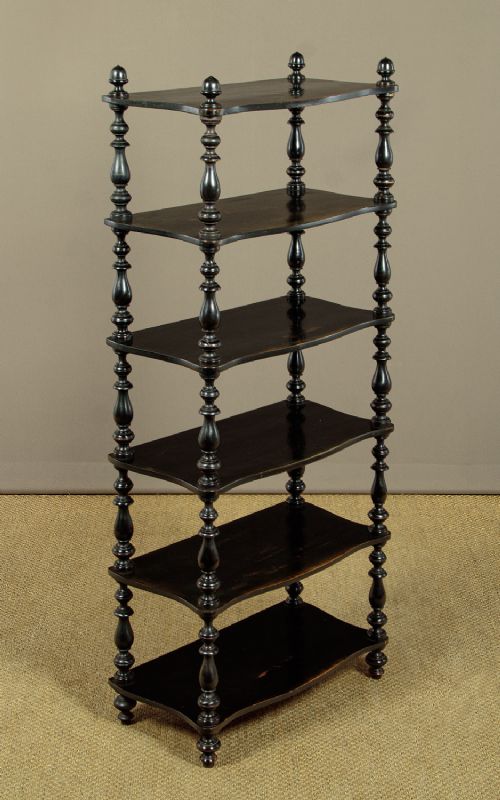
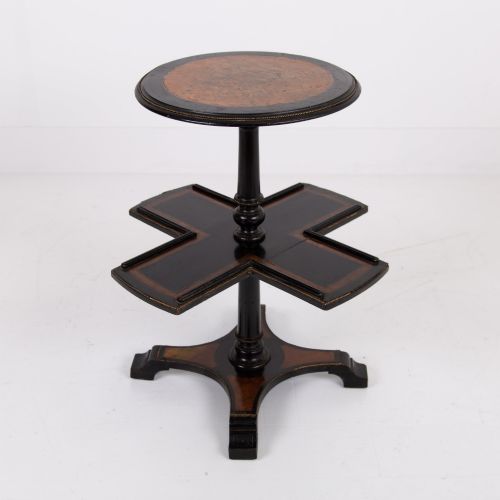


Antique Ebonised Tiered Stand
An antique ebonised tiered stand brings multi-level display space into a room, combining dark finished timber with practical shelving.
Antique Ebonised Tiered Stand
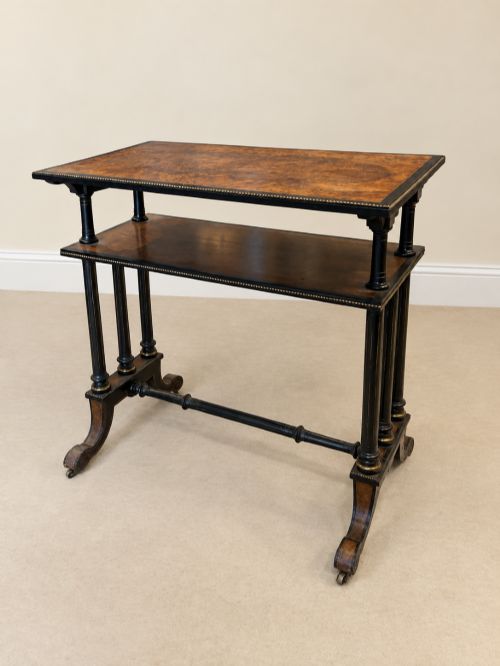
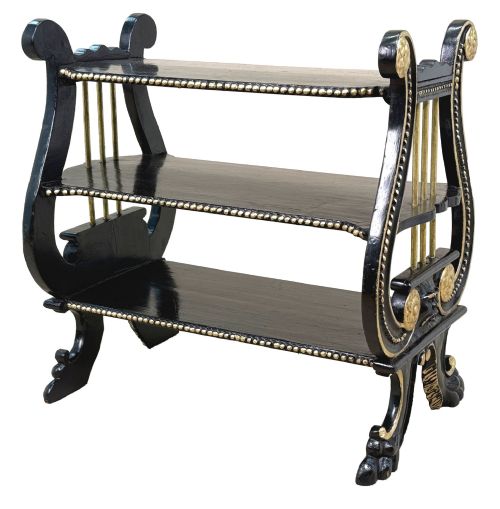
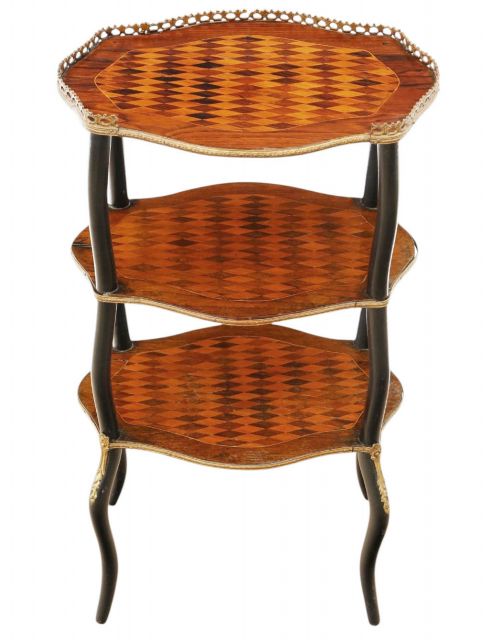
An antique ebonised tiered stand takes various forms across the nineteenth century, appearing as etageres, whatnots, dumb waiters, and multi-shelf display units.
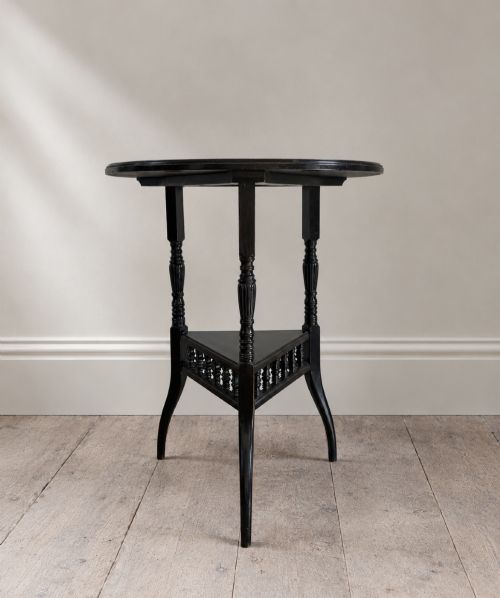
The versions met most frequently on this page date from the Victorian era and the Aesthetic Movement, reflecting a strong preference for stacked surfaces in domestic interiors.
These multi-level pieces serve as functional side tables or plant stands, providing distinct tiers for objects while maintaining a compact footprint on the floor.
Materials and Construction
Makers utilised ebonised wood and ebonised hardwood to simulate costly ebony, often combining these dark surfaces with contrasting timbers such as walnut, amboyna veneer, or mahogany.
Detailing on these stands frequently incorporates parcel gilding, brass mounts, and inlaid parquetry or marquetry to break up the sombre tone of the black finish.
Structural variety is evident in pieces utilising bamboo, woven reed, or porcelain alongside traditional turned supports and uprights.
Antique Ebonised Tiered Stand Retail Price Guide 2026
Typical asking prices for ebonised tiered stand among the pieces listed under this phrase on Sellingantiques today, from the lower quarter to the upper quarter. They describe what is for sale here now, not the wider market.
Evaluating the Pieces
Quality rests upon the crispness of the turning, the precision of the parquetry or marquetry inlay, and the stability of the multi-tiered joints.
Superior examples display careful timber selection, such as figured burr walnut or amboyna veneer, integrated harmoniously with the ebonised framework.
Liberty of London·Gordovil Spain
The Antique Ebonised Tiered Stand Glossary
- Ebonised
- Wood treated with a dark stain or finish to imitate the appearance of ebony. This technique gained immense popularity during the Victorian period for accentuating carved details.
- Etagere
- A piece of furniture consisting of a set of open shelves for displaying small objects. French in origin, these stands became staple items in nineteenth-century drawing rooms.
- Whatnot
- A multi-shelved open cabinet used for storing or displaying ornaments and books. It typically stands in a corner or against a wall.
- Dumb Waiter
- A tiered serving table designed to hold dishes or beverages without the need for constant attendants. Nineteenth-century examples often feature graduating circular or oval shelves.
- Parquetry
- Geometric mosaic woodwork used for ornamenting floors, furniture, and panels. It creates subtle shifts in tone across flat surfaces using contrasting veneers.
Antique Ebonised Tiered Stand: Frequently Asked Questions
What is an ebonised tiered stand?
An ebonised tiered stand is a multi-shelf piece of furniture finished in a dark stain to resemble ebony. These stands provide vertical display space for small decorative items.
They appear in various nineteenth-century styles, including Aesthetic Movement designs and Victorian etageres.
How were these stands used originally?
Original uses included holding porcelain, small plants, books, or tea services in nineteenth-century drawing rooms. The multiple tiers allowed homeowners to display collections in a compact area.
Some variations, such as dumb waiters, functioned near dining spaces to hold serving items.
How do I date an ebonised stand?
Dating relies on identifying stylistic markers such as Aesthetic Movement geometry, Victorian turning, or Edwardian inlay techniques. The underlying timbers and construction methods also provide clues to the decade of manufacture.
Comparing the shelf supports and joint types helps distinguish mid-nineteenth-century pieces from later twentieth-century reproductions.
Where should I place one at home?
These stands suit corners, hallways, or beside seating where vertical display is needed without taking up excessive floor space. Their dark finish contrasts well against lighter walls.
They work effectively for holding plants, lamps, or small collections of ceramics.