


Victorian Duchess Vanity Desk
A victorian duchess vanity desk offers graceful bedroom elegance with a pivoting mirror, and these walnut and mahogany pieces bring period refinement to your home.
Victorian Duchess Vanity Desk
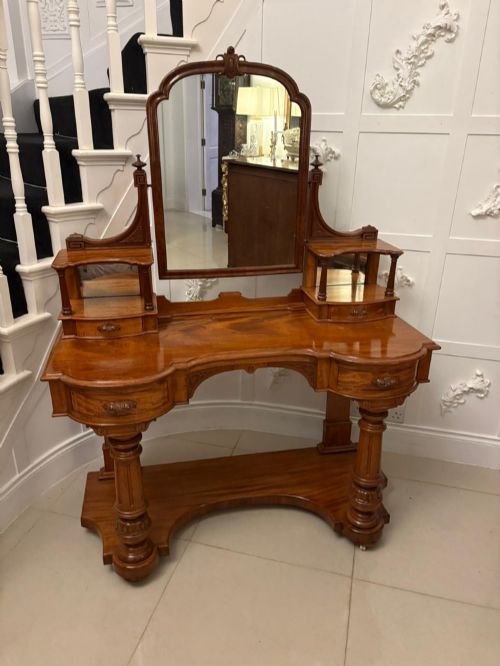
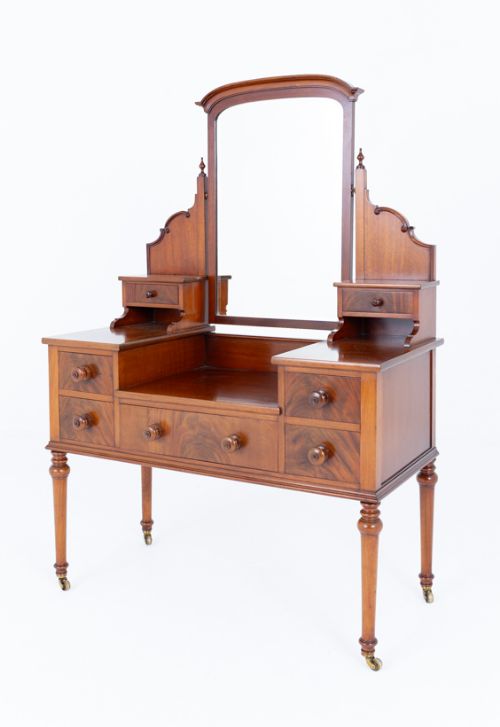
A victorian duchess vanity desk is a substantial nineteenth-century bedroom furnishing designed for grooming and display, typically featuring a large swing mirror supported by scrolling brackets above a tiered surface and small drawers. You will frequently encounter mahogany and burr walnut examples dating from the mid to late nineteenth century, reflecting the prevailing Victorian and Edwardian tastes for elaborate domestic comfort.
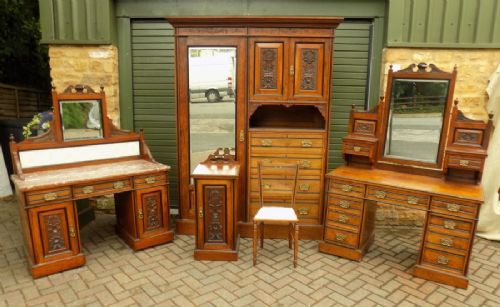
The form ranges from grand pedestal dressing tables with numerous drawers to distinctive demi-lune duchess shapes equipped with delicate superstructure compartments. Many pieces incorporate swing mirrors and small trinket drawers, while rarer variants show influences from the Gothic Revival, Aesthetic Movement or Art Nouveau periods.
How they were made
Cabinet makers utilised solid timbers such as mahogany, walnut and oak for the structural frames, often applying highly figured burr walnut veneers to the drawer fronts and upper tiers to create rich decorative patterns. Satinwood and satin birch appear in specific regional examples, whilst secondary timbers like pine are found in concealed areas such as drawer linings.
Surface ornamentation relied on traditional craftsmanship, including hand-carved scrolling details, marquetry inlay and original stencilled decoration. Swing mirrors were mounted on brass hardware, allowing the glass to tilt independently above the main vanity surface.
Listings feature pieces spanning the Victorian and Edwardian eras, predominantly constructed from mahogany, walnut, burr walnut and satinwood.
What varies in quality
The standard of a victorian duchess vanity desk depends heavily on the selection of timber veneers and the crispness of the carved wooden details. Finer examples display meticulously matched burr walnut or satinwood grains across the entire facade, alongside robust internal drawer construction using traditional dovetail joints.
John Taylor of Edinburgh
The Victorian Duchess Vanity Desk Glossary
- Duchess dressing table
- A large nineteenth-century vanity table featuring a central swing mirror attached to a decorative superstructure above small trinket drawers. This form was a staple of Victorian and Edwardian grand bedrooms.
- Burr walnut
- A highly prized timber veneer harvested from the wart-like growths on walnut trees, yielding intricate swirling grain patterns. Cabinet makers utilised it on principal surfaces for decorative impact.
- Demi-lune
- A half-moon or semicircular shape often utilised for the tabletop and base configuration of specific dressing table designs. This profile softens the rectangular geometry typical of standard bedroom furniture.
- Swing mirror
- A looking glass mounted on vertical pivots within a frame, allowing the user to adjust the angle of reflection. These mirrors form the central architectural feature of most Victorian dressing tables.
- Pedestal dressing table
- A heavy form featuring banks of drawers flanking a central kneehole space, offering substantial storage beneath the main surface. These pieces often date from the later Victorian period.
Victorian Duchess Vanity Desk: Frequently Asked Questions
What is a duchess dressing table?
A duchess dressing table is a nineteenth-century vanity desk distinguished by a large, adjustable mirror mounted on an ornate superstructure above a tiered surface and smaller drawers. These furnishings served as both practical grooming stations and decorative centrepieces in Victorian bedrooms.
The design prioritised elegance, frequently incorporating burr walnut veneers, curved demi-lune shapes and carved mahogany details. They represent the height of Victorian domestic comfort and craftsmanship.
How do I date a Victorian dressing table?
Dating these pieces involves examining the timber species, construction methods and stylistic markers recorded in the evidence from the mid to late nineteenth century. Early examples from 1850 often feature solid mahogany or plain walnut, whilst pieces from the 1880s and 1890s increasingly display elaborate burr walnut veneers and varied artistic influences.
Secondary woods, drawer dovetailing and the presence of specific decorative movements like the Gothic Revival or Aesthetic style also help narrow down the decade of manufacture. Consulting the listed periods provides a reliable chronological benchmark.
Where should I place a vanity desk?
These dressing tables suit bedrooms or dressing rooms where natural light can illuminate the pivoting mirror surface effectively. Positioning them near a window enhances the reflection and highlights the figured mahogany or burr walnut grains.
Ensure adequate clearance around the piece for the swing mirror to tilt and for the user to sit comfortably at the centre or kneehole space. Their substantial proportions make them ideal focal points against principal bedroom walls.
Are these desks suitable for daily use?
Victorian vanity desks remain entirely functional for contemporary use, offering generous surface areas and multiple drawers for storage. The sturdy construction of nineteenth-century mahogany and walnut ensures they withstand everyday domestic requirements.
Care should be taken to protect the polished wood surfaces from moisture and direct heat. Regular dusting and occasional wax application maintain the historical finish of the timber.