
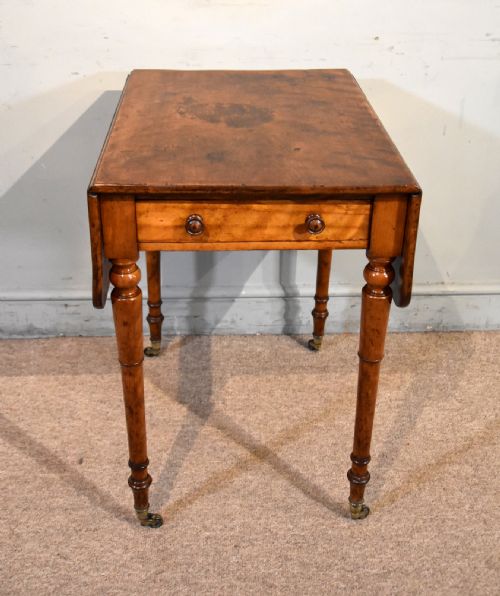
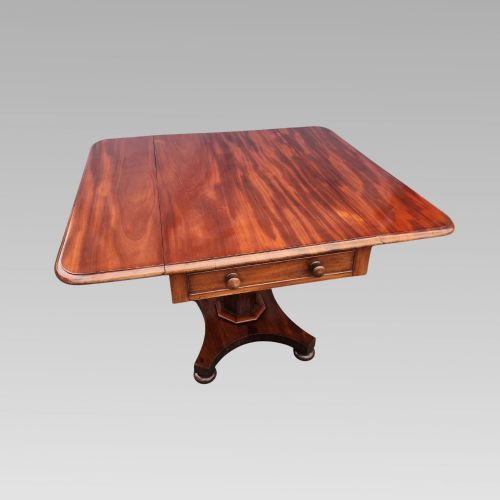


Victorian Drop Flap Table
A victorian drop flap table is a versatile folding piece that saves space while offering surface area when opened.
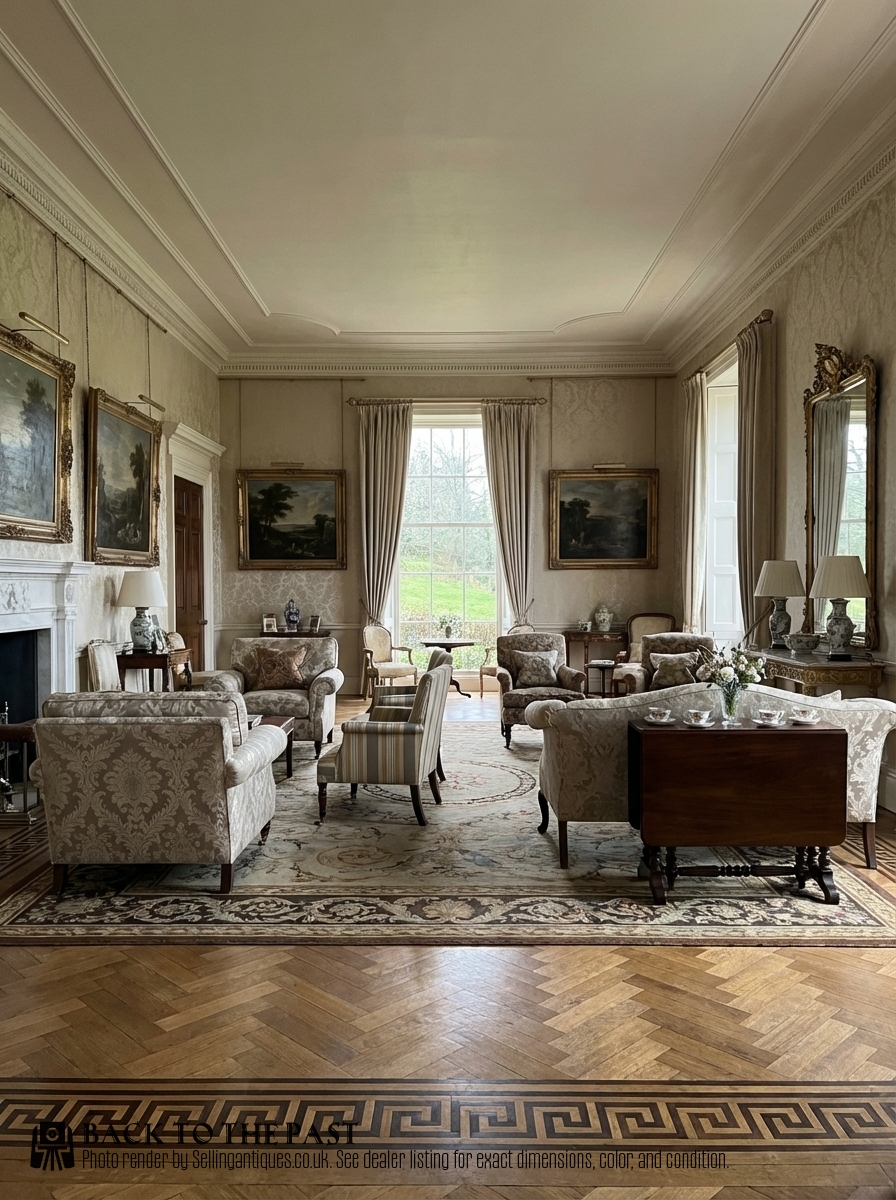
Victorian Drop Flap Table
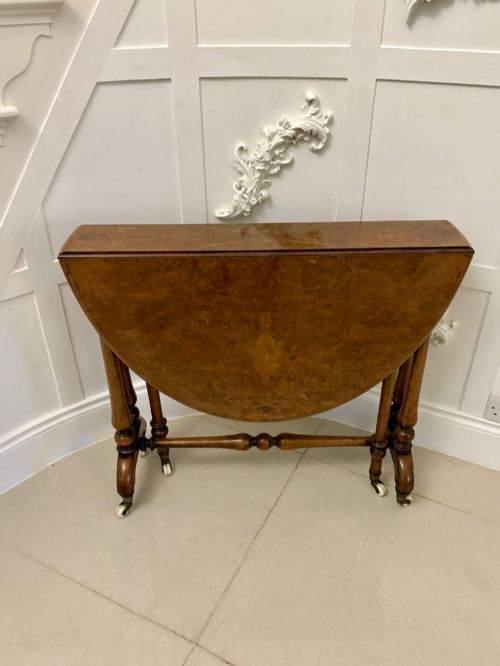
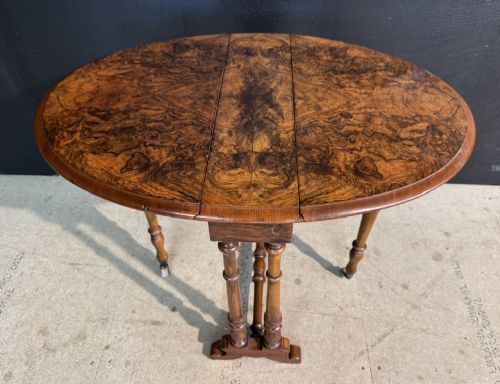
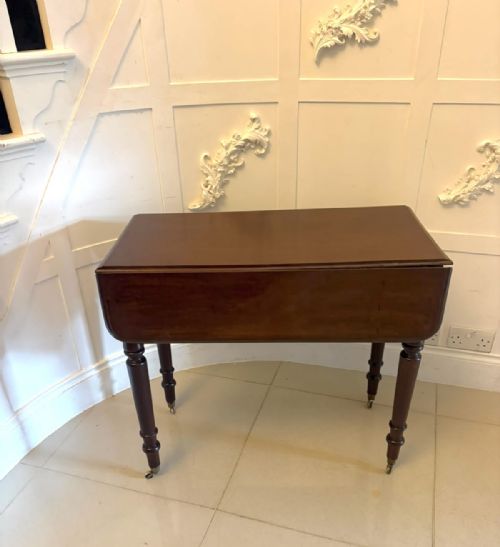
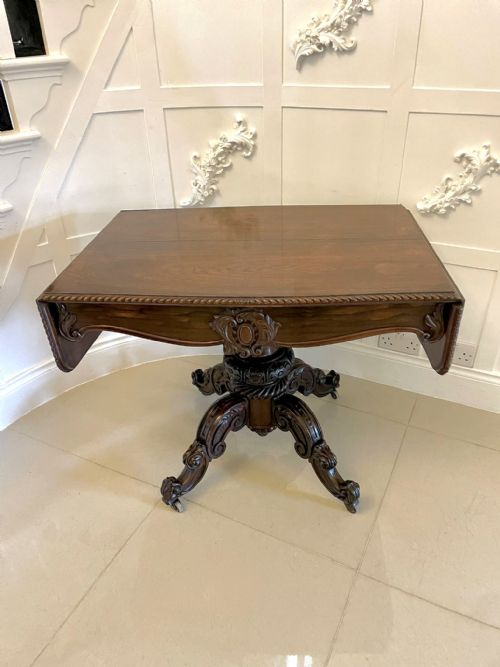
A victorian drop flap table encompasses several functional forms built during the nineteenth century, including Sutherland tables, Pembroke tables, and sofa tables. These pieces share a folding flap mechanism supported by hinged leaves or swing legs.
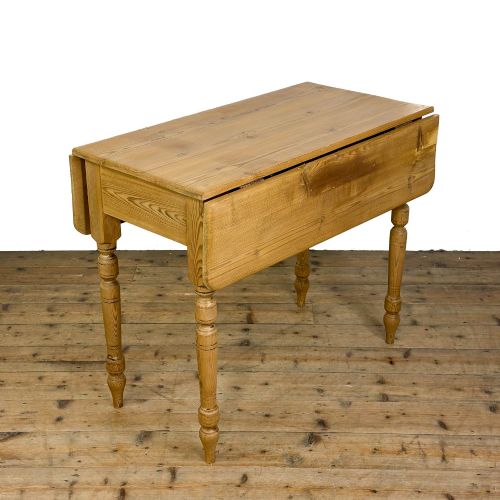
Mahogany and pine dominate the domestic examples, while burr walnut and rosewood appear on more formal drawing room pieces. Buyers encounter various scales ranging from compact occasional tables to larger kitchen and dining versions.
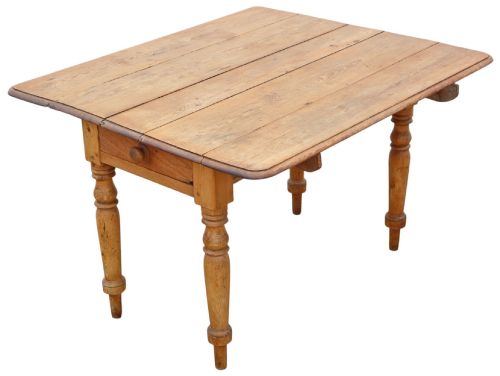
Regional and country workshops produced robust pine and elm variants for everyday utility, whereas cabinet makers constructed refined rosewood and satin birch designs for formal reception rooms.
What Varies In Quality
The choice of timber grain and veneer selection dictates the visual appeal of a piece, with figured burr walnut and flame mahogany marking the upper tiers. Simpler pine and elm items rely on solid construction and original painted surfaces rather than exotic wood.
Joinery execution, such as the snug fit of drop leaves when raised and the smooth operation of drawers, separates standard production from superior workshop output. Original brass castors and intact hinges preserve the integrity of the design.
Victorian Drop Flap Table Retail Price Guide 2026
Typical asking prices for victorian drop flap table among the pieces listed under this phrase on Sellingantiques today, from the lower quarter to the upper quarter. They describe what is for sale here now, not the wider market.
One recorded games table arrived complete with its original gaming pieces still tucked inside.
Johnstone and Jeanes·Gillow·Liberty and Co.
The Victorian Drop Flap Table Glossary
- Sutherland table
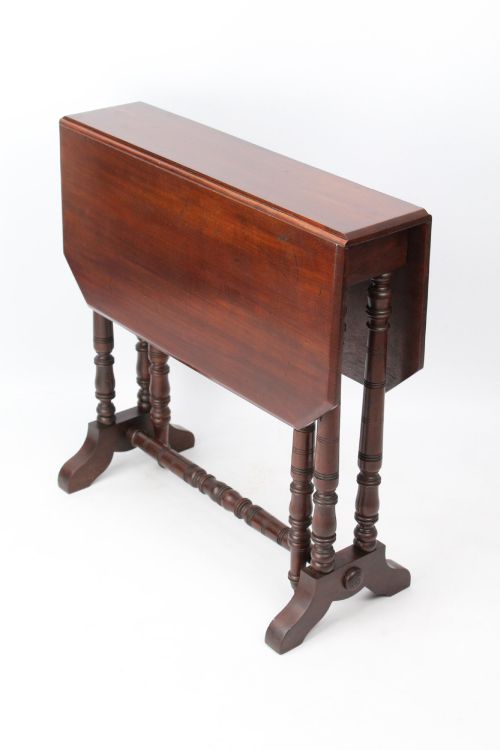
- A narrow table with exceptionally slender drop leaves that fold almost vertically down to the sides. This form became popular during the nineteenth century as an easily stored occasional table.
- Pembroke table
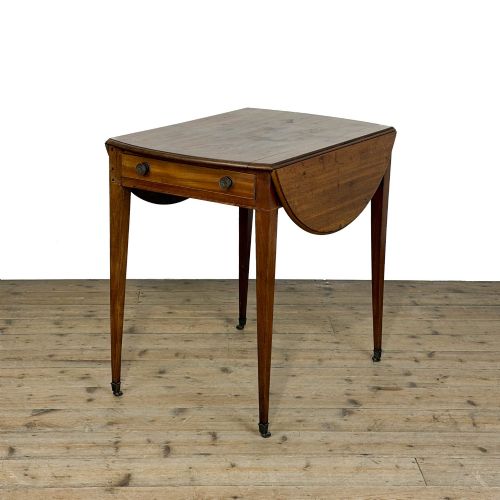
- A small table featuring two hinged drop flaps on opposite sides and usually a single drawer. It was designed for multiple domestic uses in various rooms.
- Sofa table
- A rectangular table traditionally placed in front of a sofa, fitted with drop leaves and often two small drawers. The underframe typically includes trestle supports or twin pillars.
- Drop flap
- A hinged section of a tabletop that can be lowered or raised to alter the surface area. This mechanism allows the furniture to fit into smaller spaces when not in use.
- Burr walnut
- A highly prized wood grain taken from the growth excrescences of walnut trees. It exhibits intricate swirling patterns used for decorative veneer on tabletops.
Victorian Drop Flap Table: Frequently Asked Questions
What is a Sutherland table?
A Sutherland table is a specific type of drop leaf furniture featuring very narrow flaps that hang down almost vertically. They were designed to fold into a compact footprint when not required for tea or writing.
These pieces often sit on castors and incorporate distinctive gated wooden supports beneath the leaves to hold them firm when raised.
How do Pembroke tables function?
Pembroke tables provide a flexible surface through two hinged leaves attached to a central fixed top. They frequently include a single drawer and four legs joined by stretchers.
Owners typically deployed them as writing desks or breakfast tables, pulling them out when extra surface area was needed.
Where were drop flap tables used?
These tables served multiple functions across different rooms in nineteenth-century homes, from country kitchens to formal drawing rooms. Smaller versions functioned as lamp or games tables, while larger ones acted as dining or work tables.
The folding mechanism allowed households to adjust room layouts quickly depending on the occasion.
How do I identify a Victorian piece?
Nineteenth-century construction methods often involve solid mahogany, walnut, or pine, combined with hand-cut dovetails in drawers. Brass hardware and turned wooden supports also point to this era.
Regional variations span from rustic elm and painted pine country pieces to finely inlaid rosewood town furniture.