


Victorian Dome Clock
A victorian dome clock brings together precision mechanical movement and clear blown glass to protect and display the work inside.

Victorian Dome Clock
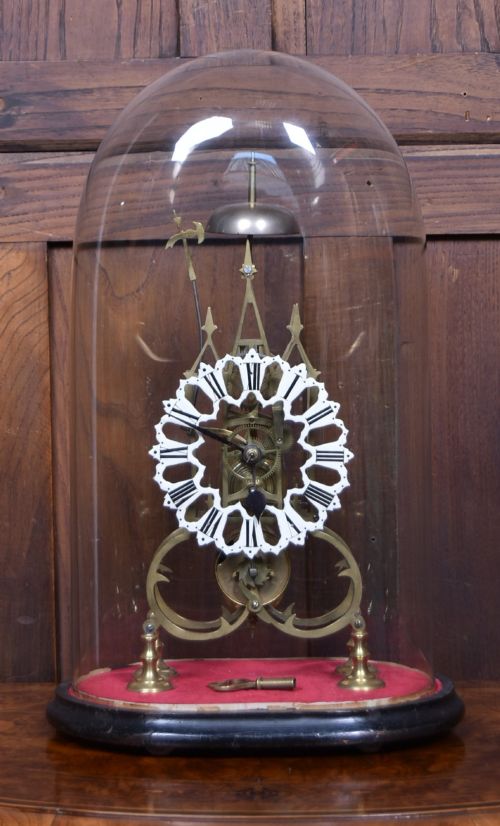
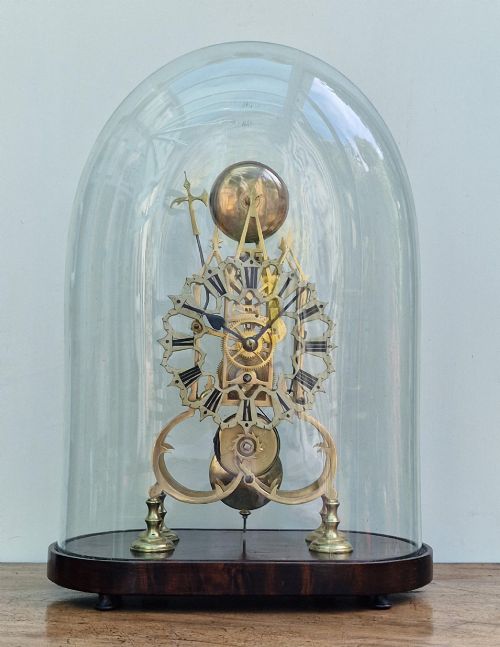
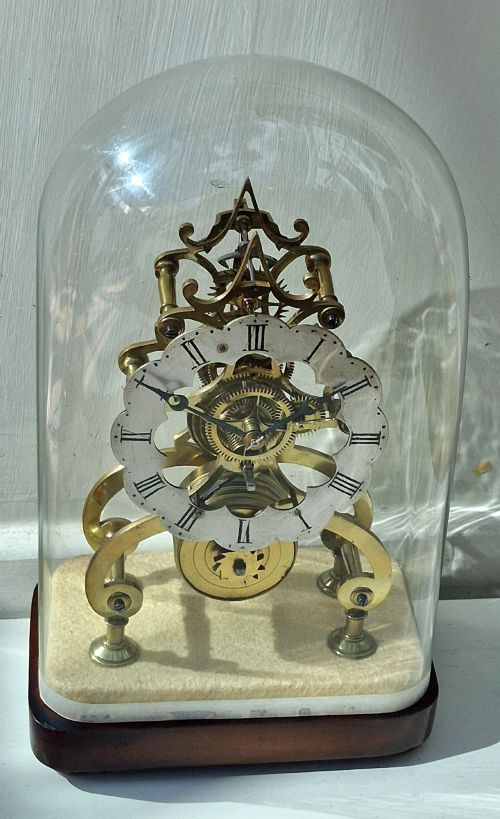
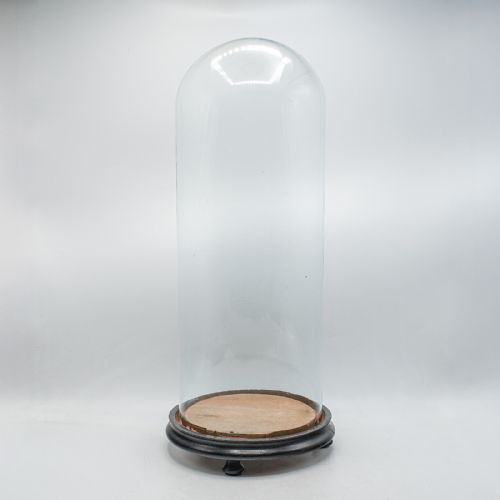
When searching for a victorian dome clock, buyers encounter timepieces enclosed beneath clear blown glass covers designed to shield delicate brass movements from dust. These objects combine the function of a mantel clock with the protective display typical of nineteenth-century showcases.
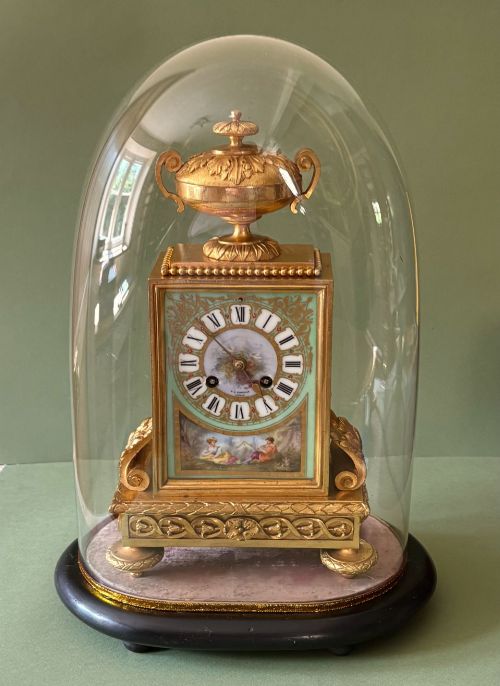
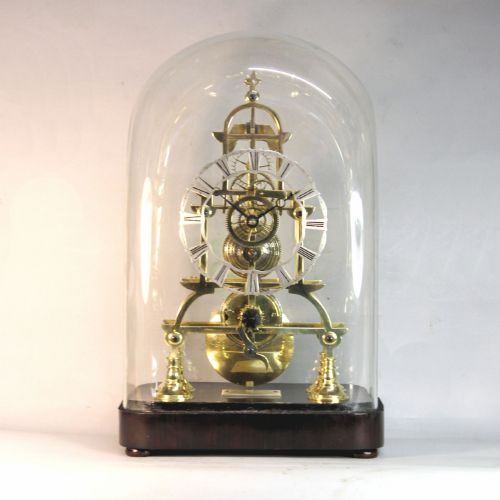
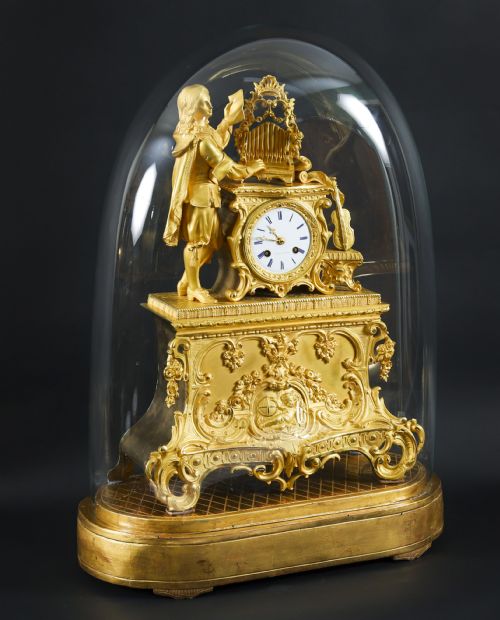
The selections span English fusee and skeleton movements alongside French ormolu and porcelain mantel pieces, frequently mounted on wooden bases lined with velvet. Many examples present architectural forms such as cathedral styles or portico designs sitting squarely in the Victorian and Edwardian periods.
How they were made
Makers constructed the glass covers by hand-blowing molten material into large domes and ovoid shapes, setting them onto turned wooden or ebonised bases. The internal clocks utilise brass wheels, iron arbors, and delicate escapements.
Outer surfaces often incorporate cast ormolu, hand-painted porcelain panels, and carved marble or mahogany cases. Velvet pads or miniature brackets support the timepiece safely beneath its transparent cover.
The listings show materials spanning brass, ebonised wood, marble, porcelain, and ormolu, reflecting both English and French manufacture from the Victorian and Edwardian periods.
What varies in quality
Superior examples show exceptional crispness in the brass wheelwork and engraving, alongside heavy, evenly blown glass free from major distortion. Maker attribution and original matched components elevate the standing of a piece.
Finer clocks employ fusee movements with six-spoke wheel work and passing strikes, housed on stable bases of marble or fine wood. Lesser specimens exhibit simpler time-only movements and later replacement glass.
Richard Winter of Chieveley·Thwaites of London·Leroy Paris·Allen Colyer·Jean Baptiste Delettrez
The Victorian Dome Clock Glossary
- Fusee
- A conical pulley used in mechanical clocks to maintain even power as the mainspring unwinds. This mechanism helps the clock maintain accurate time throughout its running cycle.
- Ormolu
- Gilded bronze or brass applied to clock cases and decorative mounts. The technique creates a rich golden finish characteristic of mid-nineteenth-century French and English design.
- Skeleton clock
- A timepiece with an open framework designed to display the gear train and escapement. These pieces expose the internal mechanics to view from every angle.
- Cloche
- A bell-shaped glass cover used to protect delicate items like clocks and taxidermy. The term derives from the French word for bell.
- Portico clock
- A mantel clock styled with architectural columns supporting the movement above. This classical layout draws on ancient Greek and Roman building forms.
Victorian Dome Clock: Frequently Asked Questions
What is a fusee movement?
A fusee movement uses a conical drum and a cord or chain to equalise the pulling force of the mainspring as it loses tension. This ensures the clock transmits consistent power to the escapement for better timekeeping.
Such mechanisms represent higher standards of clockmaking found in English skeleton clocks and better quality mantel pieces from the nineteenth century.
Are the glass domes original?
Many surviving pieces retain their original hand-blown glass covers, identifiable by subtle waviness, small bubbles, and minor thickness variations. These early domes fit their original wooden bases precisely.
Replacement glass often appears clearer and more uniform due to later manufacturing methods. Examining the base seating helps determine if the dome has belonged to the clock since creation.
How do I care for these clocks?
Keep the glass dome in place to protect the delicate brass mechanics from dust and airborne particles. Lift the cover carefully using both hands when winding or setting the time.
Position the clock away from direct sunlight and temperature fluctuations to protect the wood, velvet, and delicate metals inside.
How do French and English styles differ?
French examples frequently incorporate gilt ormolu, painted porcelain panels, and elaborate revival styles such as Rococo or Empire. They often focus on decorative richness alongside timekeeping.
English pieces tend to feature exposed skeleton movements or architectural forms like cathedral and portico designs. The focus remains on precision gear trains and mechanical transparency.