
Victorian Document Cabinet
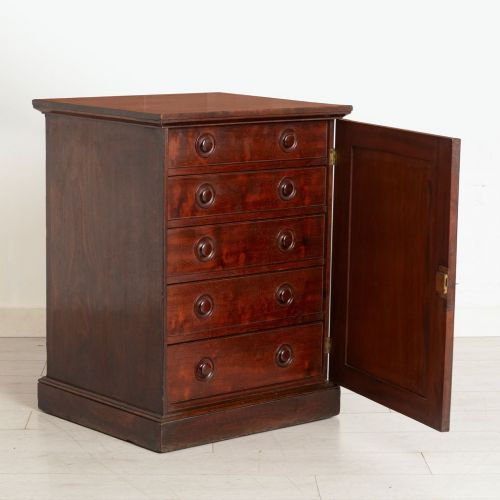
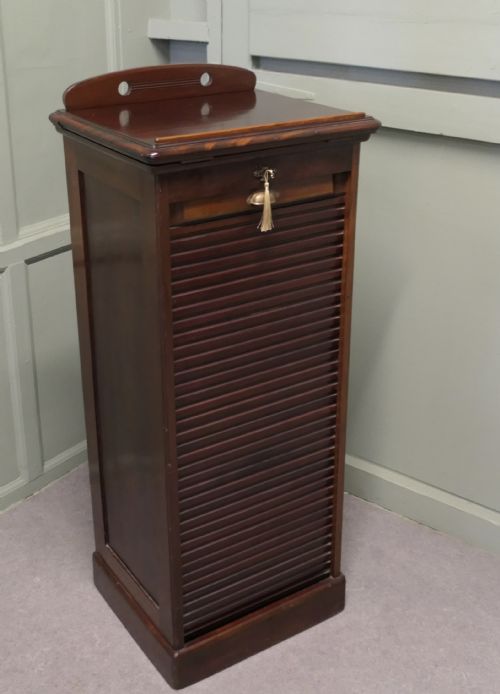
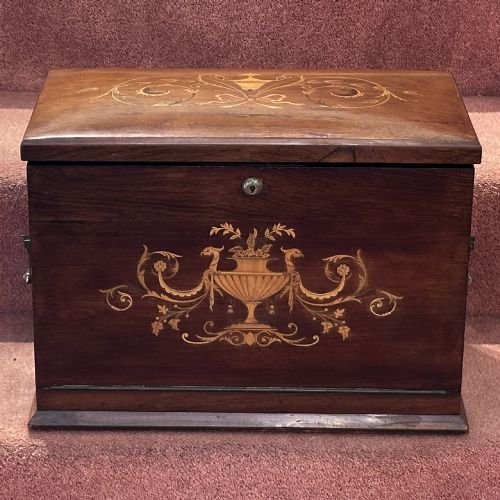
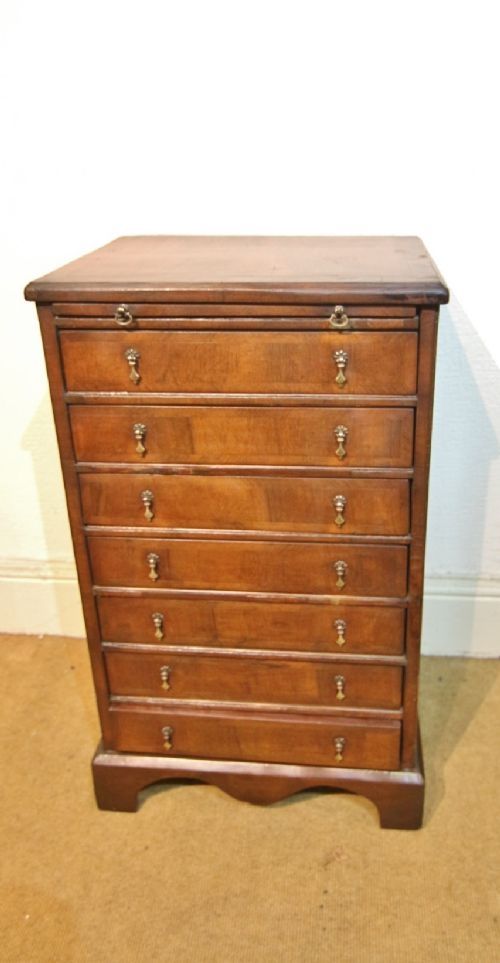
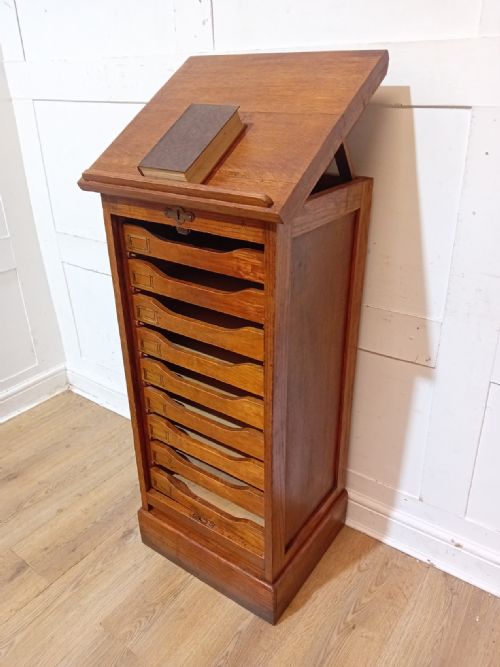
A victorian document cabinet organises letters and papers with fitted drawers, tambour fronts and brass fittings.

Victorian Document Cabinet
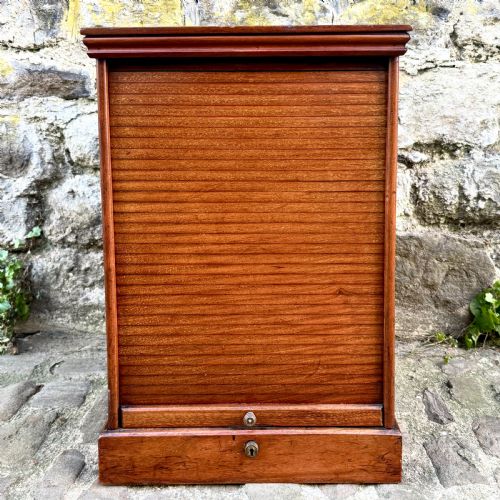
A victorian document cabinet serves to keep correspondence, ledgers and papers in order through multi-drawer banks, tambour fronts and hinged stationery boxes. The pieces gathered under this heading span the nineteenth century into the early twentieth, originating from British workshops as well as continental and Japanese makers.
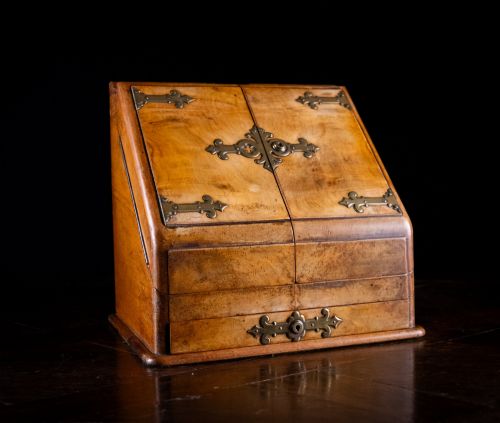
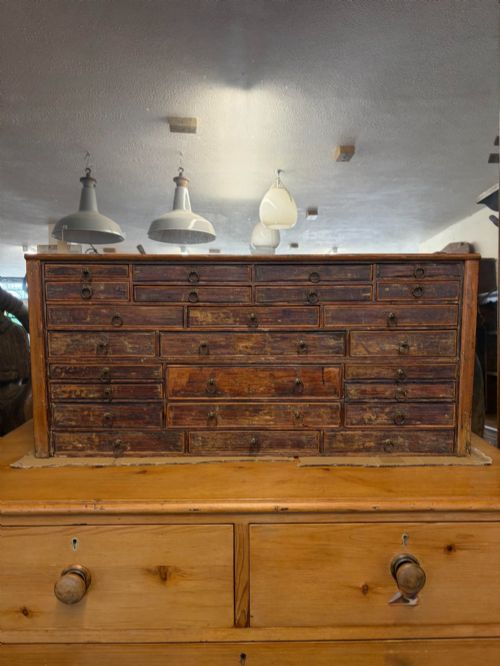
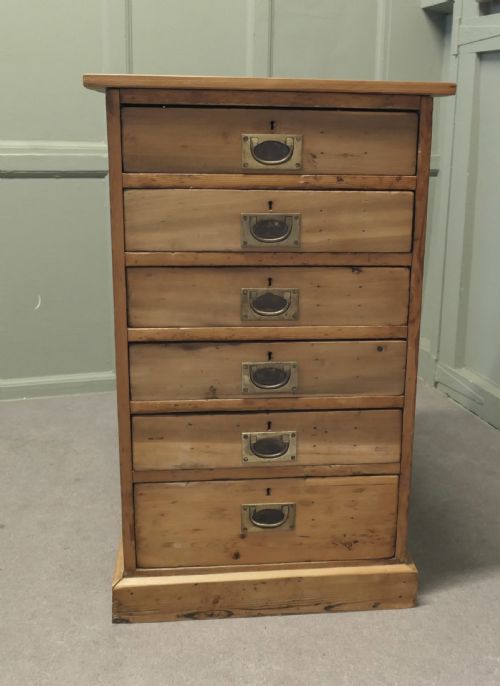
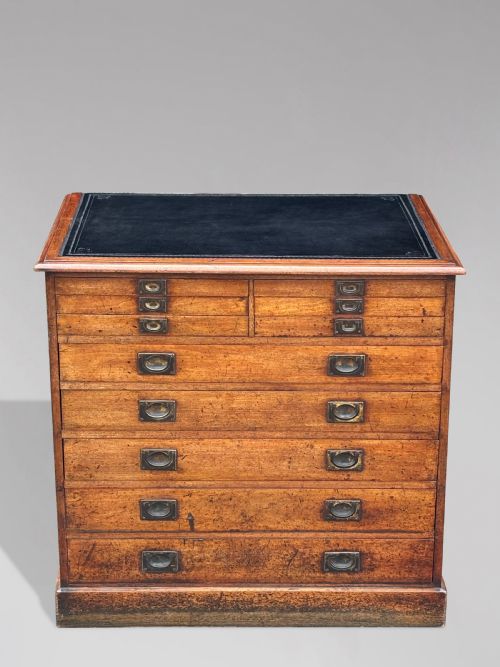
Mahogany, oak and walnut feature frequently among the forms, constructed as tabletop stationery boxes, pedestal filing units and multi-drawer chest formats. Examples range from Campaign items with brass drop handles to Arts and Crafts designs in plain pine and oak.
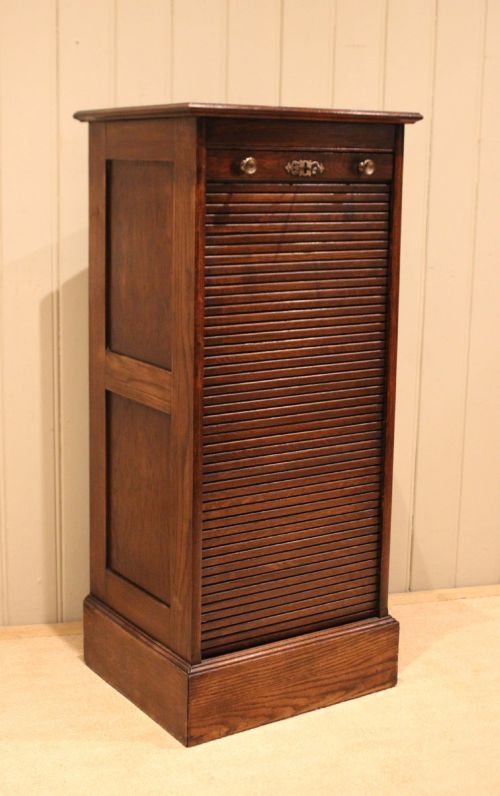
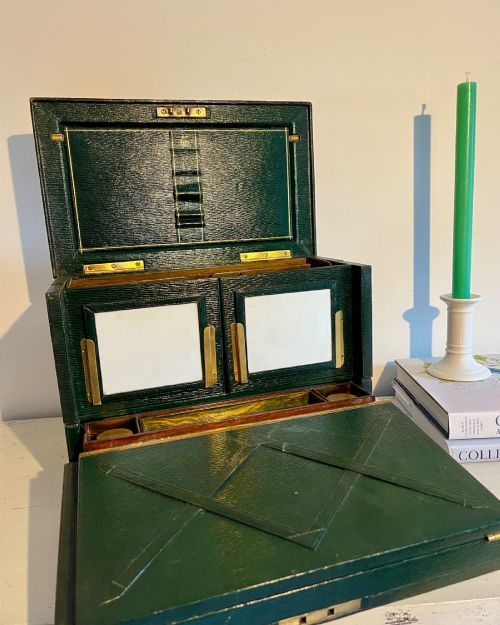
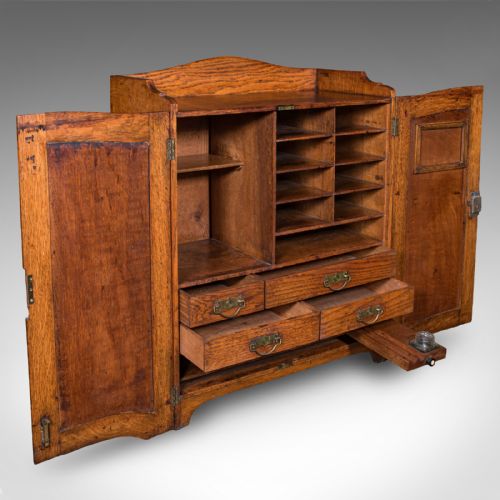
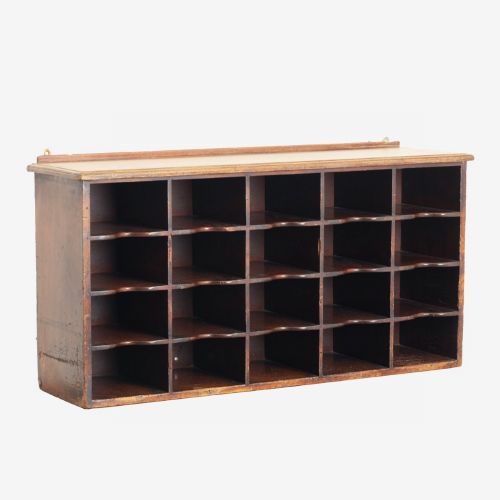
The version most commonly met on this page is the upright mahogany or oak filing cabinet from the late nineteenth century, equipped with numerous shallow drawers or pigeon holes. Buyers also encounter desktop writing boxes and stationary cabinets fitted with leather surfaces and brass locking mechanisms.
Materials and construction methods
Cabinet makers utilised dense hardwoods like mahogany, walnut and oak for the main carcase construction, often pairing them with secondary pine linings and satinwood or rosewood veneers. Brass hardware including campaign handles, escutcheons and hinges provided robust structural reinforcement and secure fastening.
Surface finishing relied upon French polish, wax or oiled treatments that highlighted the natural grain of the timber without obscuring its age. Interiors frequently incorporated leather writing skivers, velvet linings and letter partitions constructed from thin softwood timbers.
Patent mechanisms such as tambour slats and specialised letter-filing systems appeared towards the end of the period, requiring precise grooving and internal runner tracks to function smoothly.
Victorian Document Cabinet Retail Price Guide 2026
Typical asking prices for victorian document cabinet among the pieces listed under this phrase on Sellingantiques today, from the lower quarter to the upper quarter. They describe what is for sale here now, not the wider market.
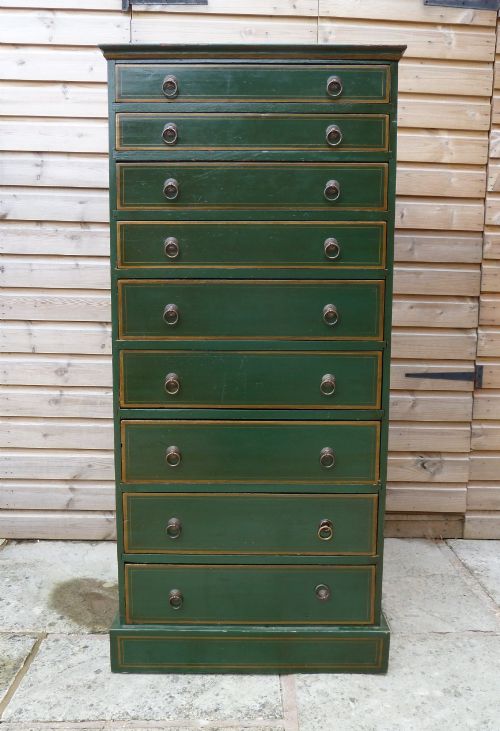
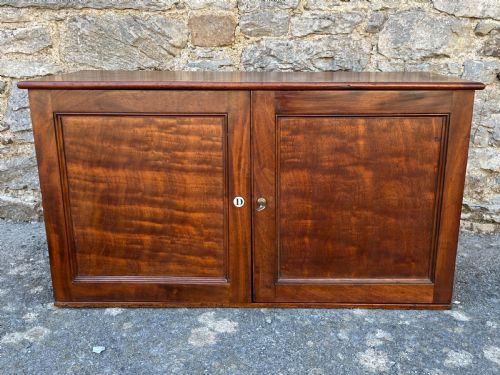
An estate gamekeeper's cabinet shares space with a musician's cabinet and a merchant's bank of twenty-five drawers.
Judging quality and craftsmanship
Quality rests upon the selection of timber and the precision of the joinery, particularly in the dovetailing of drawer boxes and the fitting of back panels. Superior pieces display matched grain patterns across the primary surfaces and retain their original working brass locks and keys.
Finer examples demonstrate meticulous attention to internal details such as tambour mechanisms that glide evenly and pigeon holes finished with polished edgings. Lesser items rely on simpler softwood construction and replacement hardware that disrupts the period integrity.
Gillows·Maple and Co·Houghton and Gunn
The Victorian Document Cabinet Glossary
- Tambour
- A flexible sliding shutter formed of narrow vertical strips of wood glued to a canvas backing. This mechanism allows the front of a cabinet to curve around a track and conceal the drawers within.
- Escutcheon
- A flat plate of brass or other metal surrounding a keyhole. It protects the surrounding wood from wear and adds a decorative accent to cabinet doors and drawer fronts.
- Campaign
- A style of portable furniture designed for travel and military use, characterised by recessed brass handles, flush corners and sectional construction.
- Pigeon hole
- An open compartment within a desk or cabinet used for sorting letters and documents. These compartments are typically arranged in stacked tiers above a writing surface.
- Skiver
- A strip of split sheepskin leather applied to the top of a desk or the interior of a writing box. It provides a smooth surface for writing and handling paper.
Victorian Document Cabinet: Frequently Asked Questions
What is a tambour front cabinet?
A tambour front cabinet uses a sliding door made from narrow wooden slats attached to fabric, allowing it to curve around a track.
This design conceals the interior filing drawers while requiring minimal clearance space in front of the unit.
How were campaign cabinets used?
Campaign cabinets were built in sections with recessed brass hardware to withstand frequent transport by officers and travellers.
Their modular construction allowed documents to remain packed securely during transit.
Where should I place a document cabinet?
These cabinets suit studies, offices and living rooms where they function as practical storage for papers, letters and stationery.
Keep them away from direct heat sources and strong sunlight to protect the timber and leather surfaces.
How do I date a nineteenth-century cabinet?
Dating relies on observing construction methods, timber choices, handle styles and patent mechanisms recorded in the piece.
Later pieces from the end of the century often incorporate mechanical filing systems and lighter oak timbers.