


Roll Front File Cabinet
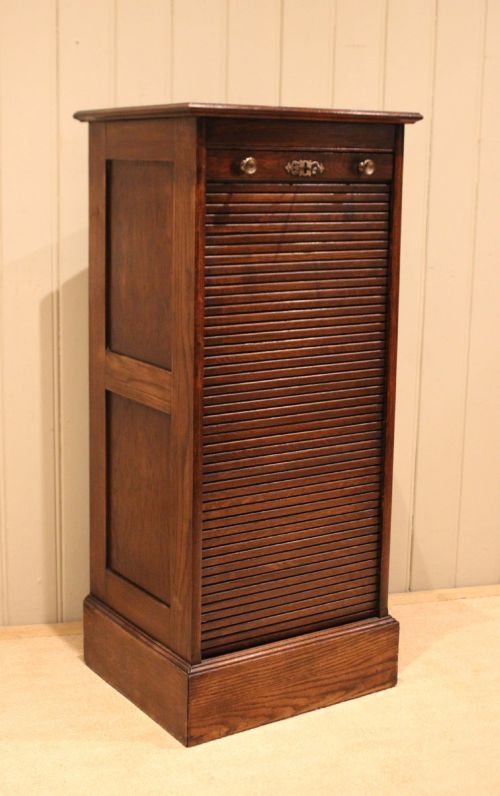
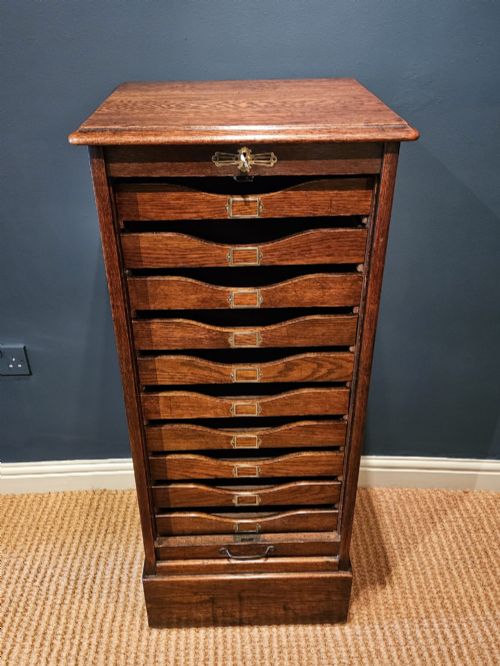
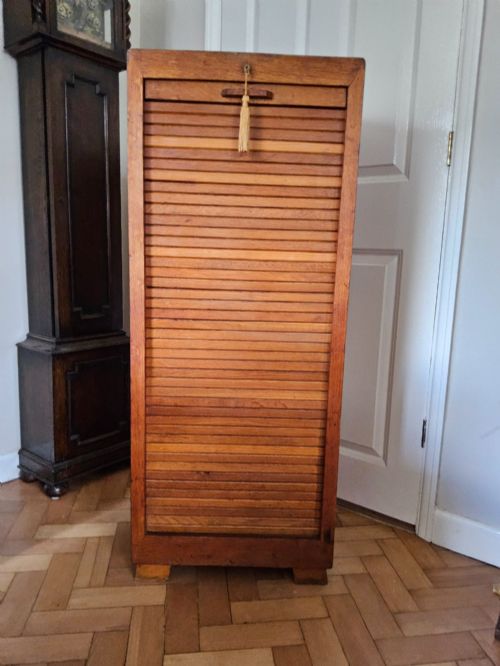
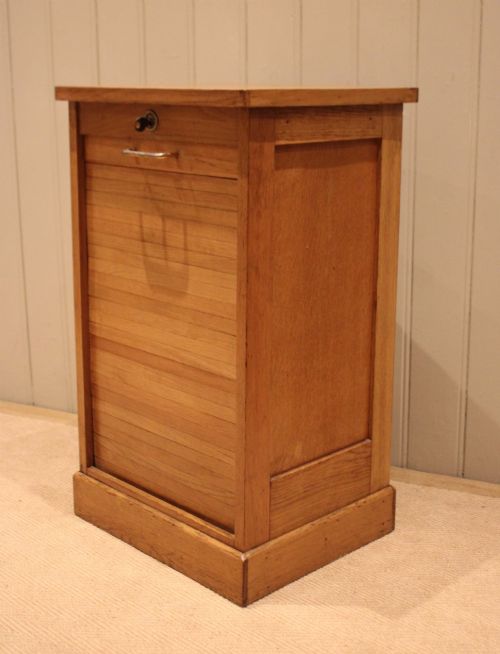
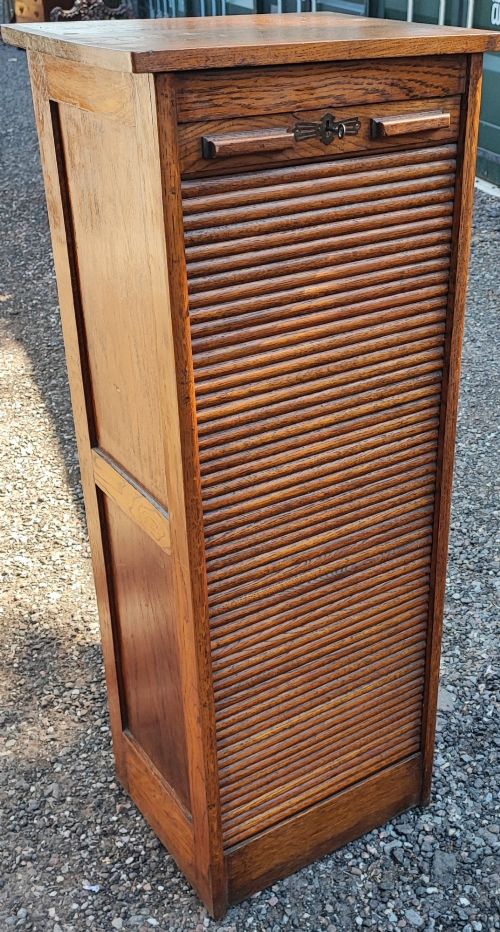
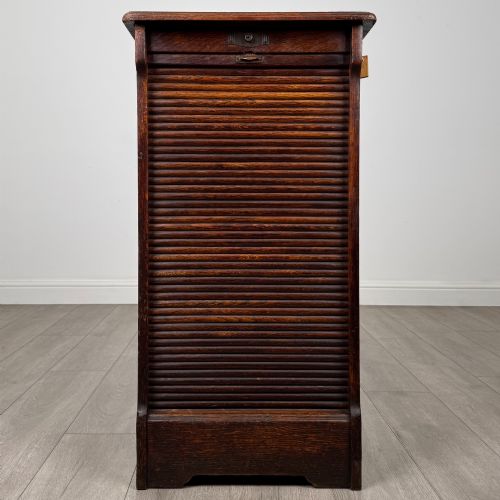
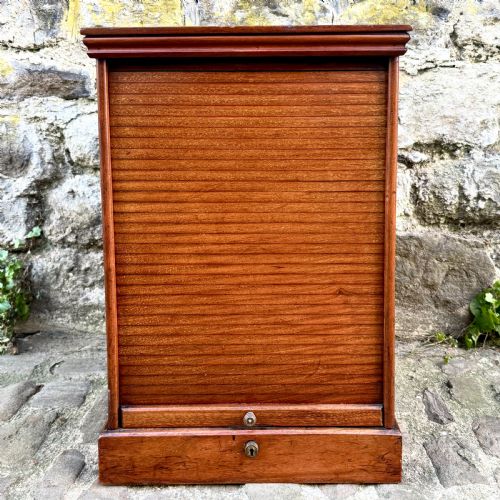
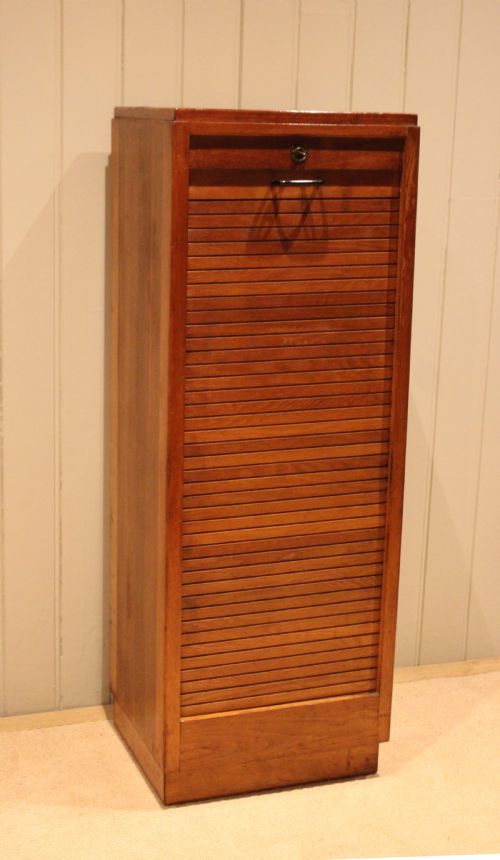
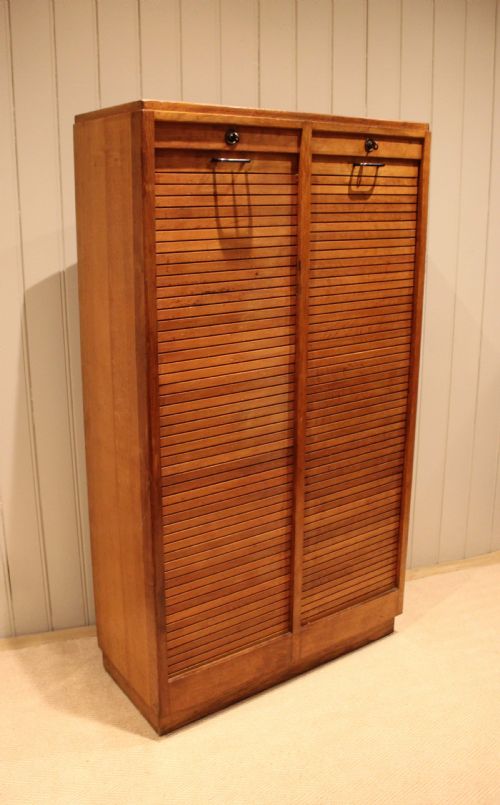
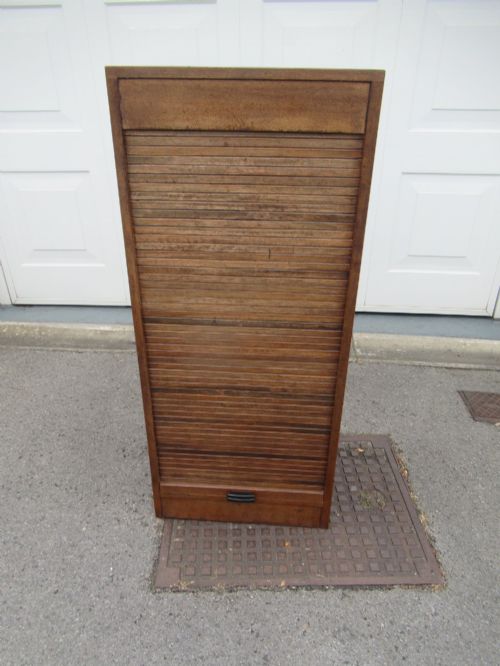
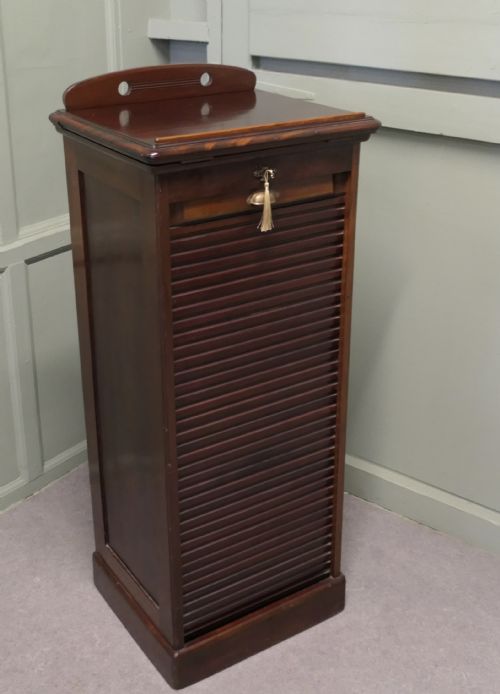
These roll front file cabinet examples combine practical paper storage with sliding slatted wooden doors, offering a compact office solution.
Roll Front File Cabinet
A roll front file cabinet is designed to house documents securely behind a flexible curtain of wooden slats known as a tambour. Buyers browsing this page encounter pieces originating from the late nineteenth century through to the middle of the twentieth century, with Edwardian and nineteen-thirties examples appearing frequently.
The prevailing forms span single and double door office cabinets alongside pedestal variations constructed for professional workspaces. Oak dominates the selection, accompanied by mahogany, rosewood, pine, and metal elements.
Stylistic influences range across Victorian, Edwardian, French Utility, and Art Deco periods. These items served administrative functions in period offices and remain practical for modern studies.
How They Were Made
Cabinet makers constructed the primary carcases of these pieces using solid hardwoods like oak, mahogany, and rosewood, alongside pine and occasional metal reinforcement. The signature flexible doors comprise narrow wooden strips glued to canvas or fabric backings, allowing the tambour to slide smoothly within concealed side tracks.
What Varies in Quality
Superior examples display dense, well-figured timber selections such as quarter-sawn oak or rich rosewood, matched with robust internal drawer arrangements. The precision of the sliding mechanism separates finer pieces from simpler utilitarian office furniture.
Construction refinement shows in the close tolerances of the individual slats and the smooth operation of the tambour track without binding or sagging.
The Roll Front File Cabinet Glossary
- Tambour
- A flexible door composed of narrow wooden slats attached to a fabric backing. This allows the closure to curve around tracks and slide open out of sight.
- Quarter-sawn
- A method of milling timber that produces a distinctive decorative grain pattern, often seen in high-grade oak office furniture.
- Pedestal
- A foundational cabinet structure that supports a desk or stands independently as a vertical storage unit.
- French Utility
- A functional design movement originating in France during the mid-twentieth century, prioritising clean lines and efficient material use.
Roll Front File Cabinet: Frequently Asked Questions
How do tambour doors operate?
The individual wooden slats are secured to a flexible canvas backing that runs within grooved tracks inside the cabinet carcase. This design allows the door to slide open and vanish into the sides or back of the unit without swinging outward.
Maintaining smooth movement requires occasional cleaning of the tracks and preservation of the timber against humidity changes.
What woods were commonly used?
Oak is the predominant timber found in these office cabinets, appearing in both dark and light finishes across various periods. Mahogany, rosewood, and pine also feature in specific regional or stylistic variations.
Metal and steel elements occasionally supplement the wooden construction in mid-twentieth-century designs.
Where were these cabinets placed?
These units served primarily in professional offices, legal practices, and administrative reception areas during the late nineteenth and early twentieth centuries. Their compact footprints made them ideal for storing correspondence and ledgers efficiently.
Today, they adapt readily to residential studies and home offices for document organisation.