



Victorian Roll Front Cabinet
A victorian roll front cabinet brings ingenious nineteenth-century mechanisms and rich timber surfaces together to keep papers and correspondence neatly concealed.
Victorian Roll Front Cabinet
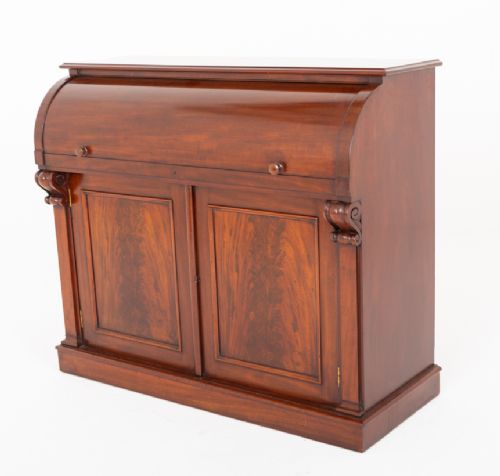
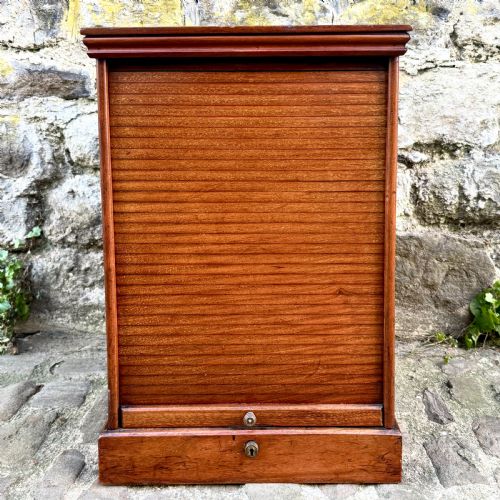
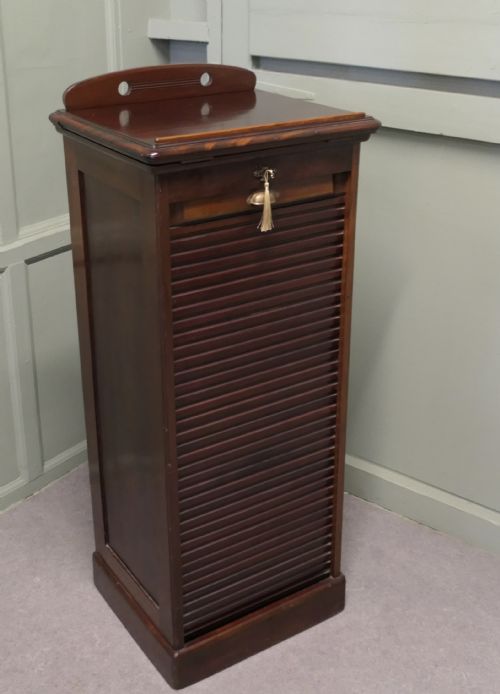
A victorian roll front cabinet is primarily encountered in forms such as filing cabinets, cylinder desks, bureau bookcases, and stationery cabinets dating across the nineteenth century. These pieces employ flexible tambour or cylinder shutters that slide smoothly to reveal fitted interiors of pigeonholes, drawers, and writing surfaces.
The selection ranges from compact oak and mahogany stationery boxes to larger pedestal filing units and bureau bookcases constructed during the Victorian, late Victorian, and Edwardian periods. Cabinets from these eras prioritize functional storage without sacrificing the formal presence expected in period interiors.
Makers utilised various timber species, notably mahogany, oak, rosewood, and satinwood, often enhanced with flame mahogany veneers or brass hardware. The resulting forms serve both domestic studies and professional reception spaces with equal utility.
How they were made
Cabinet makers constructed the flexible tambour fronts using narrow slats of solid timber, typically oak or mahogany, glued to a robust canvas or fabric backing. This traditional method allows the curved shutter to glide along recessed tracks within the cabinet frame.
Surfaces frequently feature carefully selected flame mahogany veneers or figured satinwood laid over sturdy secondary timbers. Master craftsmen incorporated brass handles, locks, and adjustable internal mechanisms to complete each functional unit.
Victorian Roll Front Cabinet Retail Price Guide 2026
Typical asking prices for victorian roll front cabinet among the pieces listed under this phrase on Sellingantiques today, from the lower quarter to the upper quarter. They describe what is for sale here now, not the wider market.
Current listings demonstrate a notable preference for mahogany and oak across nineteenth-century cylinder desks and filing cabinets.
What varies in quality
The distinction between ordinary and superior examples lies largely in the precision of the tambour mechanism and the choice of primary timbers. Smooth operation of the sliding slats without binding indicates meticulous initial joinery.
Finer pieces display sophisticated internal fittings, such as secret drawers, pigeonholes, and fine marquetry inlay, alongside superior timber figuring. The integrity of the secondary woods and the quality of the brass fittings further elevate the standing of a cabinet.
Edwards & Roberts
The Victorian Roll Front Cabinet Glossary
- Tambour
- A flexible shutter formed of narrow wooden slats glued to canvas backing. This mechanism slides along concealed grooves to enclose the front of a desk or cabinet.
- Cylinder desk
- A writing desk featuring a curved, quarter-cylinder lid that rolls backward into the body of the piece. When opened, it reveals a pull-out writing slide and internal pigeonholes.
- Stationery cabinet
- A tabletop or freestanding box designed for holding writing paper, envelopes, and inkwells. These pieces often incorporate drop-front writing surfaces and small internal drawers.
- Flame mahogany veneer
- A highly figured wood veneer cut from the branch junction of a mahogany tree. It produces a distinctive flickering flame pattern prized by cabinet makers.
- Pigeonhole
- A small, open compartment within a desk or cabinet interior. These spaces sort letters, documents, and correspondence.
Victorian Roll Front Cabinet: Frequently Asked Questions
What is a tambour front?
A tambour front consists of narrow vertical wooden strips attached to a flexible canvas backing. This allows the door to curve around a track and slide open.
Cabinet makers used this clever system to conceal storage compartments without needing clearance for swinging doors.
How do I maintain the roll mechanism?
Keep the wooden tracks clean and free from dust so the slats slide without friction. Avoid using heavy oils that might attract grime to the canvas backing.
Regular gentle operation prevents the wooden slats from sticking within their recessed grooves over time.
Where were these cabinets used?
These pieces were typically placed in nineteenth-century studies, libraries, and formal reception rooms. They provided secure storage for business ledgers and personal correspondence.
Their enclosed design kept private documents hidden from view while maintaining an orderly workspace.
How do I date a piece?
Examine the secondary timbers, construction methods, and hardware styles used in the interior drawers. Mahogany and oak were standard throughout the nineteenth century, with satinwood appearing on finer decorative pieces.
Makers often incorporated patent locks and adjustable date mechanisms that help narrow down the period of manufacture.