

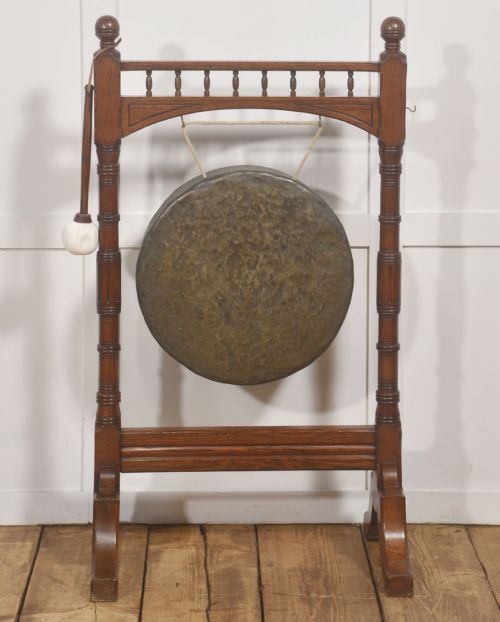
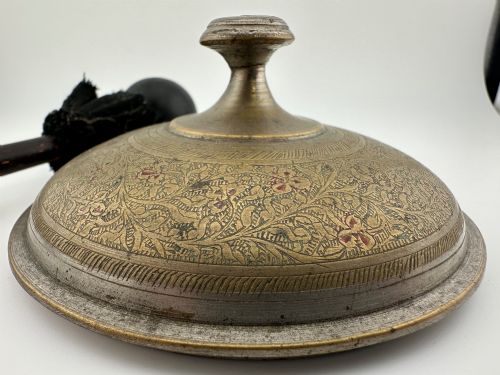


Victorian Dinner Gong Striker
These Victorian dinner gong striker pieces are practical household signals housed in robust frames, offering a distinct call to the table.
Victorian Dinner Gong Striker
A victorian dinner gong striker brings together a suspension frame and a sounding disc to announce meals in domestic settings. Buyers searching for a victorian dinner gong striker encounter floor, wall, and table models designed for daily use.
The pieces on this page span the nineteenth century through the early twentieth century, taking forms from simple tabletop rings to substantial carved structures. Stylistic influences across the selection include Victorian Aesthetic Movement, Arts and Crafts, Art Nouveau, and Chinese Export traditions.
Most examples rely on a metal disc or bar paired with a dedicated mallet to produce a resonant tone. The physical presence of these objects reflects the formal dining habits of their original period.
How They Were Made
Maker construction methods combine turned or carved wood, such as oak and bamboo, with cast and sheet metals like brass, bronze, wrought iron, and silver plate. Frames often incorporate textile cord or woven elements to suspend the metal plate securely.
Metal components show casting and plating techniques typical of late nineteenth-century workshops, whilst wooden mounts utilise traditional joinery and turning methods. The integration of diverse materials defines the physical execution of these items.
Victorian Dinner Gong Striker Retail Price Guide 2026
Typical asking prices for victorian dinner gong striker among the pieces listed under this phrase on Sellingantiques today, from the lower quarter to the upper quarter. They describe what is for sale here now, not the wider market.
Listings feature items from the nineteenth century up to nineteen-ten, utilising brass, oak, bamboo, wrought iron, and bronze.
What Varies in Quality
Quality rests upon the proportion and stability of the frame relative to the hanging gong, alongside the clarity and resonance of the metal disc itself. Superior examples demonstrate thoughtful integration between the supporting structure and the striking element.
Artistic execution distinguishes standard production from finer pieces, particularly in carved wooden detailing, decorative metalwork, and the refined handling of styles such as Art Nouveau or the Aesthetic Movement.
The Victorian Dinner Gong Striker Glossary
- Dinner Gong
- A resonant metal plate or bowl struck to summon household members to meals. These instruments typically hang from a dedicated stand or wall bracket.
- Aesthetic Movement
- A late nineteenth-century design current emphasising visual beauty over narrative content. Objects in this style often display refined ornament and stylised natural motifs.
- Arts and Crafts
- A design movement valuing traditional hand craftsmanship and simple materials. Pieces from this tradition avoid excessive machine decoration.
- Art Nouveau
- An international style characterised by flowing, organic lines and plant-inspired curves. This approach appears in the fluid metalwork of the period.
- Wrought Iron
- Iron shaped by heating and hammering by hand. This material provides strong, tactile support for heavy suspended objects.
Victorian Dinner Gong Striker: Frequently Asked Questions
How were dinner gongs used?
These gongs served as a domestic signal to gather family and guests for meals. A dedicated mallet struck the suspended metal plate to produce a clear, carrying tone.
Servants or household members operated the striker at set dining hours. The sound functioned across large Victorian homes where bells alone proved insufficient.
Where should I place a table gong?
Table gongs suit sideboards, hall tables, or dining surfaces where they remain accessible and visually balanced. Their compact footprints allow integration into various room layouts.
Ensure the hanging plate swings freely without striking surrounding furniture. Placement near dining spaces preserves their original practical context.
What materials make up these frames?
Frames utilise varied natural and manufactured materials recorded across the period. Oak and bamboo provide sturdy wooden structures, whilst brass, bronze, and wrought iron offer metallic support.
Some examples incorporate textile cord for suspension and silver plate for decorative finish. These combinations reflect the decorative tastes of the nineteenth century.
How do I identify an Aesthetic Movement piece?
Aesthetic Movement pieces display a focus on formal harmony and stylised decoration. They often incorporate Japanese-inspired motifs or clean structural lines.
Silver plating and ebonised wood frequently appear within this design current. The emphasis remains on visual elegance rather than heavy historic revival.