



Tabletop Dinner Bell
These tabletop dinner bell pieces are practical call devices and gongs from the nineteenth and early twentieth centuries, prized for their resonant tones and decorative stands.
Tabletop Dinner Bell
When you search for a tabletop dinner bell, you are looking at small striking gongs designed to summon household members or guests to meals. The pieces on this page span the Victorian and Edwardian eras, coming in both compact bell formats and larger framed gongs.
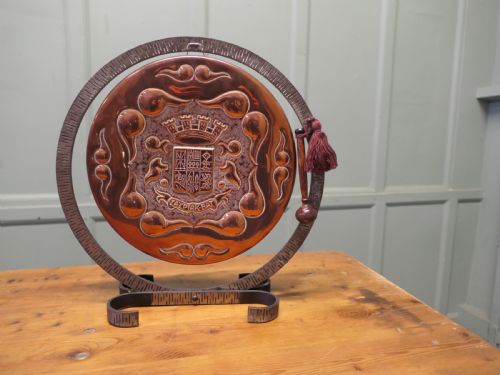
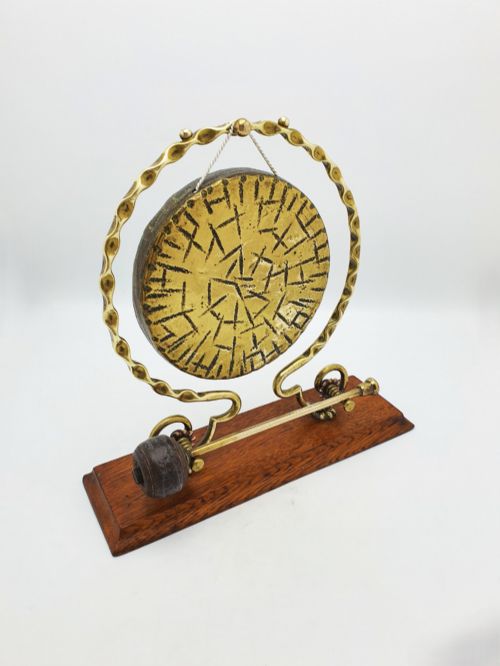
You are most likely to meet brass bells mounted on wooden bases or hanging gongs suspended from carved stands. These examples frequently incorporate materials like oak, bronze, and copper to create a decorative domestic object.
The assortment includes regional styles such as Basque folk art and Japanese-inspired designs alongside standard Victorian and Edwardian pieces. Each object serves the dual function of a decorative centrepiece and a working signalling instrument.
Materials and construction methods
Makers utilised cast brass, bronze, and hand-hammered copper for the striking plates and bells, ensuring a clear and lasting resonance. These metal components were paired with turned or carved hardwood bases and frames, utilising oak and bamboo.
Frames and stands often feature detailed carving, joinery, and metalwork reflecting Japonisme, Chinoiserie, and Art Nouveau styles of the nineteenth century. Many assemblies include original hanging cord and matched handheld strikers.
Tabletop Dinner Bell Retail Price Guide 2026
Typical asking prices for tabletop dinner bell among the pieces listed under this phrase on Sellingantiques today, from the lower quarter to the upper quarter. They describe what is for sale here now, not the wider market.
Some Victorian households relied on these musical summons to ensure dinner arrived hot while servants enjoyed a brief acoustic warning.
Distinctions in quality and execution
Quality rests in the weight and purity of the metal alloy used for the bell or gong plate, which dictates the clarity and sustain of the tone. Superior examples feature robust casting or skilled hand-hammering rather than thin, pressed sheet metal.
The standard of the woodwork on the base or frame separates ordinary pieces from finer items. Solid carved oak and detailed joinery indicate a higher grade of craftsmanship than basic turned mounts.
The Tabletop Dinner Bell Glossary
- Dinner Gong
- A suspended metal disc or bowl struck with a mallet to call diners to a meal. These forms range from simple desk-top bells to large framed units.
- Japonisme
- The influence of Japanese art on Western design during the late nineteenth century. This aesthetic appears in the stylised framing and motifs of certain gongs.
- Silver Plate
- A thin layer of silver applied to a base metal object such as copper or brass. This finish offers the appearance of solid silver while remaining durable for daily domestic use.
- Hand Hammered
- A metalworking technique where the surface is shaped and textured manually with a hammer. This process hardens the metal and leaves visible artisan marks.
Tabletop Dinner Bell: Frequently Asked Questions
What are tabletop dinner gongs?
Tabletop dinner gongs are small percussion instruments mounted on stands or bases, designed for domestic use. They were traditionally placed on sideboards or dining tables to summon household members.
These pieces combine functional metal bells with decorative wooden frames, reflecting the design tastes of the Victorian and Edwardian periods.
How do you ring a table gong?
You strike the suspended metal plate or bowl using a dedicated handheld striker or mallet. These strikers typically feature a wooden handle with a padded, leather, or bare metal head.
Swinging or tapping the gong correctly produces the resonant tone intended for signalling.
How do I date a brass dinner gong?
Dating involves examining the materials, construction methods, and stylistic influences present in the base and frame. Pieces from the nineteenth century often show hand-finishing marks and period-specific motifs like Art Nouveau curves.
Hardware styles, wood types, and mounting techniques also provide clear indicators of Victorian or Edwardian manufacture.
Can I use these gongs today?
These pieces remain fully functional and can be used for their original purpose of signalling or gathering. Their resonant tones make them practical as well as decorative items for modern dining spaces.
Placing the gong on a stable surface ensures the best acoustic performance when struck.