



Framed Table Gong
A framed table gong brings a deep, resonant tone to a room, mounted within a sturdy wooden or metal stand for everyday use.
Framed Table Gong
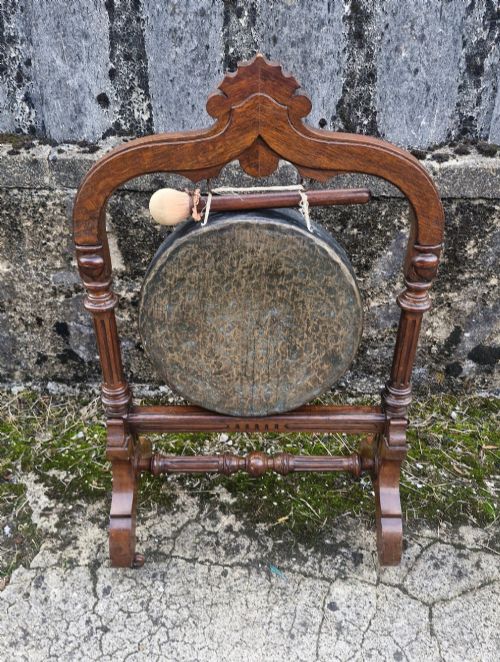
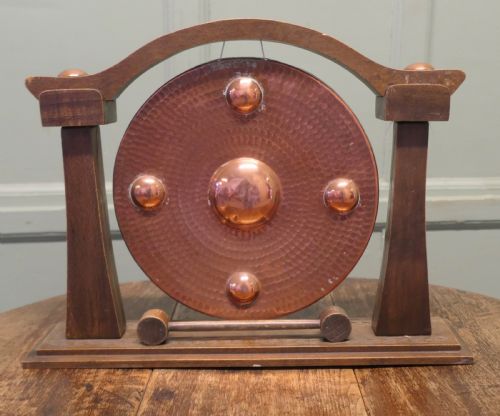
When you search for a framed table gong, you are looking at functional percussion instruments designed for domestic interiors, primarily originating from the Victorian, Edwardian, and early twentieth-century periods. These pieces combine a metallic sounding bell or plate with a supporting structure made to sit on a table, sideboard, or desk.
The versions you are most likely to meet on this page span styles from simple rustic designs to elaborate Chinese Qing Dynasty style and Arts and Crafts interpretations. Forms range from compact table gongs and dinner gongs to larger table bells mounted on stands.
Materials vary across the evidence, utilising timber frames paired with metallic elements to create both visual contrast and acoustic resonance. The combination of structural woodwork and suspended metal defines the core aesthetic of these objects.
Materials and Construction
The construction of a framed table gong relies heavily on the pairing of timber frames with cast metal bells or gongs. Oak, walnut, hardwood, bamboo, and wood form the structural stands, shaped through carving and joinery to support the hanging weight.
Metal components typically consist of brass, copper, bronze, or general metal alloys, shaped into bowls, plates, or bells. These metallic elements produce the characteristic tone when struck, while supporting frames incorporate materials like fabric or bamboo for decorative effect.
Framed Table Gong Retail Price Guide 2026
Typical asking prices for framed table gong among the pieces listed under this phrase on Sellingantiques today, from the lower quarter to the upper quarter. They describe what is for sale here now, not the wider market.
Listings feature items from the Victorian, Edwardian, and early twentieth-century periods, utilising oak, brass, bamboo, and copper.
Assessing Quality
Quality in a framed table gong rests on the precision of the joinery in the wooden stand and the purity of the metal casting. Well-executed carving on oak or walnut frames indicates a higher standard of craftsmanship.
The acoustic properties of the bell or gong itself separate standard domestic pieces from finer examples. Heavier bronze or brass plates yield a sustained, clear resonance that cheaper sheet metal versions lack.
The Framed Table Gong Glossary
- Dinner gong
- A percussion instrument traditionally used to signal meal times in large households. These are usually mounted in wooden frames designed for placement on a sideboard or table.
- Brass
- An alloy of copper and zinc commonly utilised for the sounding plates and bells. It polishes to a bright golden finish and holds a crisp tone.
- Arts and Crafts
- A design movement emphasising handcraftsmanship and simple forms. Pieces from this style often feature exposed wood grain and honest construction.
- Bamboo
- A woody grass used for lightweight stands and frames. It provides a distinct textural appearance popular in aesthetic movement pieces.
Framed Table Gong: Frequently Asked Questions
What is a framed table gong?
A framed table gong is a small percussion instrument suspended within a wooden or metal stand, designed to sit on furniture.
They were traditionally used in homes to announce meals or summon servants, functioning as both a practical tool and a decorative object.
How do you date a table gong?
Dating relies on examining the style of the wooden frame, such as Arts and Crafts carving or Victorian bamboo work.
Material choices and construction methods also offer clues, with solid oak and heavy brass pointing toward late nineteenth or early twentieth-century manufacture.
What materials are used in these gongs?
The stands are constructed from woods like oak, walnut, hardwood, and bamboo, sometimes accented with fabric or carved details.
The suspended gongs and bells are made from metals including brass, copper, and bronze to ensure a clear acoustic ring.
How should I care for a table gong?
Keep the wooden frame clean with a dry cloth and avoid harsh chemical polishes that can strip the original finish.
Metal components can be gently dusted, leaving the natural patina undisturbed if desired.