




Antique Brass Bell Gong
An antique brass bell gong is a resonant household signal, and these pieces bring the resonant chime of the nineteenth and early twentieth centuries into a modern room.
Antique Brass Bell Gong
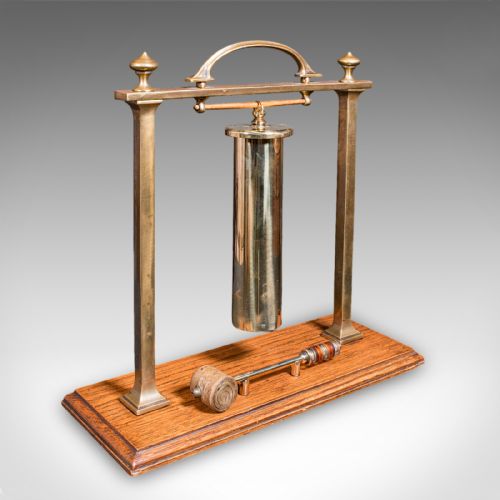
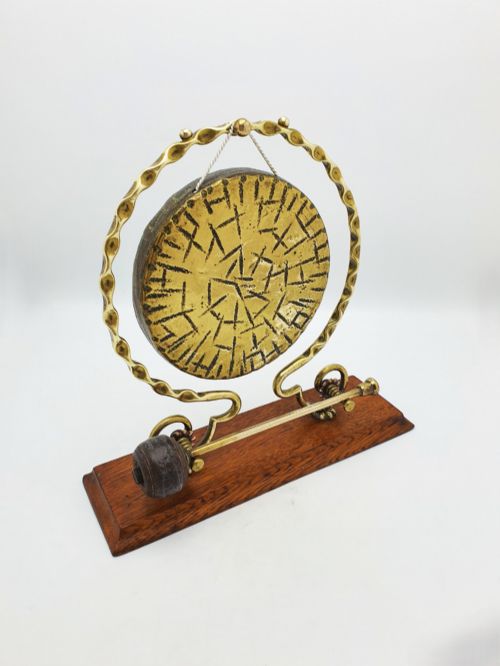
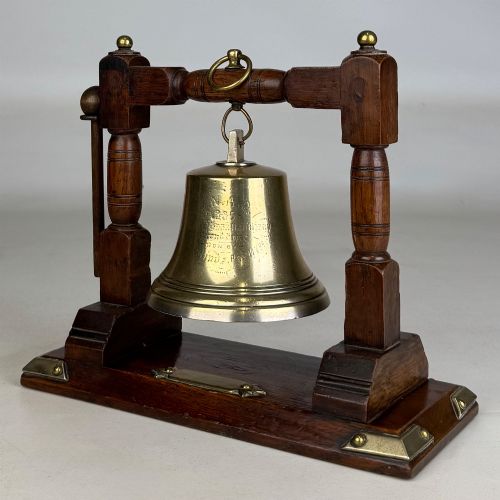
An antique brass bell gong is a domestic calling signal, most often encountered on this page as an oak-mounted dinner gong or a tabletop brass piece from the Victorian and Edwardian eras. These pieces combine a cast metal sounding element with a wooden frame or base, designed to summon guests to the dining table or draw attention in a grand hallway.
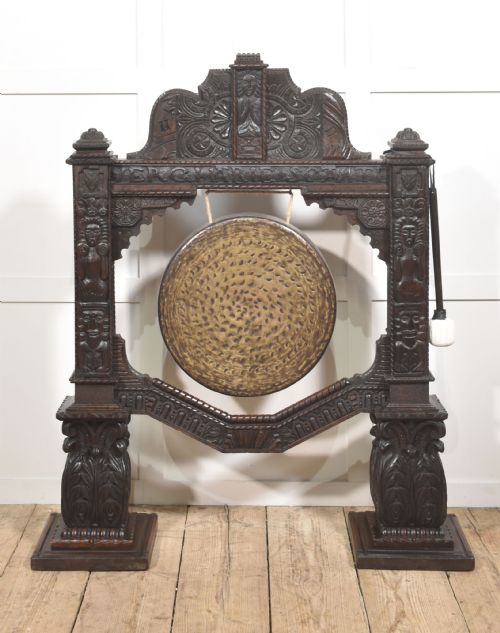
The selection ranges from compact table-top gongs to large floor-standing or wall-hanging versions, spanning the late nineteenth century through to the nineteen-twenties. Styles vary from simple domestic brass frames to pieces influenced by Japonisme, Chinoiserie, and Art Nouveau design.
Many examples incorporate a dedicated handheld striker resting alongside the bell, preserved on stands made of carved oak, bamboo, or hardwood. The domestic dinner gong remains the predominant form found across these listings.
How they were made
These items rely on durable metals such as brass, bronze, and cast iron for the sounding bell or gong, paired with structural timber bases in oak, hardwood, and bamboo. The metals are cast and hammered to achieve the correct resonance, while the wooden stands feature turned spindles, carved motifs, and joinery typical of late nineteenth and early twentieth-century cabinet-making.
Strikers and suspension systems utilise cord, leather, and felt to isolate the vibration of the bell from its wooden mount, allowing a clean ring without damping the tone. Textile elements like cord and felt provide both a decorative finish and a functional buffer for the hanging metal.
Listings feature periods spanning from the Victorian era through the Edwardian period, utilising brass, bronze, oak, and bamboo.
What varies in quality
The distinction between standard domestic pieces and finer examples lies in the weight of the metal and the complexity of the timber carving on the stand. Heavier cast brass or bronze plates produce a richer, more sustained tone, while mass-produced utilitarian bells often sound flat or short-lived.
Cabinet work also sets the range apart, moving from plain functional oak boards to intricately carved frames featuring stylistic motifs from the Art Nouveau or Orientalist movements. The presence of matching original strikers and well-preserved suspension cord adds to the integrity of an individual piece.
The Antique Brass Bell Gong Glossary
- Dinner Gong
- A large bell or metal plate suspended in a frame, historically used in large homes to announce meals. They are typically struck with a padded mallet.
- Table Gong
- A smaller version of the dinner gong designed to sit upon a sideboard or table rather than hang from a wall or floor stand.
- Japonisme
- A late nineteenth-century artistic movement reflecting European fascination with Japanese art and design, often seen in the carved stands and motifs of these gongs.
- Art Nouveau
- A style popular around nineteen-hundred characterised by flowing, organic lines and floral motifs, frequently applied to the metal frames of tabletop gongs.
- Striker
- The mallet or small hammer used to hit the bell, usually featuring a wooden handle with a padded or bound head.
Antique Brass Bell Gong: Frequently Asked Questions
How were dinner gongs used?
Dinner gongs were placed in hallways or reception rooms to signal the start of a meal to household members and guests. A sharp strike on the suspended metal produced a loud, resonant tone that carried through the entire house.
Servants or hosts utilised the gong to gather people together before formal dining began, serving both a practical and ceremonial purpose in larger Edwardian and Victorian homes.
How do I tell Victorian from Edwardian gongs?
Victorian pieces tend to feature heavier, more ornate carving, dark woods, and dense Gothic Revival or aesthetic influences. The metalwork often showcases darker patination and robust joinery.
Edwardian gongs generally display lighter oak frames, cleaner lines, and occasional Art Nouveau curves or Orientalist decorative motifs. The overall aesthetic shifts toward a slightly more restrained domestic elegance.
Can I still ring an antique gong?
Yes, these gongs remain fully functional instruments capable of producing a clear chime when struck correctly. Care should be taken to use the appropriate soft-headed striker to avoid denting the aged metal.
Regular use does not harm the piece provided the suspension cords and wooden stands remain secure and stable. Many owners continue to use them as alternative doorbells or dinner signals today.
What woods are used for the stands?
Oak is the most common timber found in these frames, ranging from plain quarter-sawn boards to heavily carved panels. Other examples incorporate bamboo, turned hardwoods, and occasionally exotic timbers influenced by Asian design.
The wood provides a stable acoustic base for the hanging bell while matching the interior joinery styles of the late nineteenth and early twentieth centuries.