

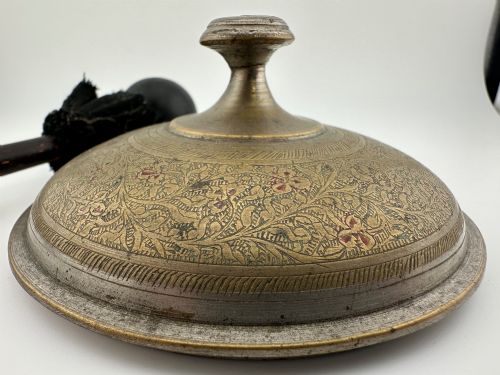
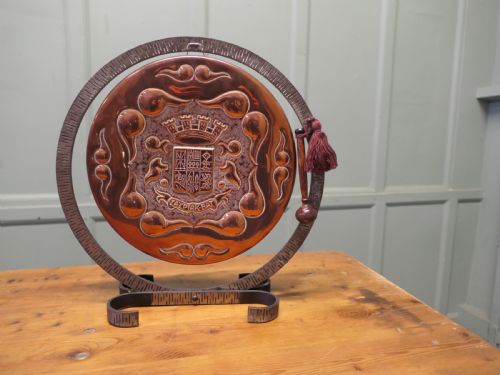
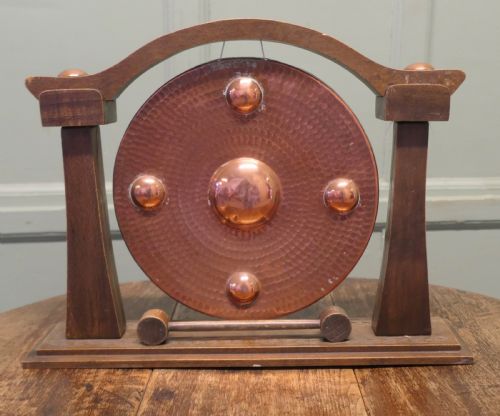


Metal Table Gong
These metal table gong pieces are striking domestic signals, offering rich resonant sound and distinct period character for any interior scheme.
Metal Table Gong
A metal table gong is a decorative and functional striking instrument designed for domestic use, primarily intended to announce dinner or summon household staff. You will find examples ranging from compact table-top brass models to larger framed arrangements.
The pieces on this page span the nineteenth century into the early twentieth century, taking forms such as dinner gongs, table gongs, and temple bells. They frequently combine metallic striking elements with structural wooden frames or novelty mounts.
Victorian and late nineteenth-century iterations dominate the selection, alongside specific stylistic expressions like Art Nouveau, Arts and Crafts, and Aesthetic Movement designs. Regional and exotic influences also appear through Basque folk art, Chinese export pieces, and Black Forest carvings.
How they were made
Makers utilised a combination of cast and hand-hammered metals, chiefly brass, copper, bronze, and silver plate, suspended from structural supports. These metal gongs and bells rely on specific alloy compositions to produce a clear, sustained tone when struck.
Wooden elements such as oak, hardwood, and carved black forest timber form the frames, stands, and novelty bases that hold the hanging gongs. Artisans applied carving, silver plating, and blacksmithing techniques to shape both the metallic and wooden components.
Metal Table Gong Retail Price Guide 2026
Typical asking prices for metal table gong among the pieces listed under this phrase on Sellingantiques today, from the lower quarter to the upper quarter. They describe what is for sale here now, not the wider market.
Some nineteenth-century makers mounted gongs between carved wooden monkeys and cow horns, proving Victorians loved a theatrical dinner announcement.
What varies in quality
The calibre of a metal table gong rests upon the weight and resonance of the metal disc or bell, alongside the depth and execution of the woodwork. Superior pieces demonstrate crisp hand-hammering, substantial bronze or brass casting, and robust structural joinery.
Artistic ambition distinguishes standard utilitarian examples from finer decorative works, particularly where makers incorporated carved animals, novelty mounts, or distinct stylistic movements like Art Nouveau and the Aesthetic Movement. The harmony between the hanging gong and its supporting frame dictates the overall visual and acoustic success of the piece.
The Metal Table Gong Glossary
- Dinner gong
- A striking instrument mounted on a stand, traditionally used in large homes to signal that meals were served.
- Art Nouveau
- A decorative style characterised by undulating, organic lines and floral motifs, popular around the turn of the twentieth century.
- Silver plate
- A thin layer of silver applied to a base metal core, giving the appearance of solid silver while maintaining structural rigidity.
- Aesthetic Movement
- A late nineteenth-century design philosophy that emphasised visual beauty and artistic expression over strict utility.
- Temple bell
- A sacred or ritual bell originating from eastern traditions, often adapted for decorative domestic use in western interiors.
Metal Table Gong: Frequently Asked Questions
What is a metal table gong?
A metal table gong is a domestic percussion instrument consisting of a suspended metal disc or bell and a striker, mounted on a portable base or frame.
Historically placed on sideboards or halls, they were struck to gather household members or announce the evening meal.
How do I date a table gong?
Dating relies on examining the manufacturing techniques, materials, and stylistic markers present in the frame and metalwork. Pieces from the Victorian era often feature heavy oak frames or silver plating, while turn-of-the-century examples lean towards Art Nouveau curves or specific export markers.
Construction methods such as hand-hammering versus machine casting also help narrow down the period of production.
Were these gongs actually used?
Yes, these objects served a practical daily purpose in period households before modern electrical buzzers and intercom systems became common.
The resonant tone carried across multiple rooms, making them an efficient signalling device for servants or family members.
How do I care for a metal gong?
Maintenance involves gentle dusting and occasional cleaning appropriate to the specific metal surface, whether brass, copper, bronze, or silver plate. Harsh chemical polishes should be avoided to preserve the natural patination built up over decades or centuries.