




Victorian Dessert Glasses
These Victorian dessert glasses bring nineteenth-century dining tables to life with cut crystal, cranberry glass and delicate etching.
Victorian Dessert Glasses
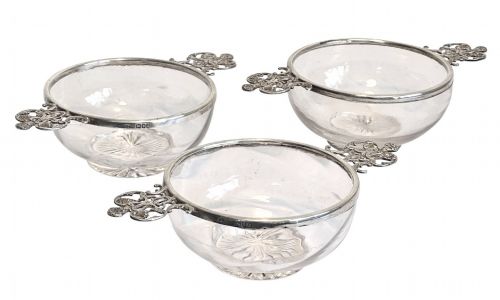
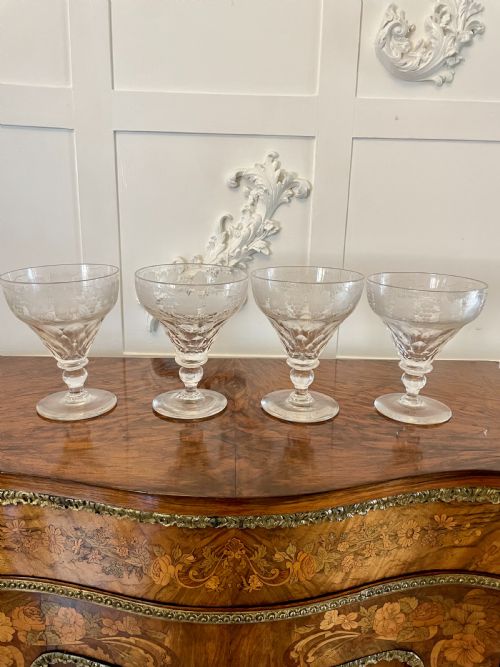
When you search for Victorian dessert glasses, you find an array of tableware designed for the final course of grand meals. The pieces span finger bowls, custard cups, dessert wine glasses, ice plates and tazza bowls, mostly originating from the nineteenth century around 1860 to 1890.
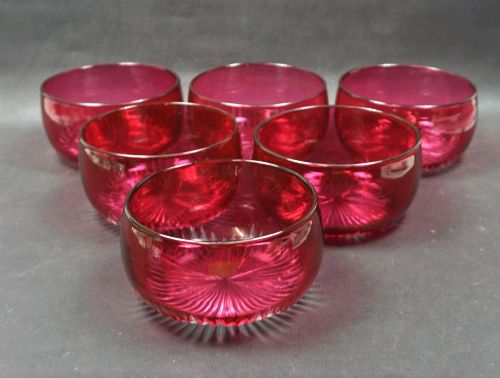
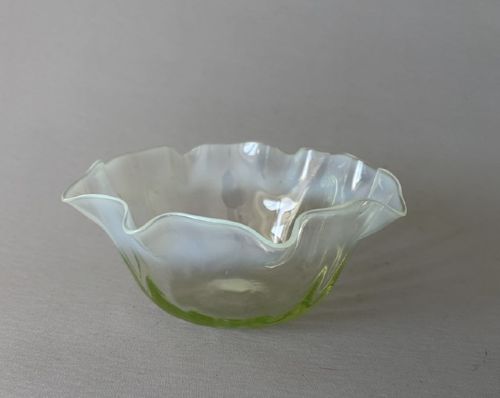
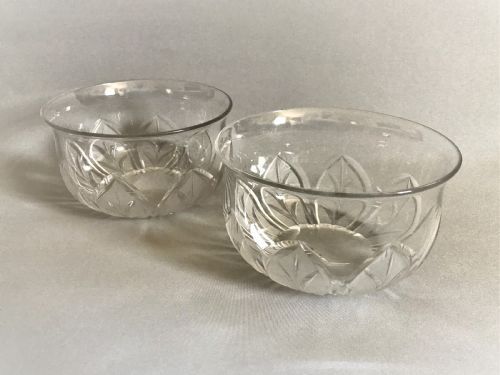
The selection ranges from single pairs of cut and frosted finger bowls to larger sets of engraved dessert wine glasses and silver-mounted glass bowls. Clear glass and lead crystal appear frequently alongside coloured examples in ruby, cranberry, aqua green and yellow over crystal.
Sets vary in scale from pairs up to a set of twelve free blown crystal glass ice plates or a summer garden party service. They represent the diverse glassware used to serve fruit, creams and dessert wines during the Victorian period.
How they were made
The makers utilised clear glass, lead crystal, frosted glass and coloured variants such as cranberry and ruby glass. Pieces were shaped using free blowing techniques and finished with hand cutting, wheel engraving or acid etching.
Decoration often includes specific motifs like fruiting vines, star patterns and Greek Key borders. Selected vessels also incorporate silver plate mounts and pierced silver spoons.
Victorian Dessert Glasses Retail Price Guide 2026
Typical asking prices for victorian dessert glasses among the pieces listed under this phrase on Sellingantiques today, from the lower quarter to the upper quarter. They describe what is for sale here now, not the wider market.
The listings show pieces dated across the nineteenth century, including specific years like 1860, 1870, 1880, 1890 and 1896.
What varies in quality
The distinction between standard items and finer examples rests on the crispness of the cutting and the depth of the engraving. Sharp, well-defined wheel engraving on dessert wine glasses displays a higher degree of artisan skill than simpler surface etching.
Colour application also dictates quality, particularly in layered pieces like yellow or red over crystal where the contrast reveals precise craftsmanship. Complete matching sets, such as suites of ten or twelve custard cups and ice plates, command greater interest than assembled or partial groups.
William Comyns
The Victorian Dessert Glasses Glossary
- Finger bowl
- A small bowl used at the table for rinsing the fingers between courses. They often feature cut glass, frosted finishes or engraved patterns.
- Custard cup
- A small vessel designed for serving individual portions of custard or creamed desserts. They appear in matching sets from the Victorian period.
- Tazza
- An elevated shallow bowl or plate standing on a central foot. They are used for presenting fruit and sweet dishes on the dining table.
- Ice plate
- A flat glass plate intended for serving iced desserts or ices. These pieces are frequently free blown in lead crystal.
- Dessert wine glass
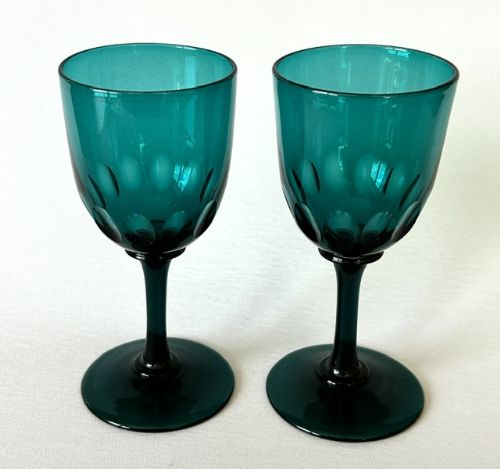
- A smaller glass specifically proportioned for sweet wines served at the conclusion of a meal. They frequently exhibit wheel-cut bowls and engraved detailing.
Victorian Dessert Glasses: Frequently Asked Questions
What were Victorian dessert glasses used for?
These pieces served the final courses of formal nineteenth-century dinners, holding fruit, custards, iced dishes and dessert wines. Diners utilised finger bowls to cleanse their hands after eating.
Different vessels accommodated specific foods and beverages, contributing to the structured presentation of the dessert table.
How can I date my glassware?
Dating relies on stylistic clues, manufacturing techniques and recorded periods such as the 1860s or 1890s. Free blown items and specific cutting styles offer direct parallels to dated archival examples.
Comparing motif designs, such as Greek Key etching or star patterns, helps place pieces within the broader Victorian era.
Can I use these glasses daily?
While sturdy enough for occasional careful use, these items are antique tablewares that benefit from gentle handling during dinner parties or displays. Hand washing prevents accidental knocks against modern kitchen sinks.
Many collectors prefer to use them specifically for celebratory dinners to preserve their condition.