


Victorian Desktop Organiser
A victorian desktop organiser keeps correspondence and writing tools ordered, bringing nineteenth-century utility to a modern desk through handsome compartmentalised woodwork.
Victorian Desktop Organiser
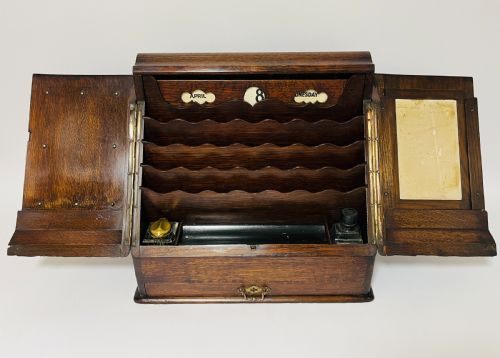
A victorian desktop organiser groups items such as stationery cabinets, letter racks, inkstands, and book slides designed to keep a nineteenth-century desk orderly. These pieces reflect the heavy correspondence of the period, providing dedicated slots for letters, postage, and writing implements.
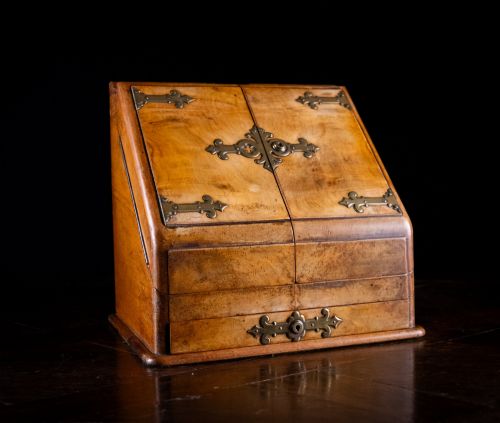
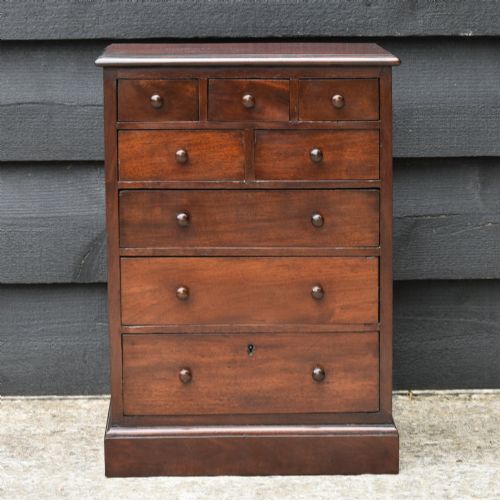
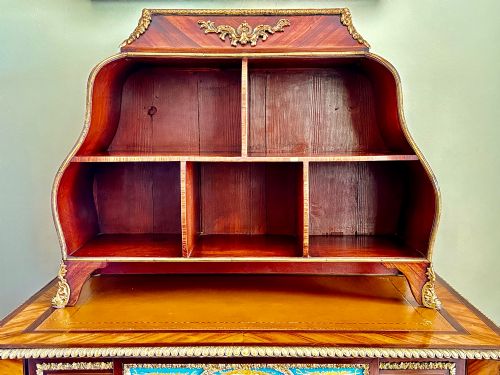
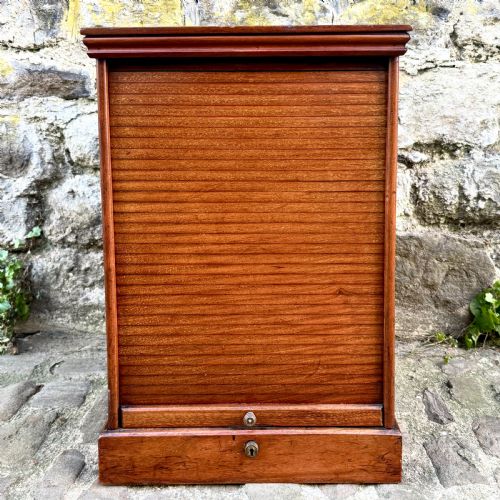
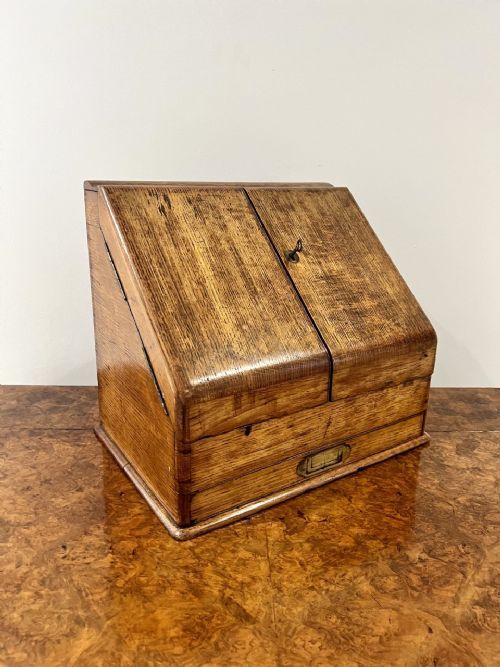
Stationery boxes and cabinets form the most common type encountered on this page, often featuring sloping lids, fall fronts, or tambour doors opening to reveal fitted pigeonholes and drawers. Alongside these, filing cabinets and miniature chests serve specialised organisational roles.
Makers drew on various aesthetic movements, producing pieces in plain oak, carved walnut, or exotic rosewood with brass mounts. Whether executed in simple Arts and Crafts oak or ornate Victorian Gothic Revival walnut, each object served the functional demands of a Victorian study or library.
Evaluating quality and execution
The degree of hand-carving and the choice of timber set finer pieces apart from standard workshop production. Selected figured walnut, coromandel, or dense rosewood indicate higher status, whereas plain utility oak serves a simpler domestic purpose.
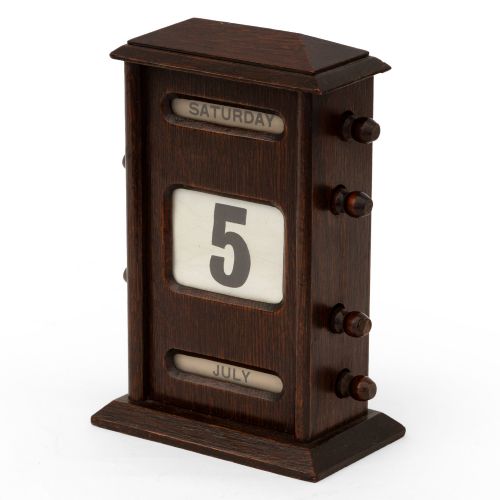
Internal complexity and mechanical ingenuity define the upper tier of these pieces, such as patented extending actions, secret drawers, and fully working perpetual calendars. Original brass hardware and undamaged glass ink bottles further elevate a piece above standard examples.
Listings feature woods including oak, mahogany, walnut, rosewood, coromandel, and ebonised timber alongside brass and glass.
Gillows·Betjemanns·F Waller·Amberg
The Victorian Desktop Organiser Glossary
- Stationery box
- A desktop cabinet designed to hold writing paper and envelopes, usually featuring a sloping lid or fall front.
- Book slide
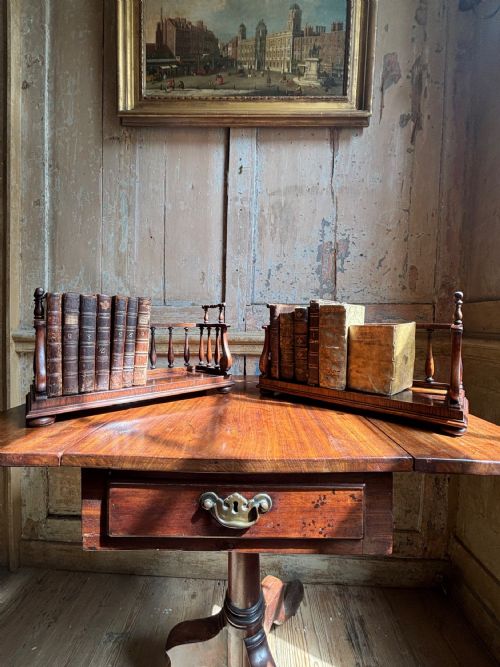
- An extending wooden stand placed on a desk or table to hold a row of books upright, often fitted with brass mounts.
- Inkstand
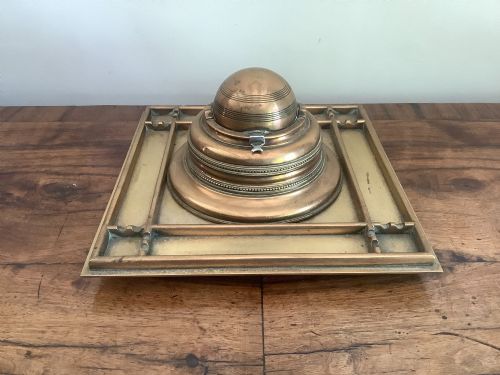
- A tray or stand incorporating one or more inkwells, frequently accompanied by pen troughs and sanders.
- Cartonnuer
- A desk top cabinet fitted with labelled compartments for holding documents, papers, or cartons.
- Pigeonholes
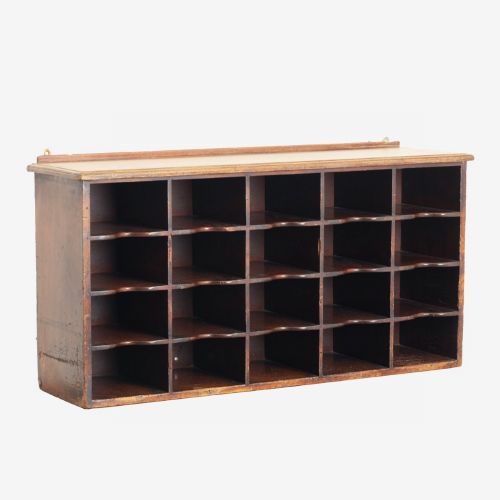
- Small, open compartments arranged in tiers inside a cabinet or desk for sorting letters and papers.
Victorian Desktop Organiser: Frequently Asked Questions
What fits inside a stationery cabinet?
These cabinets accommodate folded writing paper, envelopes, and occasionally small account books within their fitted internal partitions and pigeonholes.
Larger variations include slots for postage stamps and built-in calendars or perpetual date displays.
How do extending book slides work?
Extending book slides utilise a hinged or sliding mechanism that allows the wooden ends to pull apart smoothly.
Brass racks or scissor actions often stabilise the platform as it expands to hold more volumes.
Where were these pieces used?
Victorian desk organisers stood upon writing tables, library desks, and Davenport bureaus in middle-class homes and country houses.
They managed the steady flow of daily post and correspondence before the prevalence of modern office systems.
How do I distinguish Arts and Crafts styles?
Arts and Crafts pieces emphasise plain golden oak and visible construction methods rather than heavy factory ornamentation.
Decoration remains minimal, relying instead on the natural grain of the wood and hand-hammered copper or brass strapwork.