




Vintage Letter Rack Box
These pieces for a vintage letter rack box combine practical stationery storage with the rich wood tones of past centuries, offering a tidy desktop solution for the modern study.
Vintage Letter Rack Box
When you search for a vintage letter rack box, you are looking at desk accessories and stationery cabinets designed to organise correspondence. The versions you are most likely to meet on this page span the Georgian, Victorian, and Edwardian periods, constructed primarily as desk tidies or wall organisers.
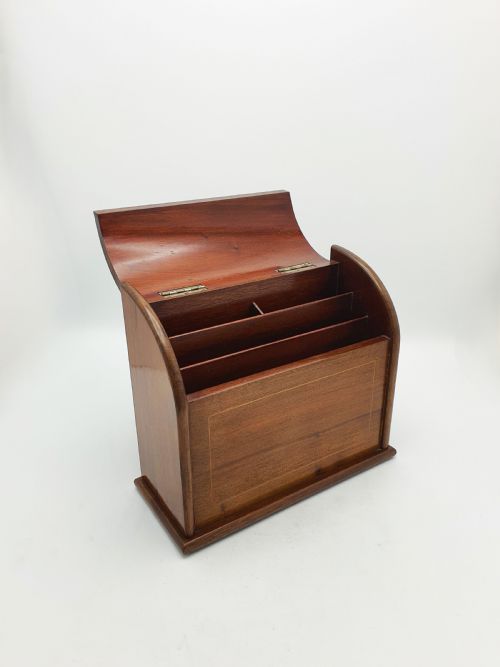
These items take various forms, including fall-front boxes, hinged-lid desks, and double-opening portable writing slopes. Their primary function remains the orderly separation of letters and paper in domestic and office settings.
How they were made
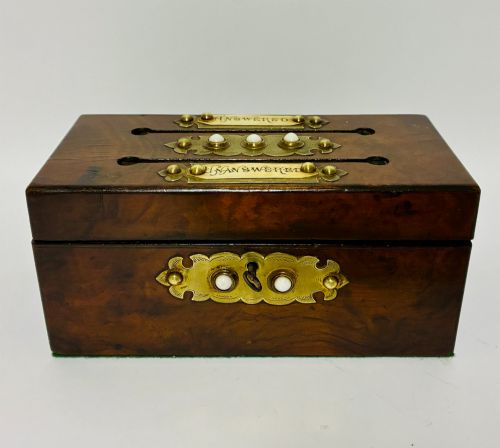
The construction relies heavily on native and imported timbers, notably oak and mahogany, shaped into robust boxes and cabinets. Many examples incorporate brass hinges, locks, and handles to secure the compartments and add functional durability.
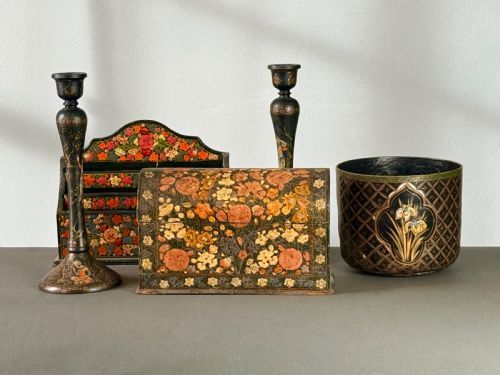
Surface ornamentation ranges from carved details and inlaid decoration to copper panels and lacquered finishes. Some pieces integrate glass, bone, and leather to line writing surfaces or divide internal sections.
The listings on this site span eight distinct periods, from the 18th century through the 1930s, featuring oak, mahogany, brass, and leather.
What varies in quality
Quality separates simple utility pieces from finer cabinetwork through the selection of timber grain and the precision of joinery. Superior examples feature thoughtful internal architecture, such as secret drawers and double-opening mechanisms.
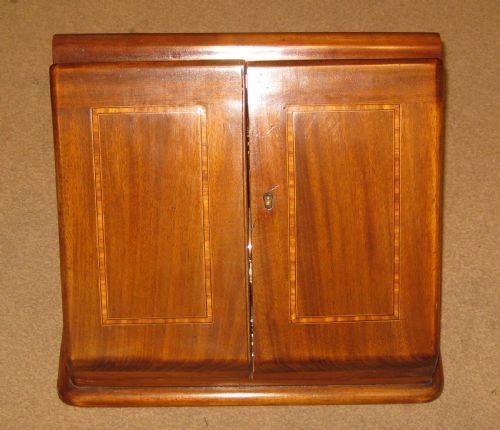
The refinement of decorative elements, including careful inlay work, hand-carved mahogany, and heavy brass hardware, distinguishes standard desk tidies from exceptional country house cabinets.
The Vintage Letter Rack Box Glossary
- Fall-front
- A box design featuring a hinged front panel that drops forward to reveal interior letter slots and pigeonholes. This mechanism allows quick access to daily correspondence.
- Stationery cabinet
- A larger desk accessory built to house envelopes, paper, and writing implements upright. These cabinets often feature locking doors or fall fronts.
- Desk tidy
- A compact desktop organiser designed to hold letters, pens, and small office supplies in fixed compartments. They keep work surfaces clear of loose paper.
- Inlay
- A decorative technique where contrasting materials like lighter woods or metal are embedded into the primary surface of the box. It defines Edwardian and Victorian ornamentation.
- Writing slope
- A portable desk with a slanted top that opens to store stationery and provide a writing surface. Some variations incorporate internal letter racks.
Vintage Letter Rack Box: Frequently Asked Questions
What is a stationery box?
A stationery box is a desk accessory designed to store paper, envelopes, and letters in an upright or stacked position. They often feature hinged lids or fall-front panels to protect the contents while keeping them accessible.
These boxes date across the Georgian, Victorian, and Edwardian eras, reflecting the writing habits of their respective periods. They sit upon a desk or table as both a practical organiser and a decorative wooden object.
How do I use a letter rack box today?
You can use a letter rack box on a modern desk or hallway console to sort incoming mail, bills, and everyday stationery. The divided slots keep paper upright and prevent clutter from spreading across your work surface.
Larger cabinets with fall fronts also provide secure storage for notebooks and pens. Their traditional compartments adapt well to organising modern envelopes and documents.
What woods are most common?
Oak and mahogany appear most frequently across these listings, representing the standard cabinet timbers of the nineteenth and early twentieth centuries. Golden oak, American oak, and walnut also feature prominently.
These hardwoods provided the structural strength needed for daily desktop use. Cabinetmakers selected them for their durability and attractive grain patterns.
How do I tell Victorian from Edwardian boxes?
Victorian stationery boxes often display heavier proportions, darker mahogany or oak timbers, and robust brass hardware. Their design leans towards formal utility and ornate carved details.
Edwardian pieces tend to show lighter golden oak or refined inlaid mahogany, reflecting a shift towards Arts and Crafts simplicity or Edwardian elegance. Finer stringing and lighter wood tones characterise the later period.