




Desktop Letter Cabinet
A desktop letter cabinet keeps your correspondence ordered, and the Victorian and Edwardian examples here range from walnut drop-fronts to oak stationery boxes.
Desktop Letter Cabinet
A desktop letter cabinet provides dedicated storage for correspondence, writing paper, and envelopes within a compact desk accessory. The pieces gathered under the search phrase desktop letter cabinet span from the mid-nineteenth century through the Edwardian period, reflecting the heavy correspondence needs of those eras.
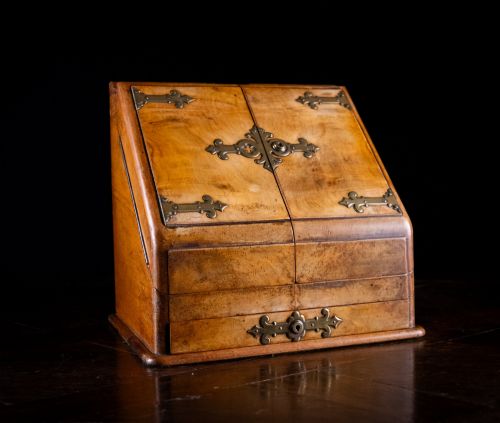
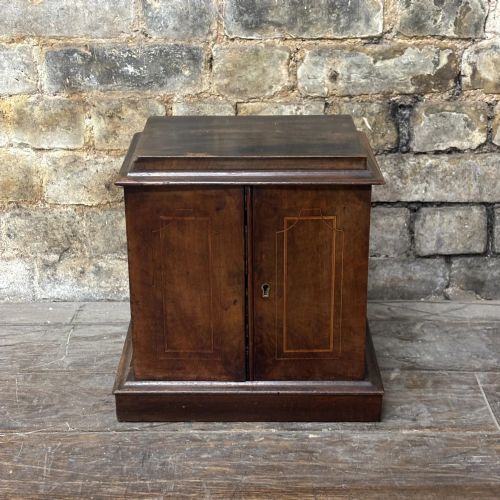
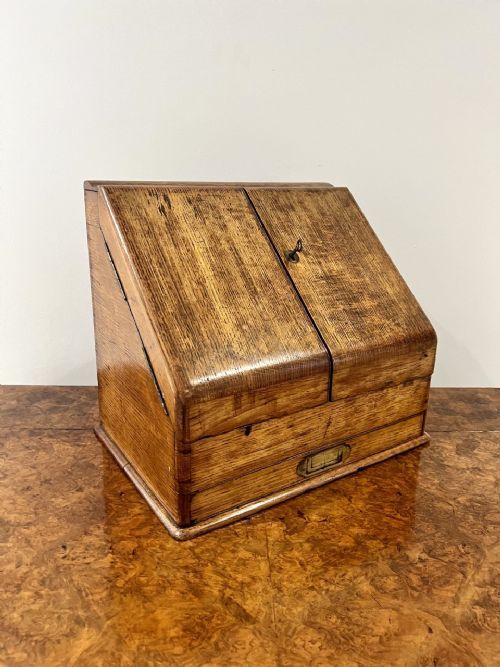
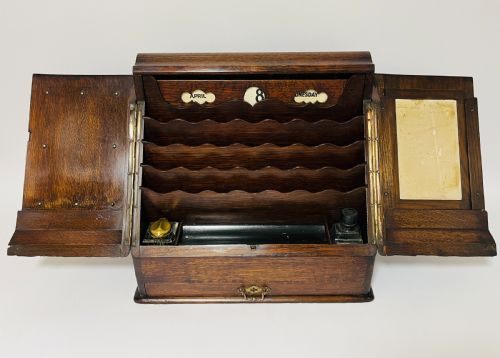
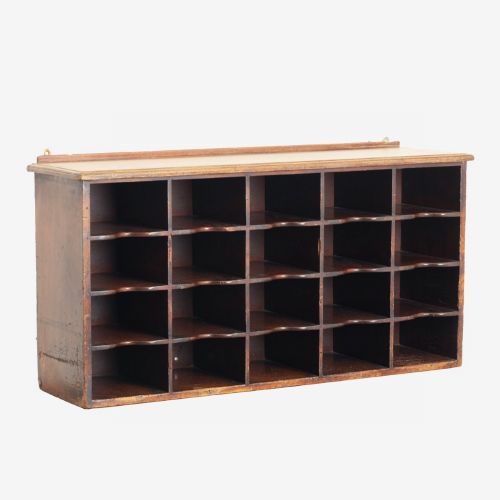
You will most commonly encounter upright oak and mahogany stationery boxes alongside drop-front walnut cabinets from the Victorian and Edwardian decades. These forms include pigeon holes, letter racks, and integrated ink bottles designed to sit upon a library table or writing desk.
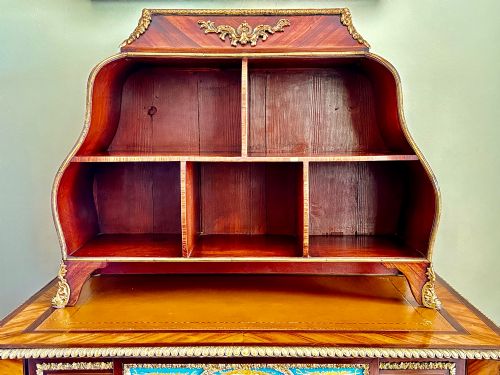
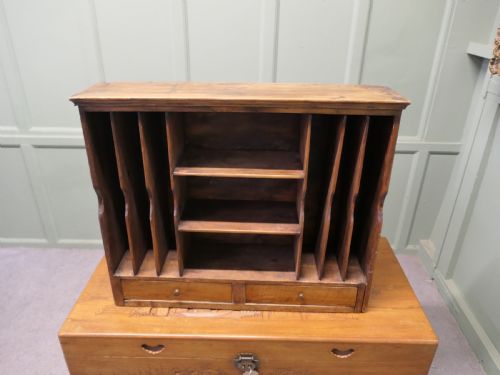
Variations range from French Louis XV style rosewood cartonnieres with ormolu mounts to utilitarian oak filing shelves and novelty letters boxes. Some incorporate adjustable dates, leather linings, or marquetry inlay while retaining their core function as desktop organizers.
How they were made
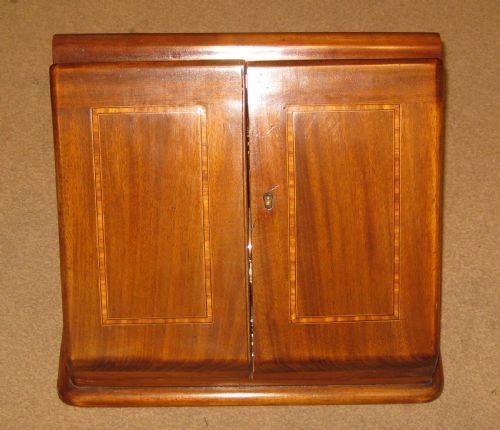
Cabinetmakers constructed these pieces primarily in solid oak, mahogany, walnut, and rosewood, often applying satinwood or elaborate marquetry veneers for decorative effect. Brass hinges, handles, and mounts provide structural reinforcement and contrast against the dark hardwoods.
Drop-front doors, sloping lids, and pigeon hole interiors required precise joinery to manage paper and letters efficiently. Glass ink bottles and gilt-covered painted panels frequently complement the woodwork on finer examples.
Listings feature oak, mahogany, walnut, rosewood, and satinwood across the nineteenth and early twentieth centuries.
What varies in quality
Quality rests upon the selection of timbers like figured walnut or coromandel and the crispness of marquetry inlay and brass mounts. Finer cabinets feature integrated fittings such as matching ink bottles, adjustable date mechanisms, and branded makers' labels.
The refinement of the internal pigeon holes and the smoothness of drop-front or sloping actions distinguish standard utilitarian office pieces from superior domestic library examples.
F Waller·Houghton & Gunn·Amberg
The Desktop Letter Cabinet Glossary
- Cartonnier
- A desktop cabinet containing multiple compartments or drawers for holding papers, documents, or cartons. These French pieces often feature ornate mounts.
- Stationery box
- A desk accessory with a hinged lid or doors opening to reveal slots and pigeon holes for writing paper and envelopes. They are frequently encountered in oak and mahogany.
- Pigeon hole
- An open compartment within a desk or cabinet used for sorting letters and documents. Sets of these compartments are often found integrated into desktop letter cabinets.
- Ormolu
- Gilded bronze mounts applied to furniture and decorative objects for ornamentation. This technique appears on revival pieces from the nineteenth century.
Desktop Letter Cabinet: Frequently Asked Questions
What is a desktop letter cabinet?
A desktop letter cabinet is an enclosed wooden box or small chest designed to hold stationery, letters, and writing implements on top of a desk. These pieces emerged to keep private correspondence organised and secure before the dominance of modern office furniture.
Most examples date from the Victorian and Edwardian periods, utilising hardwoods like oak, mahogany, and walnut. They range from simple sloping boxes to elaborate drop-front cabinets with internal pigeon holes.
How were stationery boxes used?
Stationery boxes were kept on writing tables to store blank paper, envelopes, stamps, and incoming or outgoing letters. Their compartments kept different sizes of paper separated and ready for daily correspondence.
Many incorporate ink bottles, pen trays, and letter racks so that all writing necessities remained in one tidy desktop location. Drop-front models allowed quick access to papers without moving the entire unit.
How do I date an antique letter cabinet?
Dating relies on timber choices, construction methods, and stylistic clues such as revival motifs or Arts and Crafts simplicity. Victorian pieces often use heavy oak or walnut with brass hardware, while Edwardian versions frequently feature marquetry inlay.
Makers' labels, patent stamps, or integrated calendars also help narrow down the decade of production. Earlier Georgian examples tend to feature simpler sloped fronts in solid oak or mahogany.
Where should I place a letter cabinet?
These cabinets sit comfortably on top of a writing desk, bureau, or library bookcase where they can still function for storing letters. They also work well on side tables or mantelpieces as decorative storage for modern mail and stationery.
Keep them away from direct sunlight and extreme temperature fluctuations to protect the wood finishes, veneers, and internal leather linings.