

Victorian Desk Stand
When you search for a victorian desk stand, you are looking for the compact desktop fittings that kept nineteenth-century correspondence in order.
Victorian Desk Stand
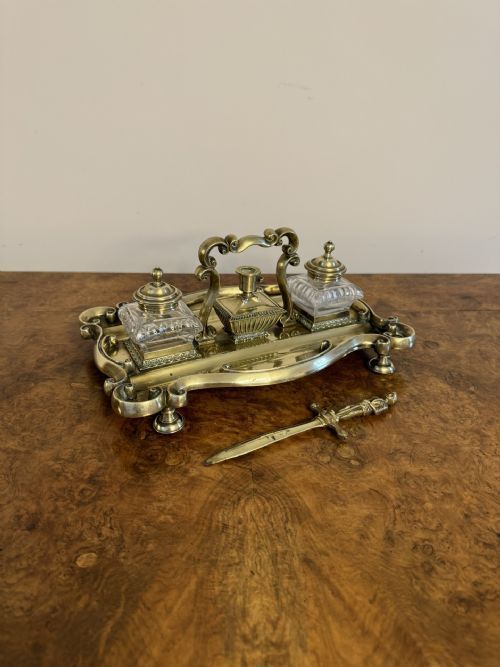
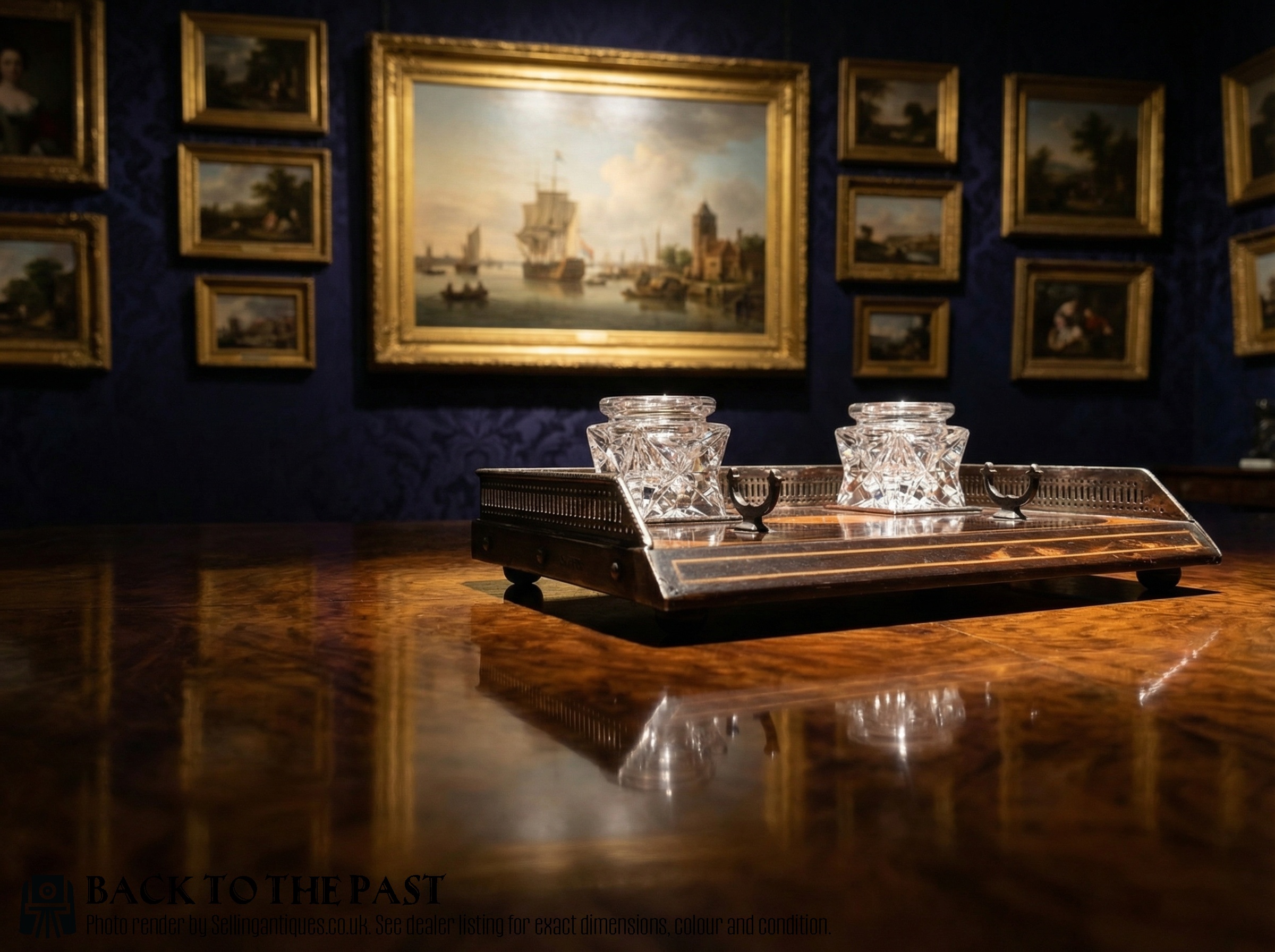
A victorian desk stand gathers the small implements of writing - typically glass inkwells, pen rests, and sometimes match holders or stamp boxes - into a single disciplined base designed to sit neatly upon a partner's desk or library table. Most examples encountered here belong to the broader nineteenth-century tradition, ranging from plain oak and walnut models to decorative brass and silver-plated pieces.
The form exists to protect the desktop from ink spills while keeping necessities within reach during long hours of letter writing. Makers arranged these pieces with a central tray or trough for dip pens flanked by fitted wells, often adding hinged lids or cut-glass liners to preserve the ink.
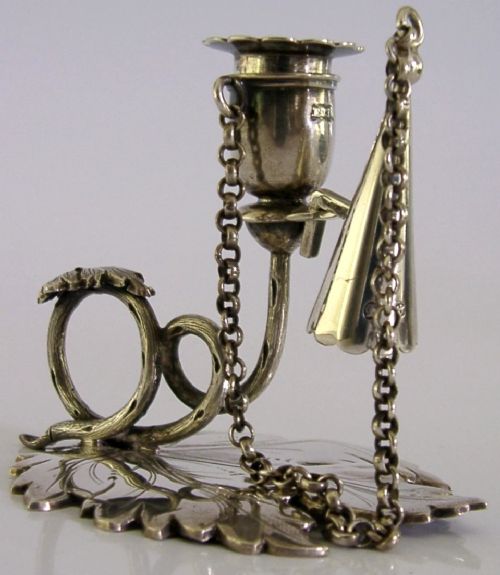
Beyond simple trays, the evidence shows variations incorporating stationary compartments, candlesticks, or tortoisehell embellishments. These objects reflect the formal writing rituals of an era before fountain pens and typewriters transformed daily correspondence.
Materials and Construction
Makers built these stands using sturdy hardwoods such as oak, mahogany, and burr walnut, frequently accented with turned brass galleries, applied bronze mounts, or silver plating. Timber bases were often carved or veneered, providing a stable heavy platform that would not slide across the writing surface when pens were lifted.
Glass production played a vital role, yielding heavy-cut inkwell inserts with snug-fitting collars designed to limit evaporation. Metal components were cast or plated, while specialty stands incorporated organic materials like tortoiseshell or carved Black Forest wood to catch the eye.
Joinery on the wooden bodies relied on precise dovetailing and housing joints to withstand the weight of heavy glass and metal fittings. Silver and pewter elements were worked by silversmiths and pewterers, incorporating hallmarked shields or decorative cast borders.
What Separates the Best Examples
Quality rests in the weight and integration of the materials. Superior stands feature heavy, lead-rich cut glass with precisely ground collars, paired with solid brass or substantial silver plating that shows crisp casting detail rather than soft, smoothed edges.
The sophistication of the secondary materials marks the upper tier of production. Exemplary pieces employ figured burr walnut, elaborate Boulle work, or finely detailed animal mounts like bronze lizards, whereas simpler utilitarian versions rely on plain turned oak with basic glass inserts.
Construction integrity also defines worth. Better stands exhibit tight, seamless joins in the timber frames, securely seated pen trays, and original matching inkwells rather than later replacement bottles that disrupt the balance of the piece.
Maple & Co·Walker And Hall
The Victorian Desk Stand Glossary
- Inkstand
- A fitted tray or stand holding inkwells, pen rests, and sometimes sanders or wafer boxes. It formed the centrepiece of any nineteenth-century writing table.
- Boulle work
- An elaborate form of marquetry utilising tortoiseshell and brass inlay, often seen on French-influenced desk accessories of the period. This technique creates a rich contrast of metallic sheen and dark organic pattern.
- Ormolu
- Gilded bronze mounts applied to furniture and desk stands to add decorative enrichment. The process involves treating the metal with an amalgam of gold and mercury.
- Ashford marble
- A black limestone inlaid with coloured mineral specimens, frequently produced in Derbyshire. It appears on decorative nineteenth-century desk wares and plaques.
- Stationery box
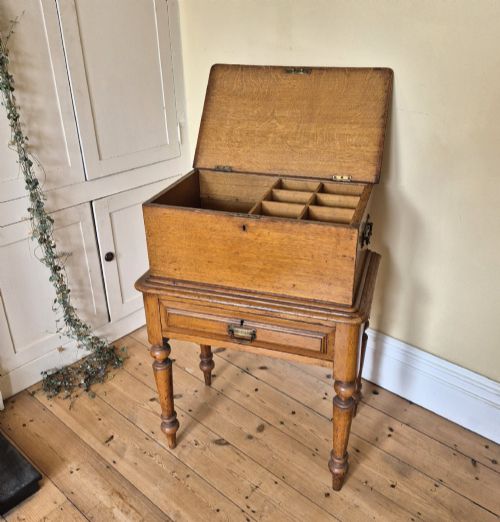
- A standing desktop cabinet with tiered slots for envelopes and letter paper. These often match the timber and decorative style of the accompanying inkstand.
Victorian Desk Stand: Frequently Asked Questions
How do I clean a brass desk stand?
Dust the surface gently with a dry, soft cloth to remove loose particles. Avoid abrasive metal polishes that can strip original patination and damage fine cast details.
If the metal requires deeper cleaning, use a mild soap solution on a damp cloth, drying the piece immediately to prevent water spots on the surrounding wood or felt bases.
Were these stands used in offices or homes?
They served both environments equally well, appearing in private libraries, drawing rooms, and commercial counting houses alike. Wealthy households placed ornate silver or tortoiseshell models in public reception rooms for guests.
Simpler oak or brass versions remained standard equipment for clerks and professionals who managed daily ledgers and correspondence.
Are the inkwells usually original to the stand?
Many surviving stands retain their matching glass inserts, but heavy daily use often resulted in breakage over the decades. Replacement inkwells are common in the antique market.
Look for glass that fits the collar precisely without rattling and matches the wear patterns visible on the rest of the metal or wooden base.
What is the difference between an inkstand and a desk tidy?
An inkstand focuses primarily on wet writing implements, featuring dedicated wells for ink and specific grooves to lay dip pens across. The core purpose is managing liquid ink safely.
A desk tidy expands the scope to hold stamps, envelopes, paper clips, and sealing wax alongside or instead of inkwells, acting as a general clearing house for desk clutter.