
Victorian Deep Seated Armchair
A victorian deep seated armchair offers generous proportions and low-slung comfort, designed for long hours of relaxation by the fire.
Victorian Deep Seated Armchair
A victorian deep seated armchair represents the height of nineteenth-century domestic comfort, built with low frames and expansive seating areas intended for complete repose. The selection centres heavily on nineteenth-century pieces, alongside related Edwardian and Regency examples that share the same generous scale.
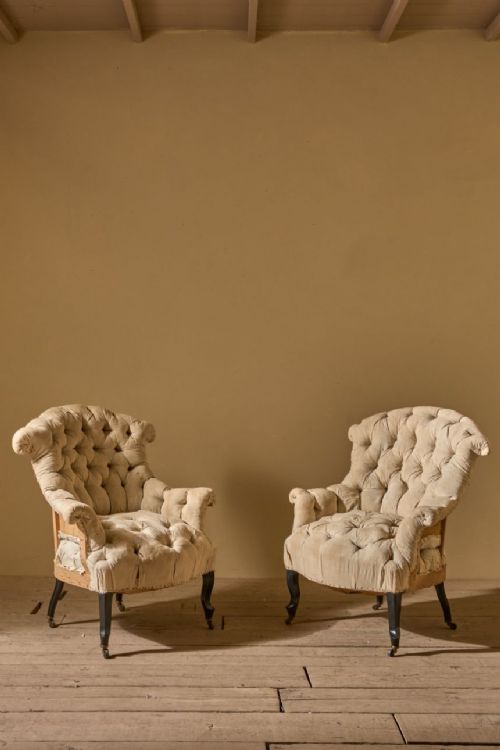
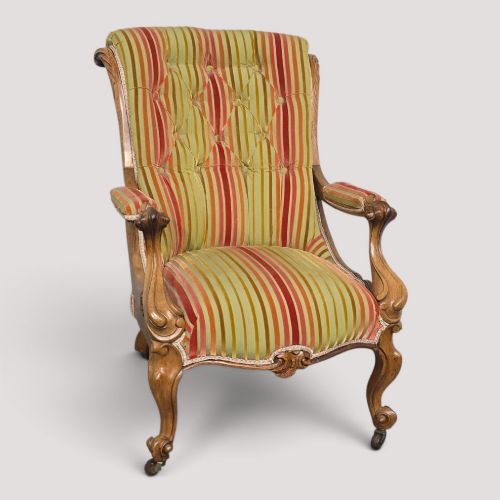
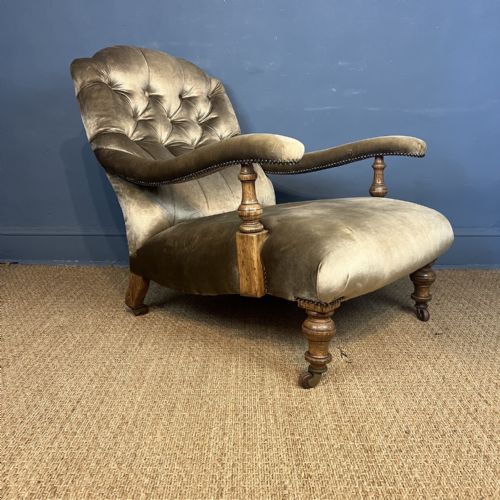
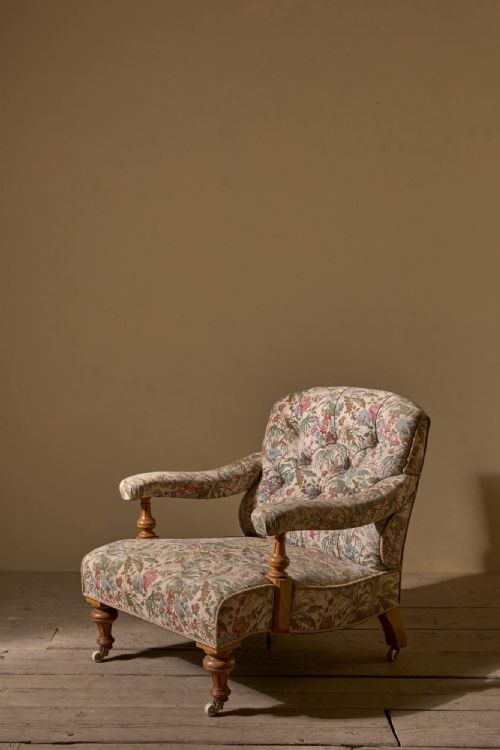
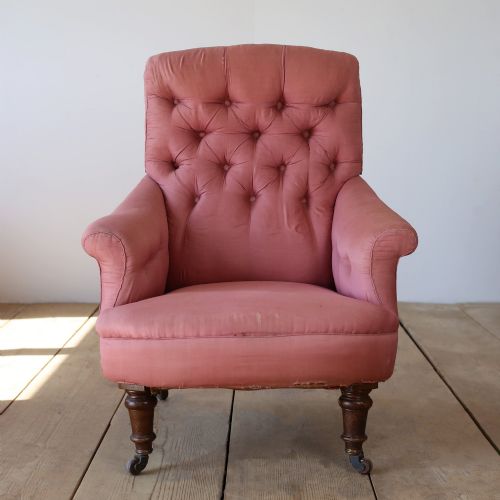
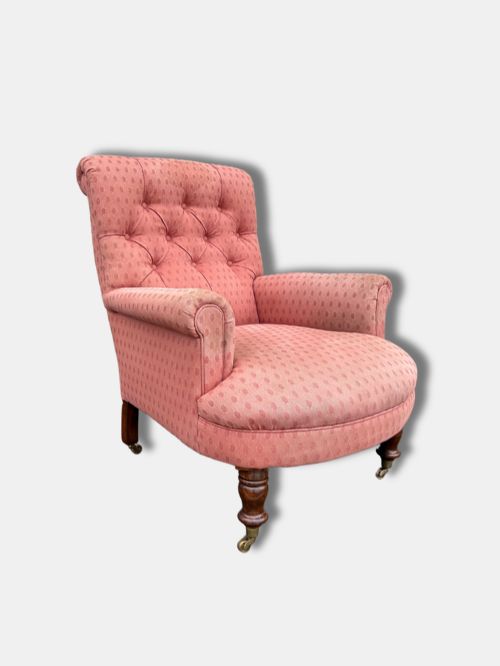
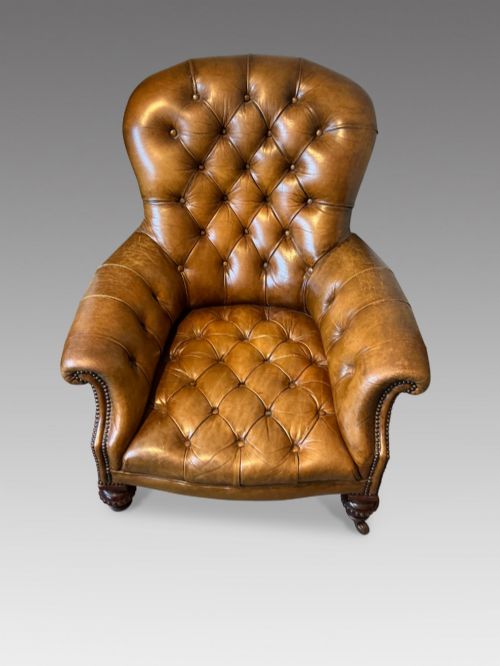
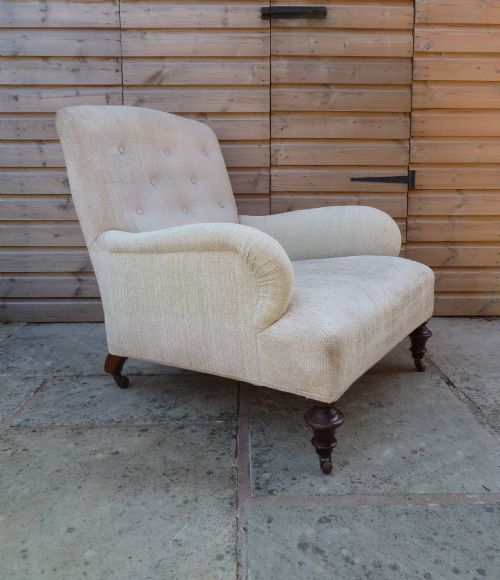
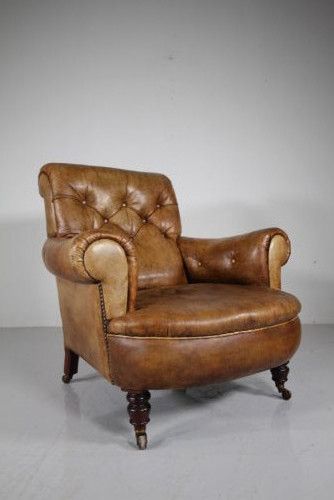
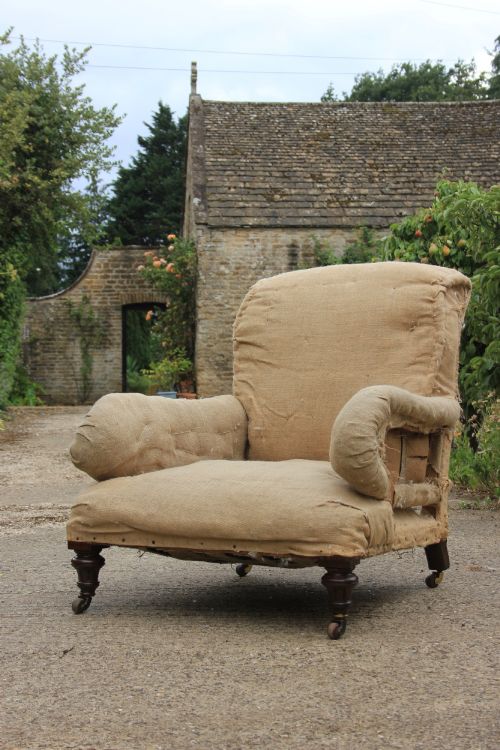
Forms range from button-backed library chairs and gentleman's chairs to low-slung country house models and distinctive Howard style designs. Many arrive upholstered in traditional materials like leather, calico, or hessian, while others retain damask and fabric coverings.
Origins span formal English workshops, Scottish country houses, and occasional French influences. Buyers frequently encounter pieces retaining their original deep springs, offering the substantial frame and low profile characteristic of the era.
How they were made
Makers built the heavy frames of these chairs using hardwoods such as mahogany, oak, and rosewood to ensure structural integrity under deep springing. Brass castors frequently support the legs, allowing easy movement across heavy carpets.
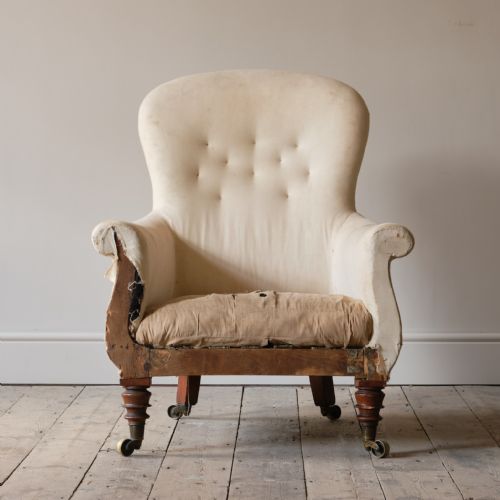
Upholstery techniques relied on webbing, coil springs, and stuffing materials like horsehair, enclosed beneath layers of hessian and calico before final finishing in leather or fabric. Button-backing required precise tensioning through the deep padding to secure the characteristic geometric indentations.
Several armchairs arrive paired with matching footstools, ensuring nineteenth-century occupants possessed every possible luxury for extended afternoon naps.
What varies in quality
The integrity of the internal springing and webbed foundation dictates the seating experience, distinguishing a properly supportive frame from one that has sagged over decades of use. Timber selection also separates standard workshop output from exceptional cabinet work, particularly in the carving of mahogany or rosewood legs.
Proportions dictate visual balance, with superior examples exhibiting a harmonious relationship between the depth of the seat and the rake of the back. Retaining original castors and undisturbed internal stuffing adds significant integrity to a piece.
Howard and Sons·Gillows·SF Cullen
The Victorian Deep Seated Armchair Glossary
- Button back
- A traditional upholstery method where deep indentations are formed by pulling twine through the padding and securing it to the frame with buttons. This technique keeps the internal stuffing firmly distributed.
- Howard style
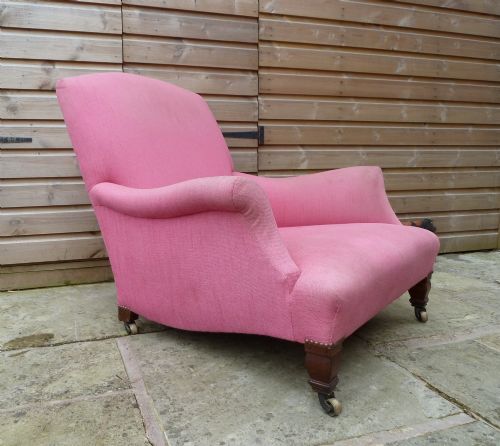
- A design archetype originating from a renowned Victorian firm, known for low-slung comfort, rolled arms, and deep cushioning. These chairs set the standard for English country house seating.
- Library armchair
- A sturdy, upholstered seat designed for prolonged reading, often framed in mahogany or oak with substantial armrests. They frequently feature deep leather upholstery suited to domestic studies.
- Castor
- A small wheel attached to the base of furniture legs to permit rolling. Brass is commonly utilised on nineteenth-century seating for durability and subtle decoration.
- Calico
- A plain-woven cotton fabric utilised as an inner lining beneath top-grade decorative textiles. It provides a stable foundation for traditional stuffing.
Victorian Deep Seated Armchair: Frequently Asked Questions
How do I identify a Howard style armchair?
A true Howard style chair is defined by low-slung proportions, gently rolled arms, and deep cushioning designed for maximum comfort. They often stand on low turned hardwood legs fitted with stamped brass castors.
Many examples from the period emulate this specific build, focusing on generous depth and restrained decoration rather than overt carving.
What is a deconstructed armchair?
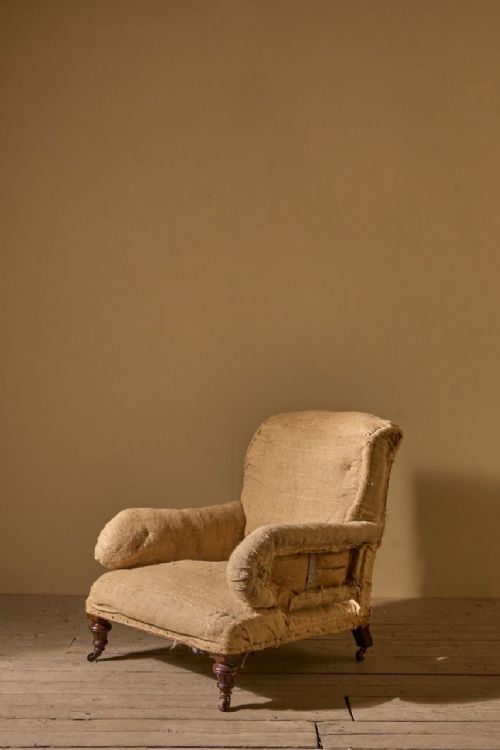
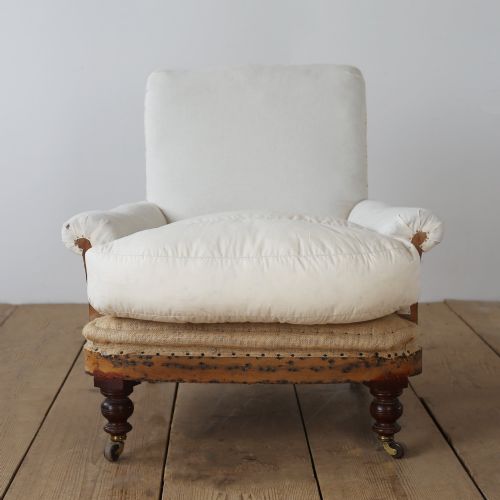
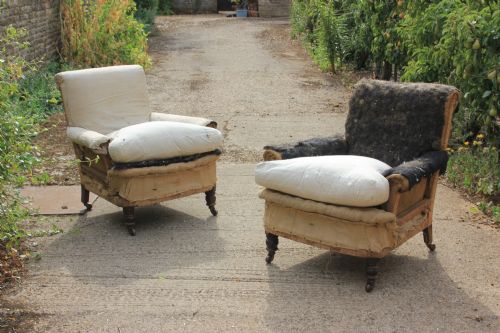
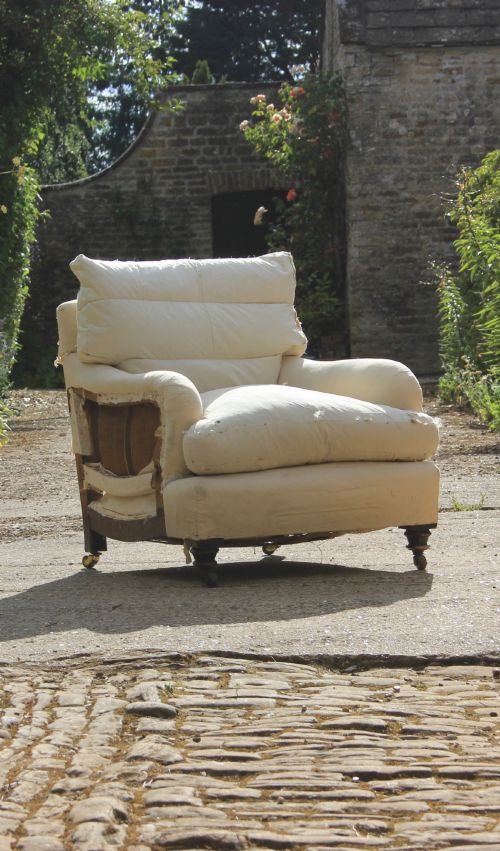
A deconstructed armchair strips away the outer decorative fabric to expose the raw hessian, webbing, and traditional stitching beneath. This presentation highlights the internal craftsmanship and materials used by nineteenth-century upholsterers.
Buyers choose these pieces to appreciate the sculptural quality of the wooden frame and internal padding without modern fabric finishes.
Are these chairs suitable for daily use?
These pieces were built for heavy domestic service using robust hardwoods and coil springing designed to endure decades of sitting. Their deep seats make them exceptionally comfortable for modern living spaces.
Checking the internal webbing and springs ensures the foundation remains supportive for regular daily relaxation.
How do I care for leather upholstery?
Nineteenth-century leather upholstery benefits from gentle cleaning and occasional application of appropriate conservation waxes to prevent drying. Keeping the material away from direct heat sources preserves the natural surface.
Allowing the leather to retain its natural patina maintains the historical character developed over generations of use.