
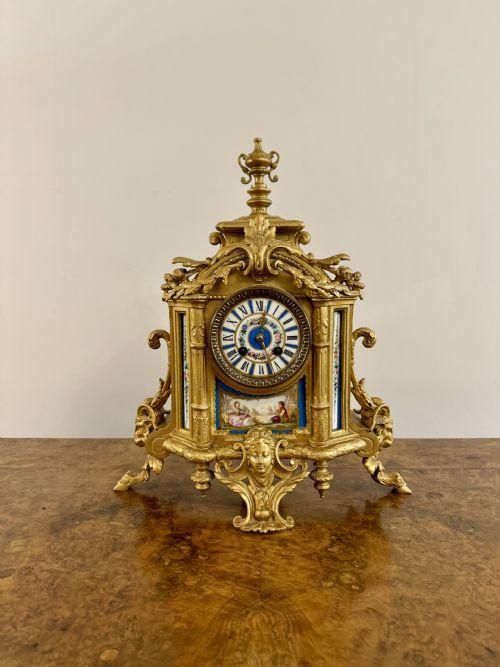


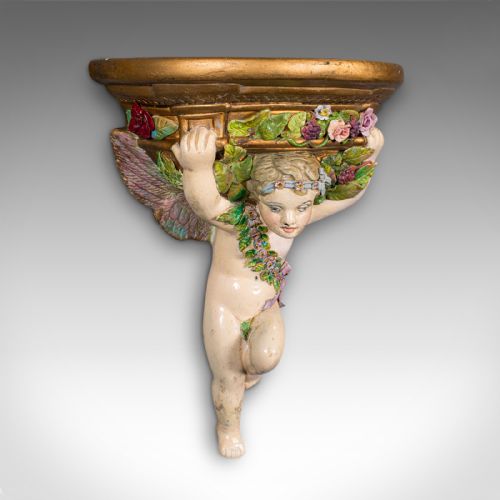

Victorian Decorative Shelf Clock
These victorian decorative shelf clock pieces bring sculptural brass, gilt bronze and porcelain into domestic rooms with the confident weight of the nineteenth century.

Victorian Decorative Shelf Clock
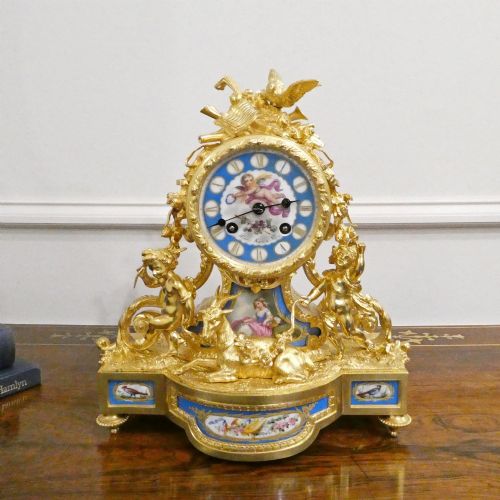
When buyers search for a victorian decorative shelf clock, they encounter an array of mantel clocks, bracket clocks and carriage clocks originating largely from French workshops and English makers during the nineteenth century. These objects combine timekeeping mechanics with elaborate sculptural housings designed to command attention on a mantelpiece or shelf.
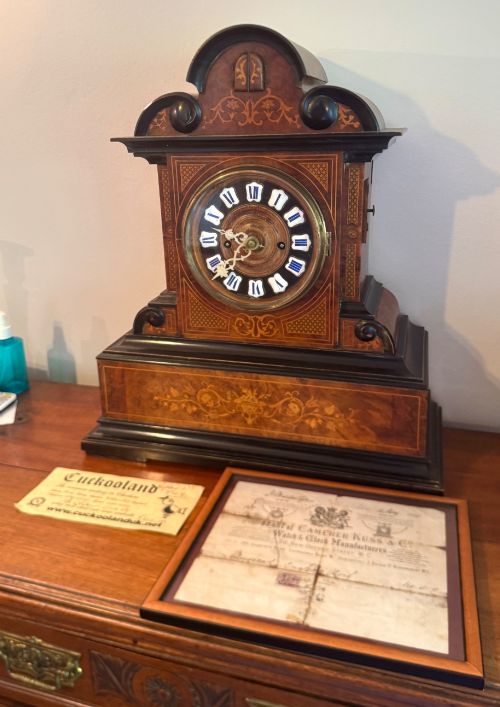
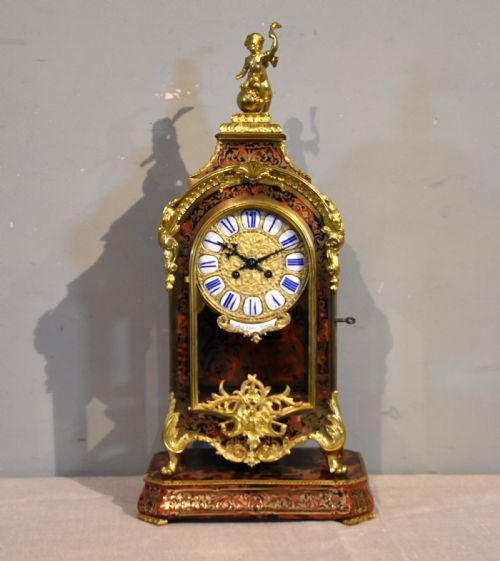
The pieces on this page span the Victorian era, utilising diverse stylistic revivals such as Rococo, Louis XIV and Louis XVI. Forms range from classical gilt bronze cases decorated with porcelain panels to ebonised wood and marquetry walnut housings.
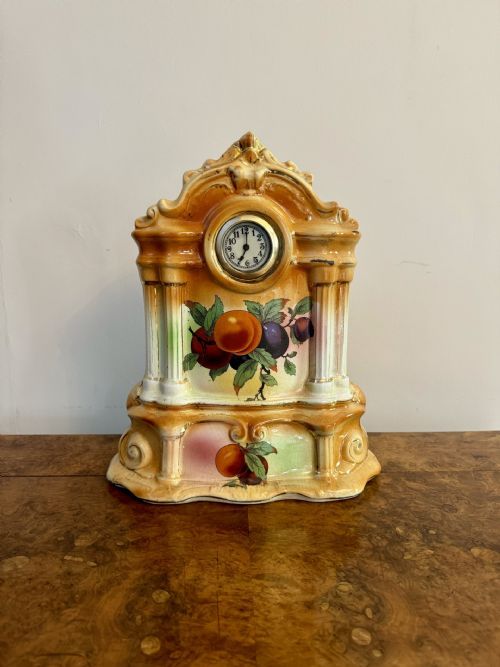
Buyers are most likely to meet French ormolu and porcelain mantel clocks dating from the mid to late nineteenth century, alongside earthenware Staffordshire figures and specialised double-sided carriage clocks. Each type reflects the period's taste for decorative domestic metalwork and ceramic integration.
Standards of Execution
Quality in these pieces depends upon the crispness of the bronze or ormolu casting and the refinement of the chased detailing across the metal case. Superior examples display deeply articulated ornamentation rather than soft, generalized moulding.
The integration of ceramic elements further separates the range, with hand-painted porcelain panels and crisp enamel dials demonstrating higher artistic ambition than plain or mass-produced substitutes. The harmony between the clock movement, case materials and decorative mounts dictates the overall calibre of the object.
One exceptional timepiece keeps the domestic peace by featuring two small bronze doves perched atop the dial.
Henry Marc·P.H Mourey
The Victorian Decorative Shelf Clock Glossary
- Ormolu
- A technique of applying finely ground high-carat gold to an object of bronze, creating a rich golden finish. This surface treatment defines the luxurious appearance of many nineteenth-century French cases.
- Champlevé
- An enamelling technique where troughs are dug into a metal surface and filled with vitreous enamel before firing. It creates vibrant coloured patterns across clock bezels and bezels.
- Boulle
- A style of marquetry using brass and tortoiseshell inlaid in intricate patterns, named after the cabinetmaker André-Charles Boulle. It provides a striking dark and golden contrast on wooden clock cases.
- Bracket clock
- A portable clock traditionally designed to sit upon a wall bracket or table. Many Victorian examples include matched wall brackets for suspension.
- Striking clock
- A clock mechanism that chimes the hours or half-hours on a bell or gong. These 8-day movements require regular winding to maintain their audible function.
Victorian Decorative Shelf Clock: Frequently Asked Questions
How do I wind a Victorian shelf clock?
Most mechanical shelf clocks utilise a key inserted into winding holes on the enamel dial to tension the mainsprings. Care must be taken not to over-wind the movement.
Ensuring the clock is placed on a level surface helps the pendulum maintain an even beat and accurate timekeeping.
What is the difference between ormolu and gilt metal?
Ormolu specifically refers to mercury gilding applied to a bronze base, resulting in a deep, lasting lustre characteristic of fine French manufacture. Gilt metal generally denotes a less costly base alloy with a surface wash of gold.
Clocks described as gilt bronze or ormolu typically represent higher workshop standards than standard gilt metal pieces.
Where should I place a heavy bronze clock?
These dense metal and porcelain clocks require a sturdy mantelpiece, shelf or heavy furniture top capable of supporting substantial weight. Wall-mounted bracket clocks need secure fixings into solid masonry or wall studs.
Keep them away from direct heat sources and damp environments to protect the wood, gilding and delicate enamel dials.
How do I identify French pieces from English ones?
French Victorian shelf clocks frequently lean into Louis XIV, Louis XV or Rococo revival styles utilising ormolu, champlevé enamel and Sevres-style porcelain. English examples often favour walnut, marquetry or simpler ceramic bodies like Staffordshire pottery.
Inscribed signatures on the backplates or dials often point directly to continental makers.