
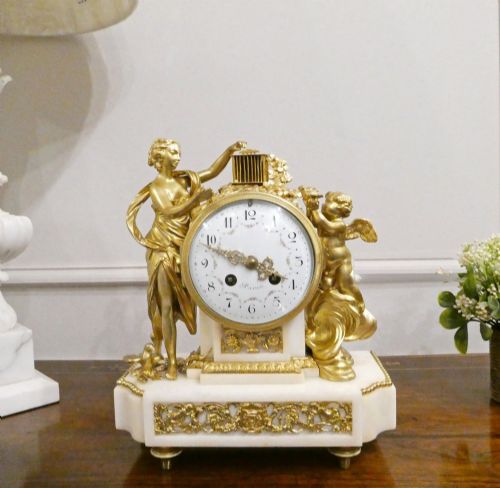
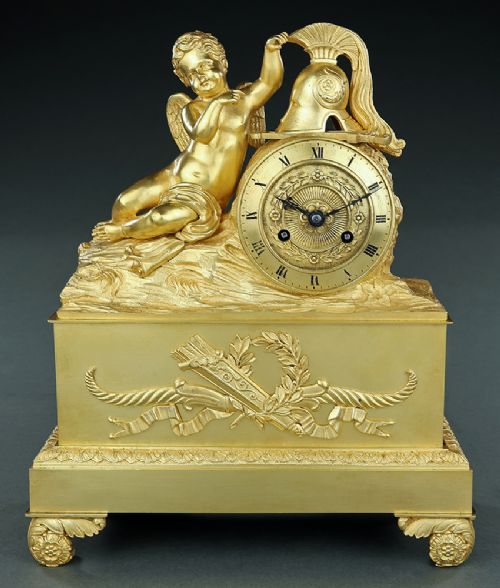


Cherub Pendule Clock
These cherub pendule clock examples combine gilt bronze, marble and classical figures to grace a mantelpiece with enduring continental style.
Cherub Pendule Clock
A cherub pendule clock is an ornamental timepiece often featuring figures of cupids or cherubs alongside classical architectural styling. Buyers searching this phrase will encounter mantel clocks and wall clocks originating from continental European traditions, predominantly French workshops.
The pieces available on this page span the eighteenth and nineteenth centuries, taking inspiration from Louis XVI, French Empire and Rococo revival styles. Ormolu, gilt bronze and marble form the primary visual vocabulary of these ornate decorative objects.
Mantel clocks dominate the selection, frequently paired with enamel dials and mechanical movements. Most examples date from the Victorian era and the mid to late nineteenth century, reflecting the period appetite for elaborate domestic timepieces.
How they were made
Craftsmen utilised cast bronze and brass, applying gold gilding or ormolu finishes to create a luminous metallic surface. Marble and porcelain provided contrasting structural and decorative elements for the bases and dials.
Intricate figural castings of cherubs and cupids were combined with decorative scrollwork and floral motifs associated with French rococo and empire aesthetics. Enamel dials carried the numerals, while mechanical movements relied on traditional escapements like silk suspension.
Listings feature nineteenth-century French mantel clocks incorporating gilt bronze, ormolu, and specimen marble.
What varies in quality
The refinement of the cast bronze figures and the crispness of the chasing separate standard timepieces from superior examples. Finer pieces display sharply defined facial expressions on the cherubs and deep, even gilding across the ormolu surfaces.
The selection of materials also dictates the standard of the object, with multi-coloured specimen marble bases and hand-painted porcelain panels indicating higher craftsmanship. Integration between the sculptural bronze work and the functional clock movement marks the distinction between ordinary and exceptional pieces.
Henry Dasson·F Marti
The Cherub Pendule Clock Glossary
- Ormolu
- A metallic technique involving the application of finely ground high-carat gold to a bronze base. This process creates a rich, durable golden finish characteristic of decorative French clocks.
- Silk suspension
- A method of hanging the pendulum by a short thread of silk within the movement. It appears on earlier clocks and offers a gentle, adjustable swing.
- Cartel clock
- A wall clock housed in an ornate frame made of gilt bronze or ormolu. These decorative timepieces were designed to mount directly onto wood paneling or masonry walls.
- Enamel dial
- A clock face created by fusing powdered glass onto a metal plate at high temperatures. The resulting glossy white surface provides a crisp background for painted numerals.
Cherub Pendule Clock: Frequently Asked Questions
How do I wind a cherub pendule clock?
Most mechanical clocks require a key inserted into the winding arbors on the dial face. Turn the key gently until resistance is felt, taking care not to overwind the mainspring.
Different movements require different intervals, commonly needing attention every eight days. Consult the specific movement requirements before attempting to set the time or tension.
What is the silk suspension method?
Silk suspension uses a delicate thread of silk to support the pendulum inside the clock movement. This traditional mechanism allows for precise regulation of the beat.
Because silk degrades over time, these suspensions require careful handling and occasional professional maintenance to keep the clock running accurately.
How do I identify a Louis XVI style clock?
Louis XVI style timepieces lean towards classical symmetry, straight architectural lines, and restrained ornamental motifs like urns and swags. Cherubs on these pieces often hold formal garlands rather than dynamic rococo flourishes.
Ormolu mounts on these clocks emphasise geometric balance over asymmetrical curves, reflecting the neoclassical shift in French design.
Where should I place a marble mantel clock?
Marble mantel clocks require a sturdy, level surface capable of supporting substantial weight. A solid mantelpiece or heavy sideboard provides the ideal stable foundation.
Keep the clock away from direct sunlight, moisture, and extreme temperature fluctuations to protect the delicate marble, ormolu finish, and internal mechanical parts.