


Victorian Decorative Oil Lamp
These Victorian decorative oil lamps bring warm period character and glowing ambient light to a room.
Victorian Decorative Oil Lamp
A Victorian decorative oil lamp is a functional lighting piece from the nineteenth or early twentieth century that combines a fuel reservoir with a burner and often a glass shade. When you search for a victorian decorative oil lamp, you encounter table lamps created during periods spanning the mid-nineteenth century to the early twentieth century.
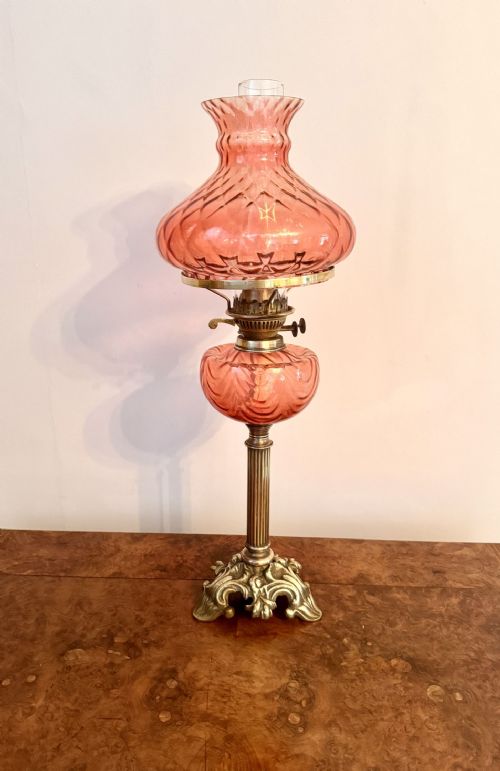
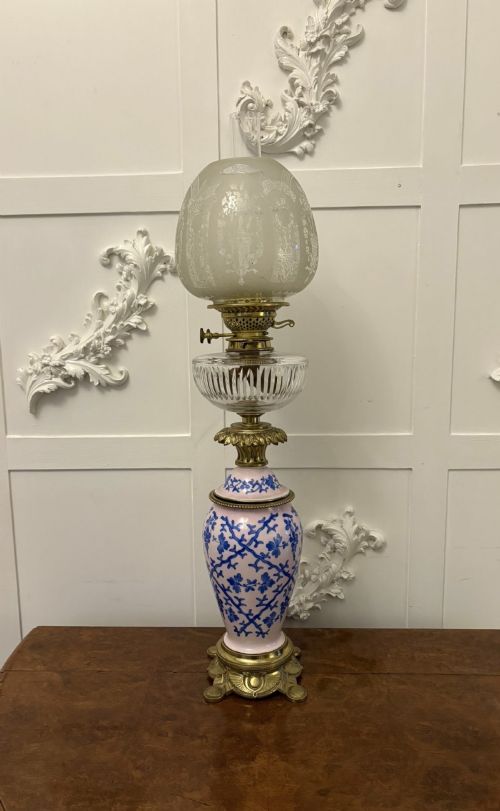
Makers utilised a rich mix of materials to construct these lighting pieces, ranging from gleaming metals to delicate ceramics and coloured glasses. Such variety ensures that each piece displays a distinct aesthetic suited to period interiors.
Construction and Materials
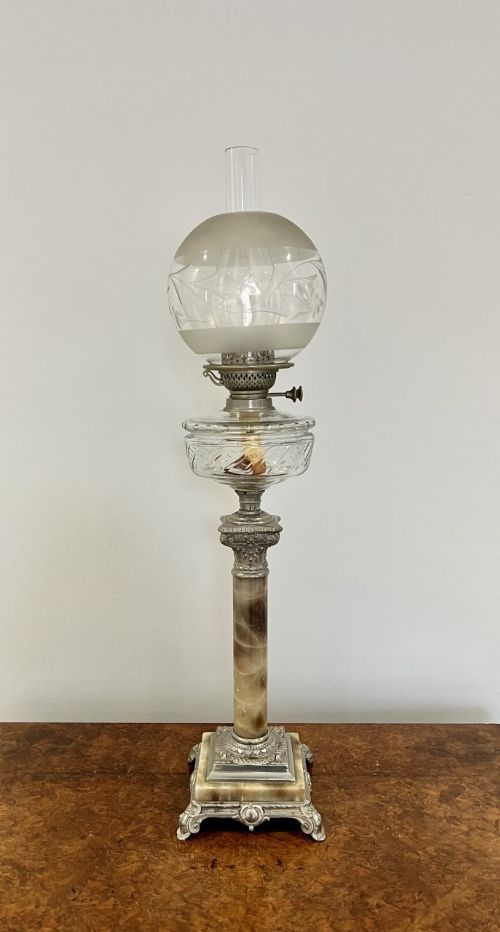
Makers constructed the structural bodies of these lamps using metals like brass, bronze, copper, and silver plate, frequently pairing them with heavy onyx or marble bases for stability. These metallic elements were cast, turned, and sometimes cold painted to achieve intricate surface details.
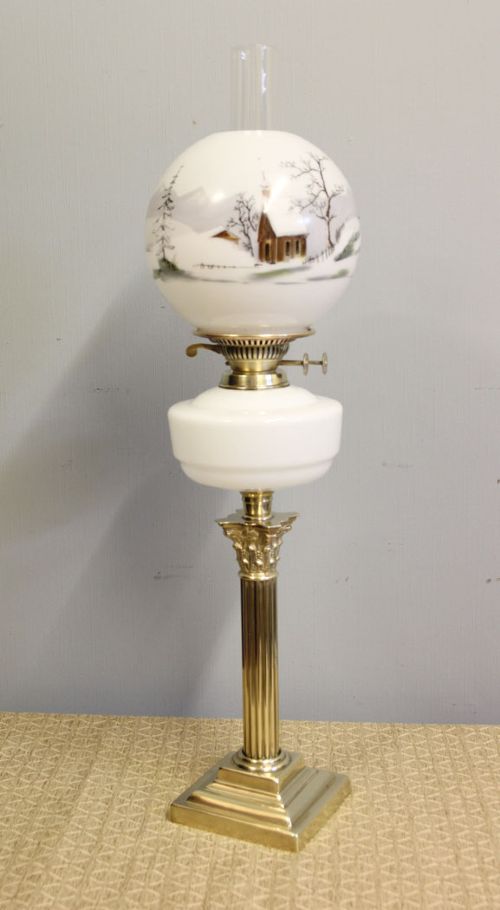
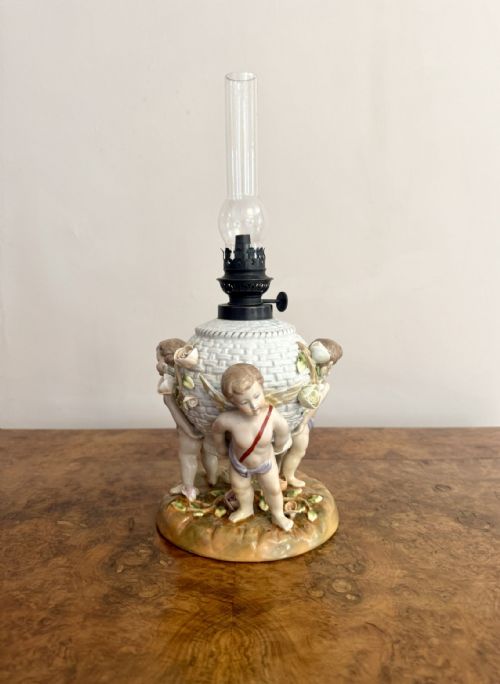
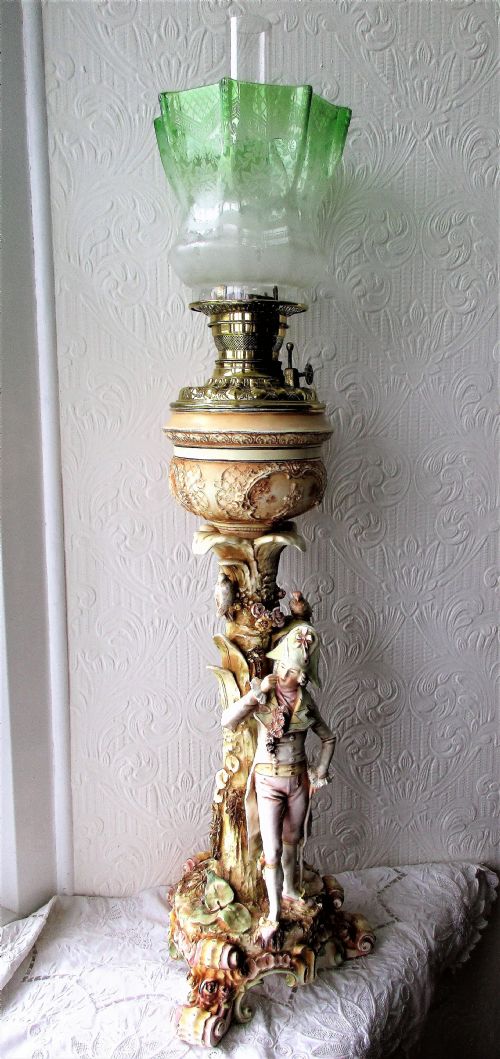
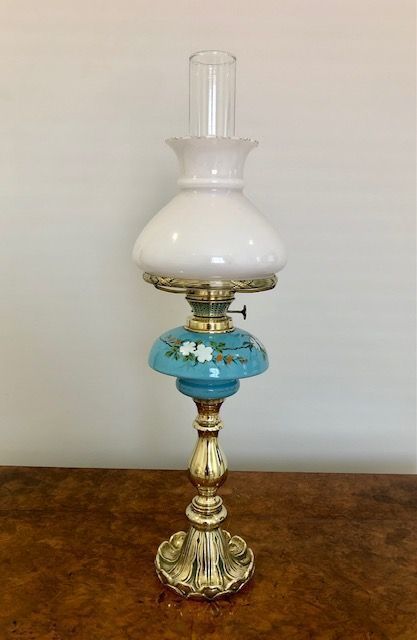
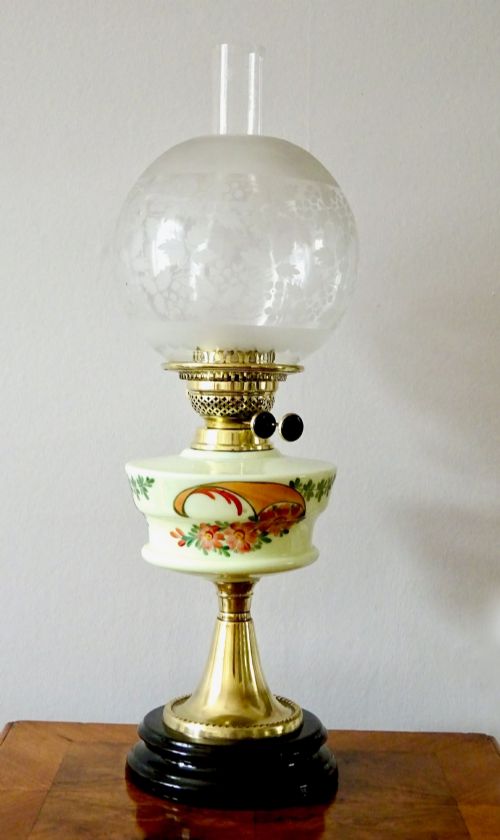
Porcelain, ceramic, opaline glass, and milk glass form the decorative fonts and bodies, often decorated with hand-painted scenes, gilt highlights, or enamelled motifs. Paired with etched or tinted glass shades, these components created diffused, colourful illumination.
Some winter scene shades seem ready to drop actual snowflakes onto the mantelpiece.
Assessing Quality
The fineness of a piece rests in the crispness of its casting and the detail of its hand-painted decoration. Superior examples display sharply rendered Corinthian capitals, finely modelled figural components, and well-preserved gilt work.
The choice and combination of materials also dictate the tier of a piece, with complex mixed-media constructions featuring onyx, bronze, and specialised porcelain standing apart from simpler brass standards.
Sitzendorf porcelain
The Victorian Decorative Oil Lamp Glossary
- Font
- The oil reservoir of the lamp, typically made of glass, porcelain, or metal to hold the fuel safely. It sits atop the base and below the burner mechanism.
- Corinthian Column
- A classical architectural column style featuring ornate acanthus leaves on the capital, frequently utilised for the stems of metal table lamps. This design reflects the classical revival tastes of the period.
- Opaline Glass
- A pale, translucent glass that diffuses light softly, often tinted in pastel shades and used for lamp bodies or shades. It gained popularity during the nineteenth century for decorative homewares.
- Cold Painted
- A technique where bronze or metal figures are painted with non-heat-set paints after the casting process. This method allows for vibrant surface colours but requires careful handling to preserve the finish.
- Faience
- Tin-glazed earthenware decorated with opaque coloured glazes, seen on ceramic lamp bodies. It provides a rich ground for hand-painted botanical or figurative designs.
Victorian Decorative Oil Lamp: Frequently Asked Questions
How do I operate an old oil lamp?
Operating a vintage lamp requires filling the reservoir with a suitable liquid fuel, such as paraffin, and allowing the wick to saturate completely before lighting. Adjust the wick height carefully to control the flame size and prevent smoke.
Most decorative pieces found today serve primarily as ornamental objects or have been safely converted to electricity for modern home use. Ensure any conversion work complies with current safety standards.
Are these lamps safe to use with oil?
While these pieces were originally designed to burn lamp oil, using them with fuel today requires a thorough inspection of the reservoir and burner by a specialist. Cracks in glass fonts or perished seals pose significant safety risks.
Many collectors prefer to display them as decorative objects or arrange professional electrical conversions to enjoy the aesthetic without handling flammable liquids.
How do I clean a brass and glass lamp?
Clean brass components gently with a soft cloth to remove dust, avoiding harsh abrasive polishes that can strip antique patina. Glass shades and fonts can be washed in warm soapy water and dried thoroughly.
Take special care around hand-painted porcelain sections, cold painted bronze surfaces, and gilt highlights to prevent accidental damage to delicate finishes.