




Traditional Oil Table Light
When you search for a traditional oil table light, you are looking at nineteenth and early twentieth century lighting built from brass, glass, and ceramic.
Traditional Oil Table Light
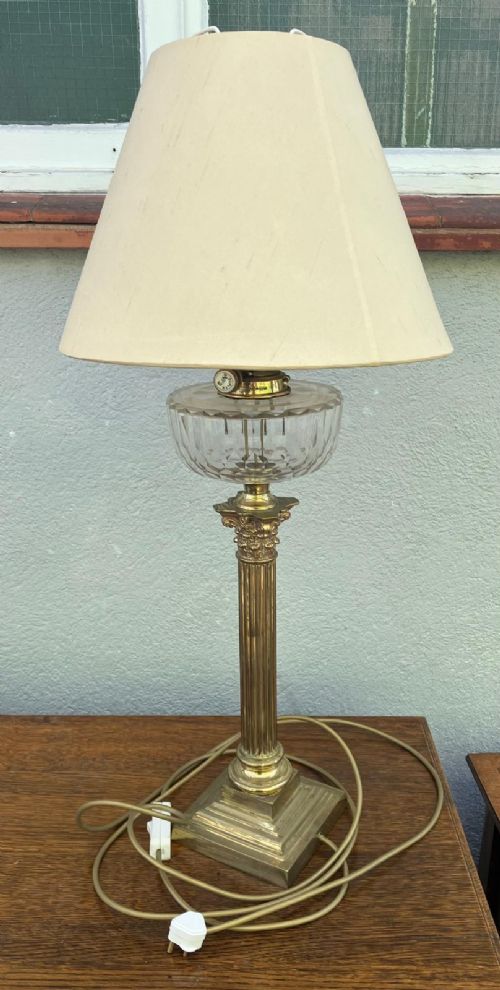
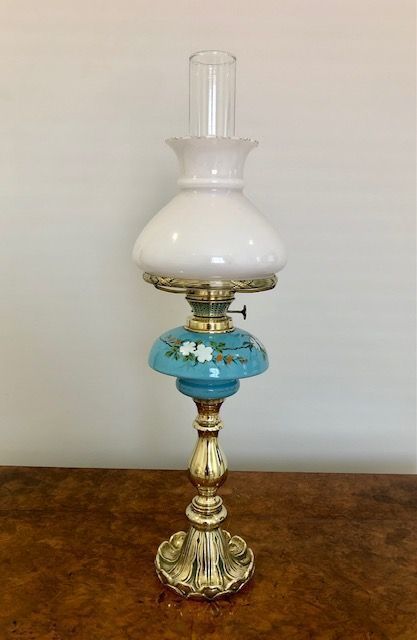
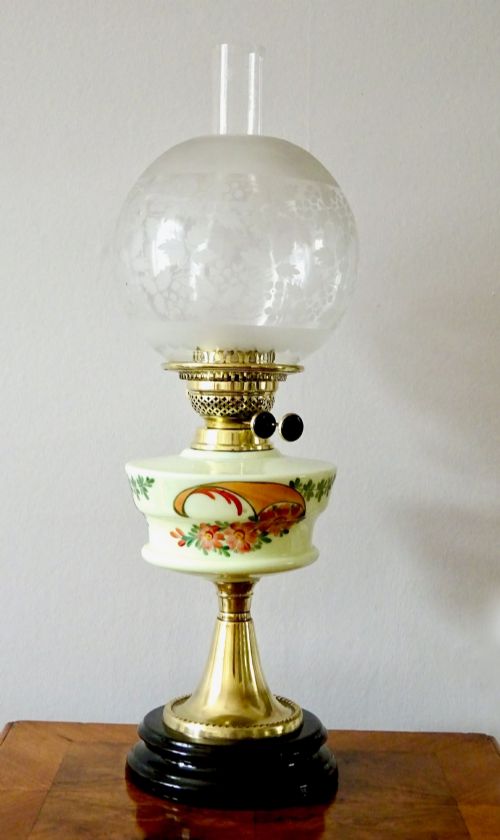
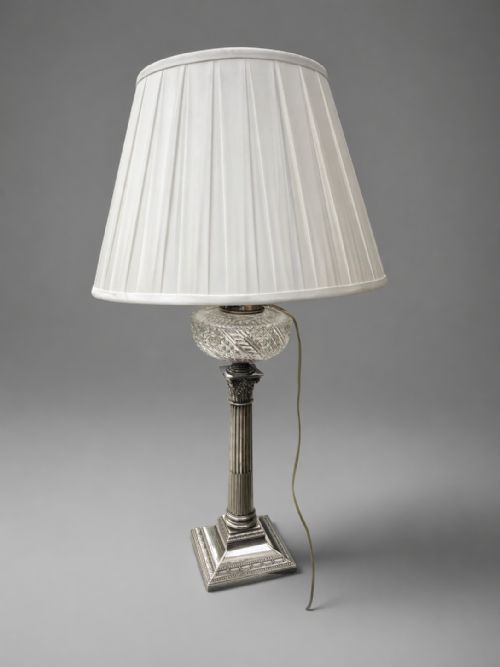
A traditional oil table light is a domestic lighting piece designed to burn paraffin or oil on a table or desk surface, appearing predominantly as Victorian and Edwardian examples. The listings show forms ranging from student lamps with implements to tall Corinthian column lamps and cottage table oil lamps.
You will most frequently encounter brass bases paired with glass reservoirs and shades, spanning periods from the mid-nineteenth century up to the early twentieth century. Many examples on this page retain their original proportions while others show later conversions to electric operation.
Materials and construction
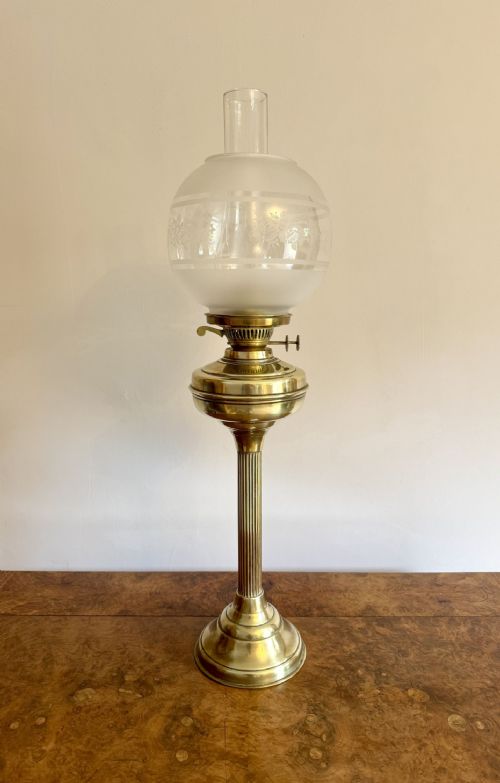
The construction relies heavily on cast and turned brass, often formed into classical columns or heavy bases to provide stability for the fuel reservoir above. Metals such as copper and silver plate also appear alongside repousse work on French examples.
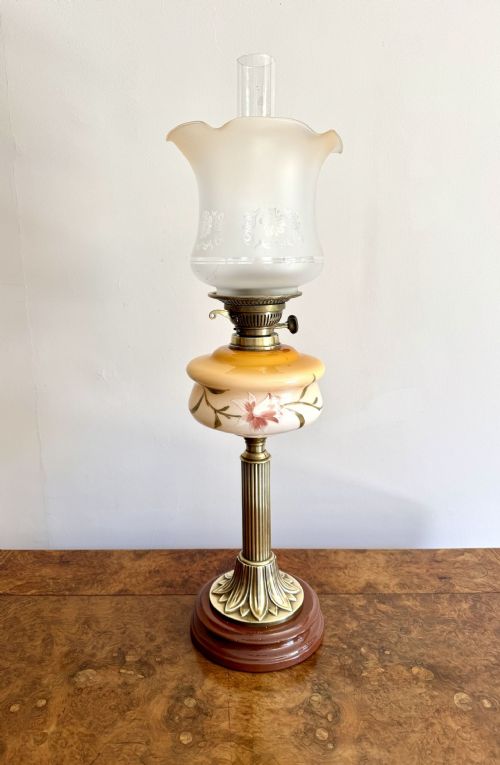
Reservoirs and shades utilise decorative glass techniques, incorporating opaline glass, cut glass, and cranberry glass to diffuse the light. Fabric shades and ceramic elements complete the construction of these table lights.
Some student lamps still carry their original implements, proving that nineteenth-century scholars were just as prone to losing their tools as modern ones.
Assessing quality and finish
Quality in a traditional oil table light rests upon the weight of the metal casting and the precision of the brass work, particularly in architectural details like Corinthian capitals. Heavy brass bases and crisp detailing separate finer examples from simpler cottage pieces.
The finish and material of the shade and font also determine the standard of the piece, with complex cut glass reservoirs and hand-etched glass tulip shades representing superior manufacture. Maker attributions or structural completeness further distinguish individual pieces.
Young s Special·Messengers·Harrods
The Traditional Oil Table Light Glossary
- Duplex
- A twin-burner mechanism designed to burn two flat wicks side by side, producing a brighter flame than single-wick burners. This system required a wider wick channel and a corresponding duplex gallery.
- Font
- The oil reservoir of the lamp, positioned above the base to hold the fuel supply. Fonts are frequently made from coloured glass, cut glass, or matching brass.
- Corinthian column
- An architectural column style featuring ornate acanthus leaves on the capital, frequently utilised for the stems of nineteenth-century brass table lamps. This classical revival style added considerable weight and formality to the lighting piece.
- Opaline glass
- An opaque, milky-white glass popular for lamp shades to soften and diffuse the light output. It provides a clean, bright appearance on Victorian and Edwardian lamps.
- Repousse
- A metalworking technique where the design is hammered into relief from the reverse side. This decorative method appears on French brass bases.
Traditional Oil Table Light: Frequently Asked Questions
How do I date a traditional oil table light?
Dating relies on stylistic clues, patent marks on the burner mechanisms, and the construction methods used for the brass and glass components. Victorian pieces often display heavier cast brass and more ornate classical detailing than later Edwardian versions.
The evolution of shade shapes and glass colours, such as cranberry or opaline, also helps narrow the period of manufacture between the mid nineteenth century and the early twentieth century.
Were these lamps converted to electricity?
Many traditional oil table lights have been converted to electricity to allow safe everyday use in modern homes. This process typically involves running a cord through the burner assembly while preserving the exterior brass and glass body.
Converted lamps retain their original decorative character and proportions as table lighting while removing the need for paraffin or oil operation.
What is a student lamp?
A student lamp is a specialised task lighting form featuring an adjustable arm or a single upright stem designed to focus light downward onto a desk or workspace. These often included specific metal implements for trimming wicks and managing the flame.
They were built for reading and writing before general electric lighting became common in homes and study rooms.
How should I clean a brass lamp base?
Brass lamp bases benefit from gentle dusting and occasional cleaning with a non-abrasive cloth to preserve the metal surface. Harsh metal polishes can strip away the natural patination accumulated over the centuries.
Keeping glass shades and fonts clean with warm soapy water maintains the clarity and colour of cranberry and opaline glass.