




Victorian Davenport Side Drawers
Victorian davenport side drawers offer compact writing surfaces paired with ingenious storage, combining practicality with rich nineteenth-century cabinetmaking.
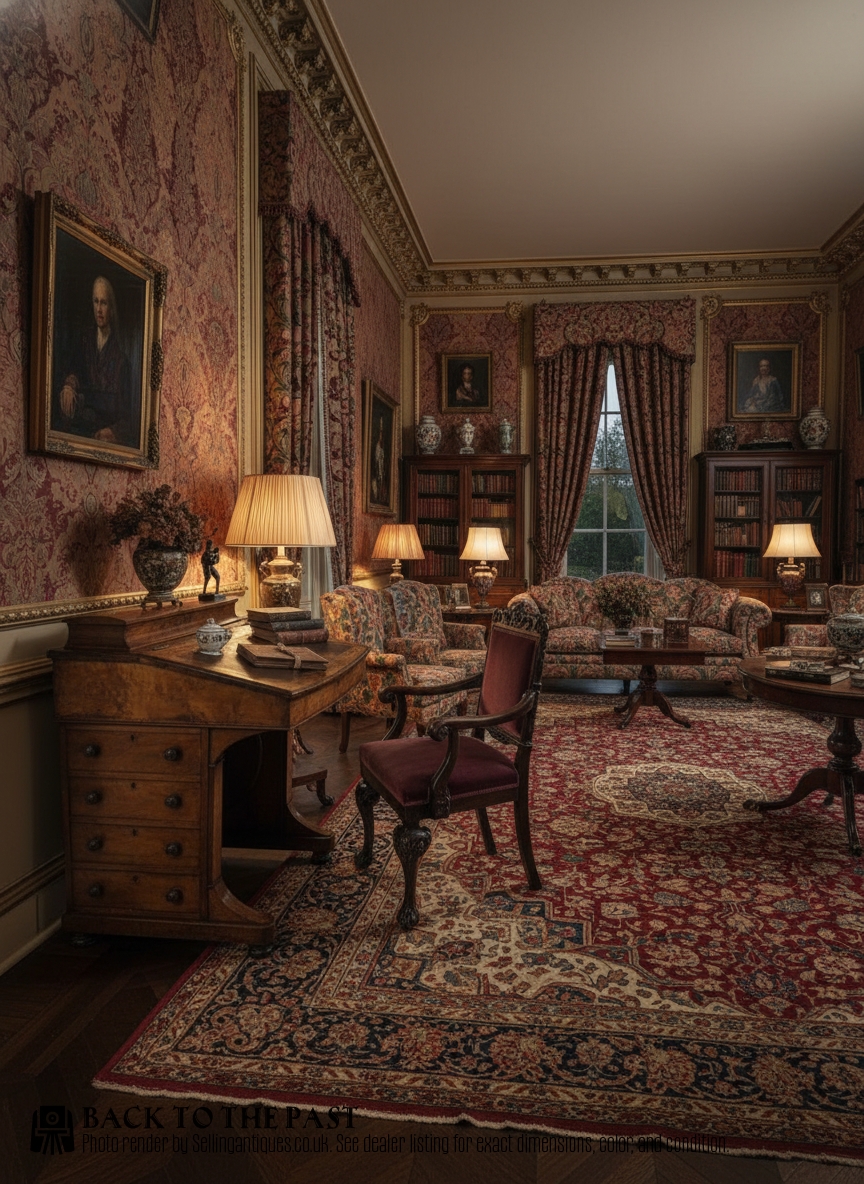
Victorian Davenport Side Drawers
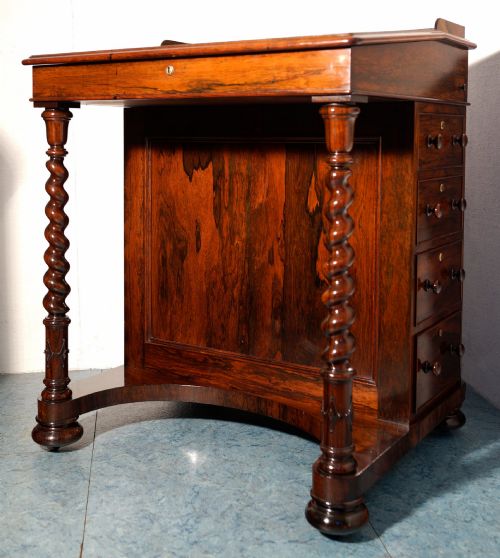
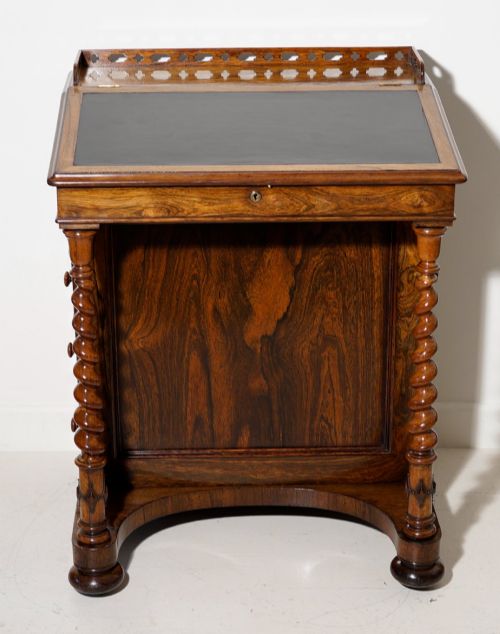
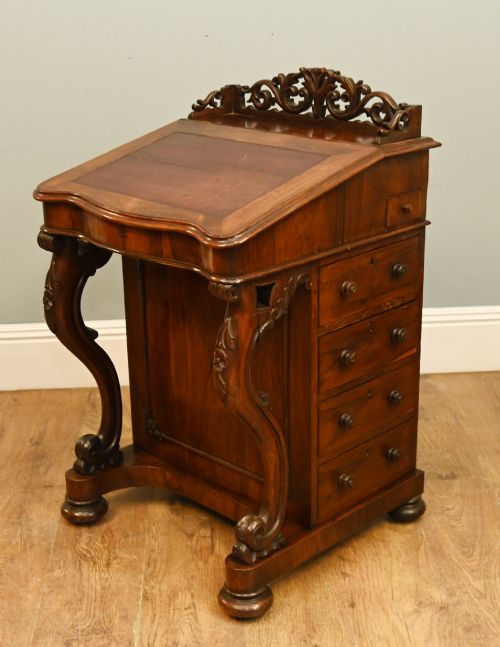
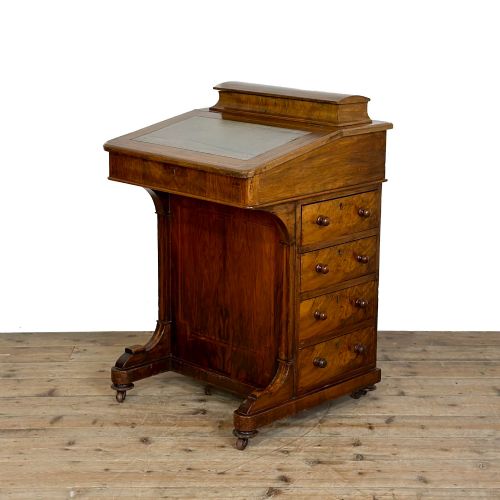
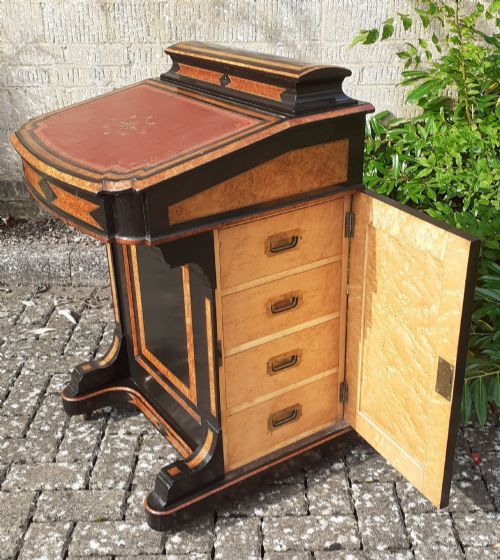
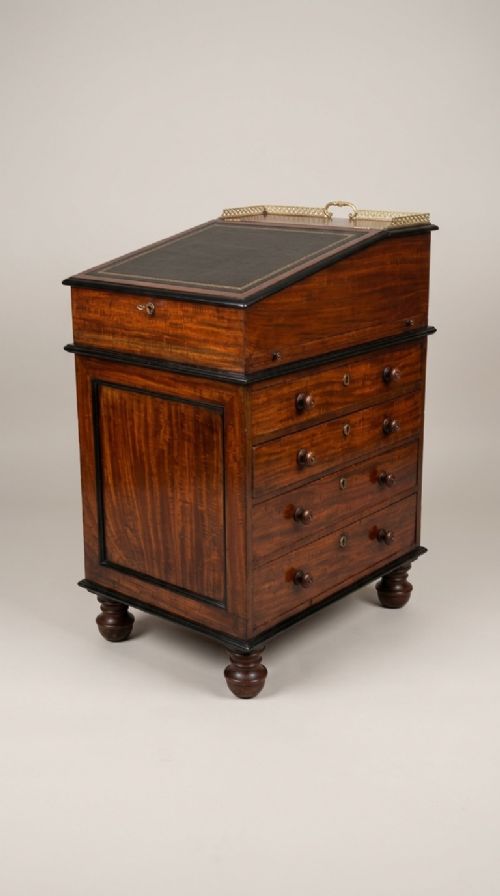
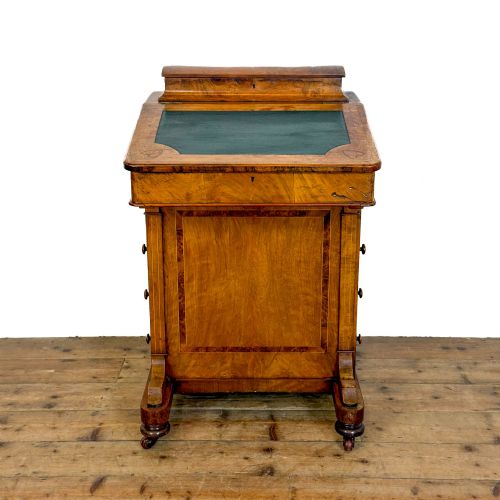
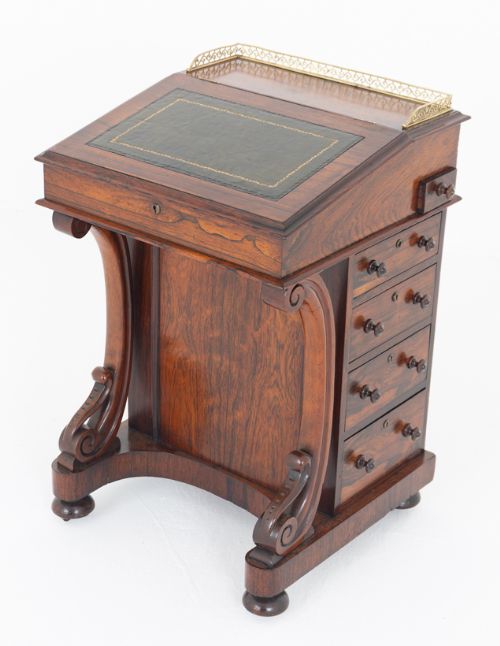
Victorian davenport side drawers are compact writing desks characterised by a sloped writing surface and banks of drawers positioned along the side. The form emerged strongly in the nineteenth century, encompassing styles from Regency and William IV to Early Victorian and later decades.
You will most frequently encounter walnut, burr walnut, and mahogany variants on this page, often featuring leather writing inserts and brass hardware. These pieces served as convenient writing stations in nineteenth-century drawing rooms and boudoirs where space was at a premium.
Materials and construction
Cabinetmakers utilised rich timber veneers such as burr walnut, pollard oak, rosewood, and flame mahogany over sturdy secondary woods, applying intricate marquetry and ebonised details to enhance the visual depth. Tops frequently lift or slide, concealing stationary compartments and small pigeonholes beneath the sloped writing flap.
Drawers are integrated into the side of the pedestal cabinet, sometimes operating alongside dummy drawers on the reverse to maintain a balanced appearance. Brass fittings, leather inserts, and occasionally keys secure the functional integrity of these compact writing desks.
Secret compartments and hidden pen trays lurk beneath sliding tops, rewarding the inquisitive writer with unexpected hiding spots.
Assessing quality and craftsmanship
Superior examples display exceptional figure in the timber, such as highly figured burr walnut or meticulously matched flame mahogany veneers across the fall-front and sides. The precision of the inlay work and the integration of sliding mechanisms or piano tops further distinguish finer workshops from standard production.
The choice of secondary woods, the execution of the dovetail joints within the side drawers, and the retention of original brass hardware and fitted leather surfaces elevate certain desks above others. Maker attribution, where discernible through structural finesse or branding, marks the upper tier of these writing desks.
Gillows·James Winter and Son
The Victorian Davenport Side Drawers Glossary
- Davenport desk
- A compact nineteenth-century writing desk featuring a sloping top and a pedestal base with drawers. The design prioritises small-scale functionality.
- Burr walnut
- A prized timber veneer obtained from the deformed growths on walnut trees, showing swirling grain patterns. It was heavily utilised during the Victorian period for decorative surfaces.
- Fall-front
- The hinged writing flap on a desk that drops down to provide a flat surface for correspondence. It often conceals internal stationery compartments.
- Pedestal
- The upright columnar base supporting the writing surface of the davenport, housing the side drawers. It provides structural stability to the compact form.
- Marquetry
- Decorative veneer work arranged in pictorial or geometric patterns using various woods. It appears on the writing slopes and panels of select pieces.
Victorian Davenport Side Drawers: Frequently Asked Questions
What is a davenport desk?
A davenport desk is a small nineteenth-century writing desk featuring a sloping, often leather-lined writing surface above a pedestal base.
The pedestal typically contains a bank of functional side drawers, occasionally balanced by dummy drawers on the opposite side to ensure a symmetrical appearance.
How were these desks used?
These compact pieces were designed for correspondence and light administrative tasks in domestic settings such as drawing rooms or private boudoirs.
The internal compartments kept stationery and writing implements neatly organised beneath the main writing flap when not in use.
How do I date a davenport?
Dating relies on observing stylistic markers, timber choices, and construction techniques spanning the Regency, William IV, and Victorian periods.
Earlier examples often showcase rosewood or flame mahogany, while the later decades of the nineteenth century favoured burr walnut and elaborate marquetry inlay.