




Victorian Damask Footstool
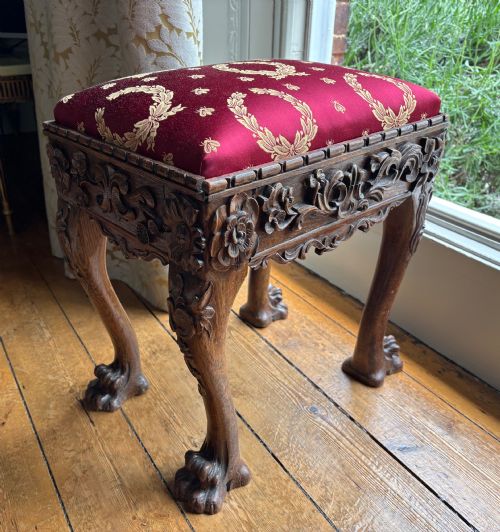
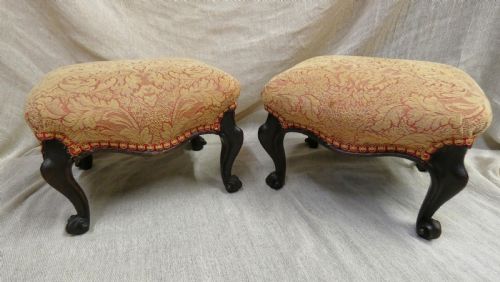
These pieces are a victorian damask footstool, low seating built to support the feet during long hours in a parlour or study.
Victorian Damask Footstool
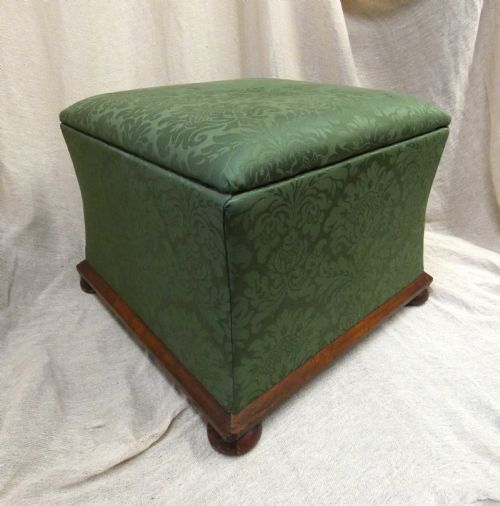
A victorian damask footstool is a low domestic seat designed to accompany armchairs and sofas in nineteenth-century interiors. These objects appear as simple upholstered pads, low footstools, and larger ottomans across the listings.
The materials and frames span the Victorian era, alongside revival designs such as Chippendale style, Queen Anne revival, and Anglo-Indian forms. Walnut, mahogany, and rosewood timber frames support the woven fabrics on these seats.
Visitors to this page encounter pieces dating from the nineteenth century, including specific years like 1860, 1870, 1880, 1890, and 1920, as well as Regency periods. The forms range from pairs of footstools to dressing stools and country house walnut pieces.
How they were made
Makers built the structural frames of a victorian damask footstool using hardwoods including mahogany, walnut, and rosewood. Craftsmen shaped these timbers into carved legs, turned supports, and sturdy underframes.
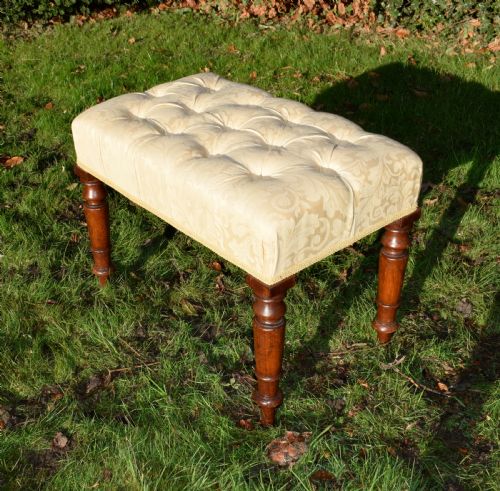
Upholsterers applied fabric coverings, notably damask and buttoned textiles, over padded interiors. Brass fittings occasionally appear on these frames as decorative or structural elements.
Listings feature items from the Victorian period, 19th Century, 1860, 1870, 1880, 1890, 1920, and Regency eras.
What varies in quality
The distinction between standard and exceptional pieces rests in the execution of the timber carving and the integrity of the frame. Carved walnut and mahogany frames with detailed embellishments demonstrate superior craftsmanship compared to plain supports.
The choice of upholstery fabric and the precision of the buttoning or textile application affect the overall finish. Pieces from country house settings or those exhibiting specific revival styles often display a higher standard of joinery and material selection.
The Victorian Damask Footstool Glossary
- Damask
- A reversible figured fabric with patterns formed by weaving, historically used for upholstery and drapery. This textile provides the characteristic textured surface seen on period seats.
- Ottoman
- A low upholstered seat or bench without a back or arms, often used as a footrest or auxiliary seating. These larger forms share construction methods with smaller footstools.
- Chippendale Revival
- A decorative style inspired by eighteenth-century cabinet maker designs, popular in later periods. Pieces in this style feature carved wooden details and classic proportions.
- Anglo-Indian
- A designation for items made in India during the British period, combining local timber work with European forms. Rosewood is frequently utilised in these distinctive carved stools.
Victorian Damask Footstool: Frequently Asked Questions
What is a victorian damask footstool used for?
These low seats were originally placed before armchairs and sofas to support the feet and legs of seated occupants. They served both a practical comfort function and a decorative role in formal Victorian reception rooms.
Today, they function as movable seating options or low display surfaces within domestic interiors, integrating easily beside modern or period furniture.
How do I date a victorian damask footstool?
Dating relies on examining the timber species, carved style details, and the construction methods used in the frame. Mahogany and rosewood were typical of specific mid to late nineteenth-century cabinet making.
Reference to specific revival periods, such as Chippendale or Queen Anne, alongside recorded dates like 1860 or 1880, helps place an item within its historical context.
Where were these footstools placed?
Victorian footstools and ottomans were positioned in principal rooms such as drawing rooms, libraries, and parlours. They accompanied larger armchairs or stood freely as dressing stools in bedrooms.
Larger country house examples occupied expansive reception spaces, matching the scale of substantial upholstery sets.
What woods appear in these stools?
Makers utilised dense hardwoods such as mahogany, walnut, and rosewood for the exposed frames and legs. These durable timbers allowed for crisp carving and stable structural support.
Some pieces also incorporated brass components for decoration or structural reinforcement alongside the primary wood frames.