
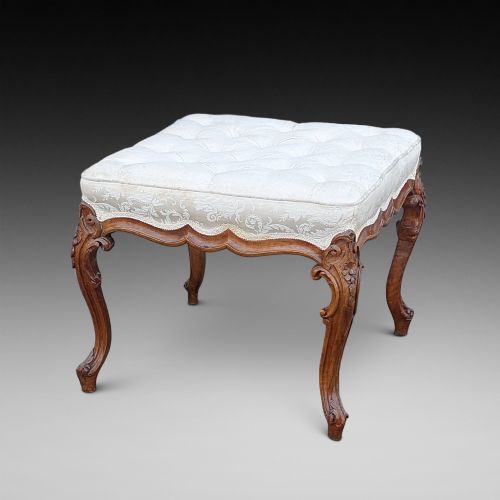
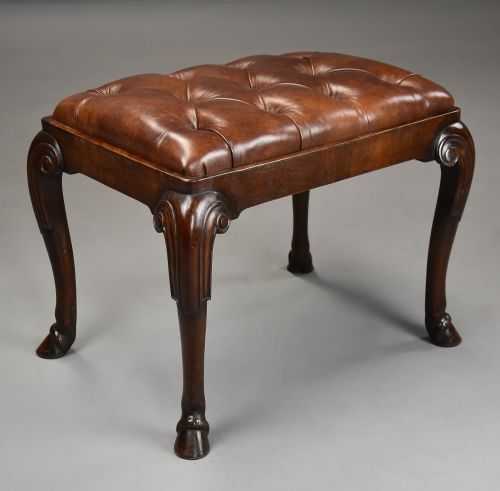
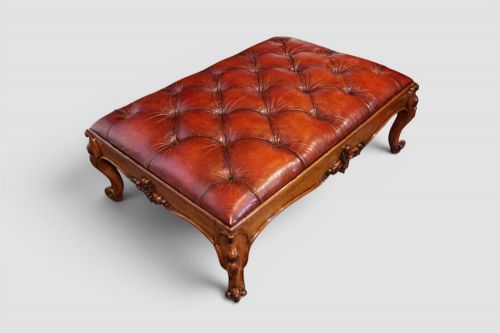


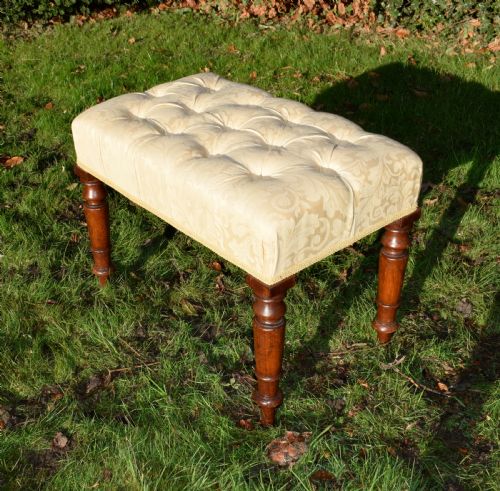


Walnut Buttoned Stool
A walnut buttoned stool brings tactile warmth and refined nineteenth-century craft to an interior, offering both resilient seating and decorative utility.
Walnut Buttoned Stool
A walnut buttoned stool represents a distinct class of domestic seating originating predominantly from the nineteenth century, including Victorian salon pieces, adjustable piano stools, and library window designs. Buyers searching this phrase will most frequently encounter nineteenth-century and Victorian examples featuring rich timber frames paired with deep upholstery.
The physical forms vary from compact footstools and dressing table seats to larger rectangular ottomans and paired window stools suitable for conversion into coffee tables. These pieces combine sturdy structural timbers with soft, buttoned textile or leather surfaces designed for prolonged comfort and daily use.
How they were made
The construction of these pieces relies heavily on solid walnut frames, frequently shaped into cabriole legs, X-frames, or turned supports that showcase the natural grain of the timber. Joinery methods of the period ensure structural rigidity, while some piano and dressing stools incorporate internal metal and wooden mechanisms for height adjustment or revolving movement.
Upholstery forms a critical component of the manufacturing process, utilising traditional stuffing materials beneath outer coverings of hand-dyed leather, damask, or textile. Deep buttoning involves securing the upholstery through the padding to create characteristic geometric indentations that hold the cushioning firmly in place over time.
The listings on this site span the nineteenth century into the early twentieth century, featuring walnut frames paired with leather, damask, and fabric.
What varies in quality
The standard of timber selection and carving execution dictates the primary tier of quality, with finer pieces displaying expressive walnut grain patterns and crisply detailed cabriole legs rather than plain turned supports. Superior examples often retain original adjustable hardware that operates smoothly without excessive play in the mechanism.
Upholstery depth and the choice of outer covering also determine the grade of the piece, where hand-dyed leather or heavy period damask reflects higher workshop investment than standard textile replacements. The precision of the buttoning work and the firmness of the underlying padding further separate standard domestic seating from elite salon furniture.
The Walnut Buttoned Stool Glossary
- Cabriole leg
- A furniture leg that curves outward at the knee and tapers inward toward the foot, inspired by animal limbs. This form appears frequently on Victorian and Queen Anne revival walnut frames.
- Buttoning
- An upholstery technique where twine pulls the outer cover deep into the padding, secured with fabric or leather buttons. This creates a grid of dimples that prevents the stuffing from shifting.
- X-frame
- A structural base formed by two intersecting diagonal members that cross in the centre. It provides robust support for low stools and library seating.
- Damask
- A reversible figured fabric traditionally woven on a jacquard loom with patterns formed by contrasting warps and wefts. It is frequently seen on formal nineteenth-century salon seating.
- Revolving
- A mechanical feature allowing the seat top to spin on a central pivot screw. This is especially common on nineteenth-century piano and music stools.
Walnut Buttoned Stool: Frequently Asked Questions
Where were walnut buttoned stools used?
These pieces served multiple functions across different rooms, appearing beside pianos for musicians, in dressing rooms for daily grooming, and alongside library windows for reading.
Larger variants also functioned as footstools before heavy armchairs or were placed centrally in salons to provide flexible auxiliary seating.
How do I identify a Victorian piece?
Victorian examples typically display dense walnut framing combined with deep buttoned upholstery in leather or patterned textiles. Look for structural characteristics such as cabriole legs, X-frames, or turned wooden supports.
Many pieces also incorporate nineteenth-century mechanical height adjustments for piano or dressing table use.
Can I use an antique stool as a coffee table?
Larger rectangular upholstered stools, particularly those covered in sturdy hand-dyed leather, adapt well to serving as coffee tables in contemporary living spaces.
Their substantial timber frames and flat padded tops provide a stable surface when paired with a protective tray for drinks.
How do I care for nineteenth-century leather?
Maintain antique leather upholstery by keeping it away from direct heat sources and strong sunlight that can dry out the hide over time. Gentle cleaning with appropriate leather balms helps preserve the suppleness of the material without altering its historic finish.