


Victorian Cut Glass Vessel
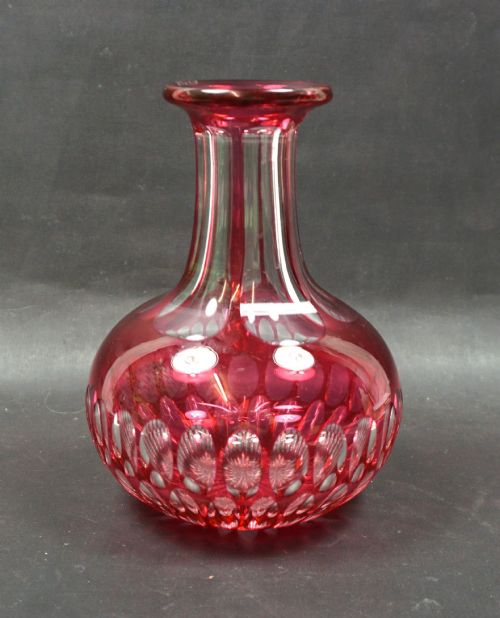
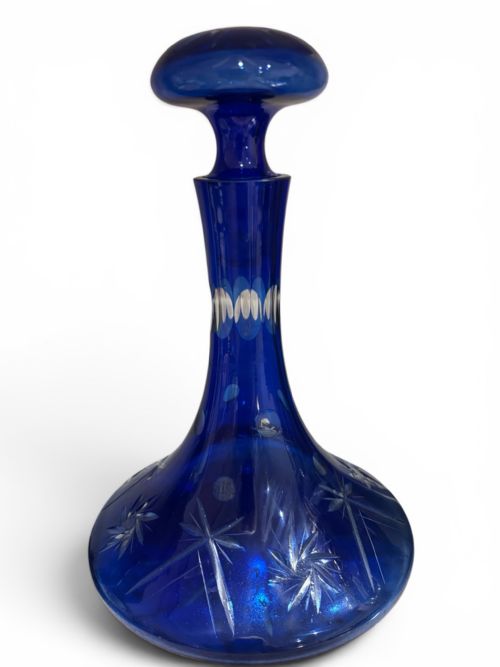
A victorian cut glass vessel brings heavy, light-catching brilliance to a room, ranging from deep cranberry carafes to sharp cobalt vases.
Victorian Cut Glass Vessel
A victorian cut glass vessel encompasses an array of functional and decorative items designed during the nineteenth and early twentieth centuries. Decanters, vases, carafes, and claret jugs dominate the selection, often accompanied by smaller jars and beakers.
Most examples hail from the Victorian period through to the Edwardian era, with significant representation from English and Bohemian makers. The forms vary from massive ceremonial beakers to delicate dessert wine glasses and heavy lidded display pieces.
The aesthetic leans heavily into dense surface decoration, where geometric facets or engraved motifs catch the light from every angle. Buyers encounter both standalone glass forms and those augmented with silver mounts, silver plating, or gilt highlights.
Materials and methods
Makers utilised heavy lead crystal and clear glass as the base for deep wheel-cutting and faceted designs. Overlay techniques allowed artisans to cut through a coloured outer layer - such as cranberry, cobalt blue, or ruby red - to reveal the clear glass beneath.
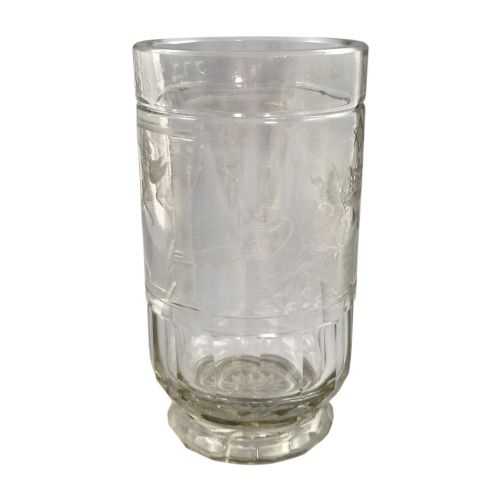
Engraving and intaglio techniques added intricate floral, Masonic, or geometric imagery to the surface of goblets, carafes, and decanters. Gilding and gold leaf occasionally accented the rims and panels of high-status Bohemian and English pieces.
Many glass bodies were completed with silver plating or solid silver mounts, creating combined vessels such as claret jugs, preserve pots, and scent bottles. These metal additions required precise smithing to fit the contours of the blown and cut glass.
A massive Bohemian Jewish Masonic ceremonial beaker demands attention, proving that nineteenth-century glass could hold secrets as well as it held liquor.
Assessing quality and execution
The crispness of the cutting separates superior pieces from standard production. Sharp, deep facets that feel precise to the touch indicate skilled hand-cut work rather than softer, moulded imitations.
The weight and clarity of the metal or crystal dictate the base quality of the vessel. Heavy lead crystal provides a resonant ring and a refractive depth that lighter, ordinary glass simply cannot match.
The integration of secondary materials like silver mounts or gold leaf reveals the ambition of the piece. Secure, well-fitted hardware and evenly applied gilding demonstrate high standards of workshop collaboration.
Hukin and Heath
The Victorian Cut Glass Vessel Glossary
- Cased glass
- Glass formed of two or more distinct layers of different colours, often associated with Bohemian production. Artisans cut through the outer casing to expose the contrasting layer underneath.
- Intaglio
- A design engraved into the surface of the glass rather than carved in relief. This technique creates subtle, recessed pictorial details on goblets and decanters.
- Sweetmeat jar
- A covered vessel historically used for serving small confections, nuts, or sweetmeats. These jars frequently feature heavy cutting and a footed base.
- Claret jug
- A pouring vessel designed specifically for serving red wine, typically combining a cut glass body with a silver-plated handle, mount, and hinged lid.
- Overlay
- A manufacturing method where a coloured glass skin is fused over a clear or contrasting body before being cut. It yields striking contrast between the exterior colour and internal transparency.
Victorian Cut Glass Vessel: Frequently Asked Questions
How do I clean an antique decanter?
Wash the glass by hand in warm water using mild soap, avoiding harsh scrubbing brushes that might scratch the surface.
Dry the vessel thoroughly and store it unstoppered to prevent moisture accumulation inside the chamber.
Are these glass vessels safe for daily use?
While sturdy, historical lead crystal and thin etched glass require gentle handling during use and washing.
Hand-washing is mandatory, and modern dishwashers should be avoided entirely to protect the glass and any silver mounts.
How do I distinguish Bohemian from English pieces?
Bohemian examples frequently employ bold coloured overlays like cobalt or cranberry, alongside elaborate multi-layered cutting.
English vessels often favour heavy, clear lead crystal with precise geometric cutting, occasionally paired with sterling silver hardware.