
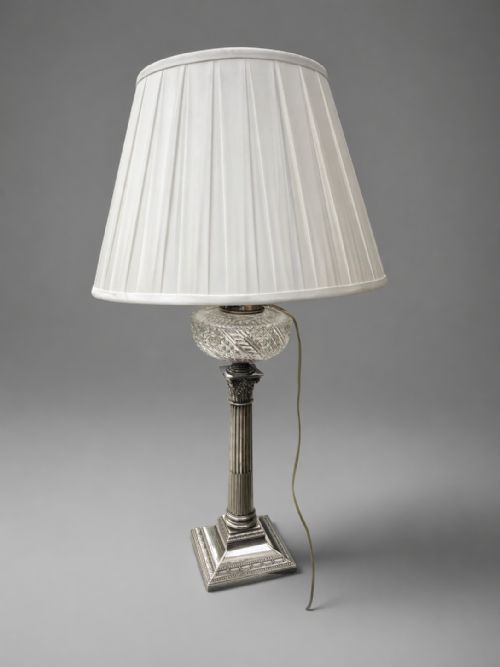


Victorian Cut Glass Lamp
These victorian cut glass lamp examples bring heavy lead crystal and polished metal together to illuminate a room with genuine nineteenth-century weight and sparkle.
Victorian Cut Glass Lamp
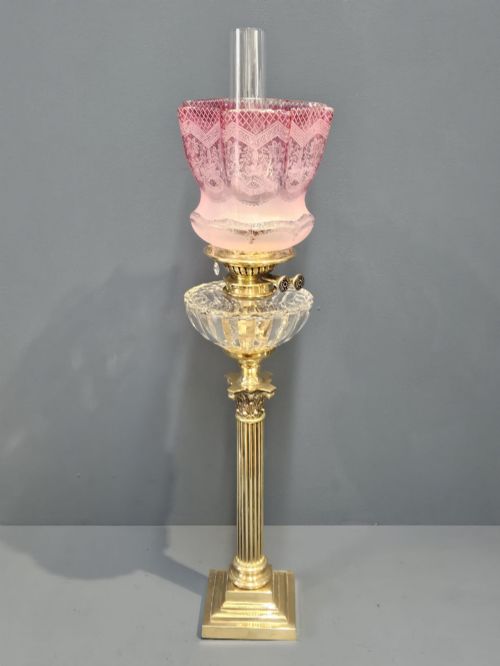
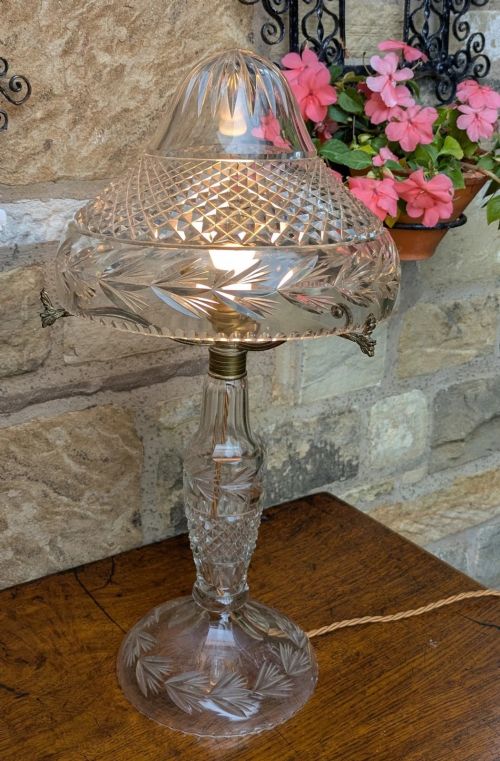
A victorian cut glass lamp combines heavy faceted crystal reservoirs or columns with metal mountings, primarily designed for oil or paraffin burning. These pieces draw from styles including Neoclassical, Edwardian, and French Napoleon III influences.
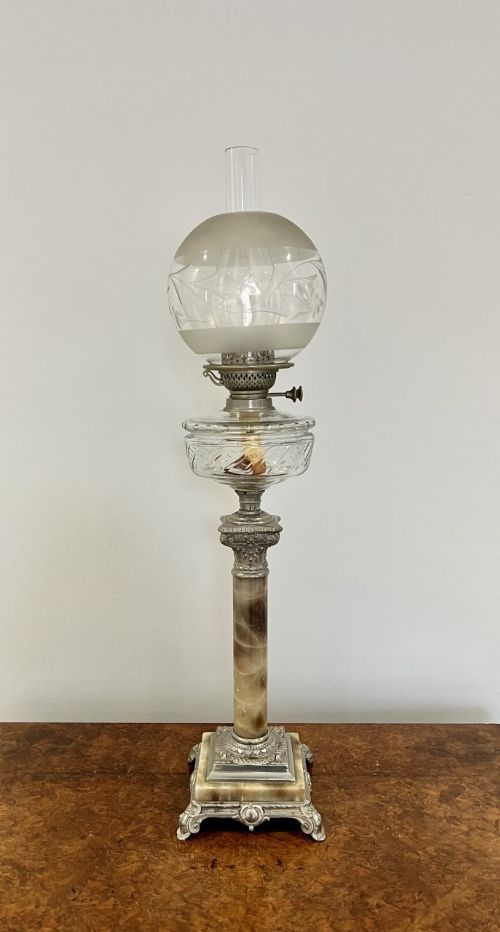
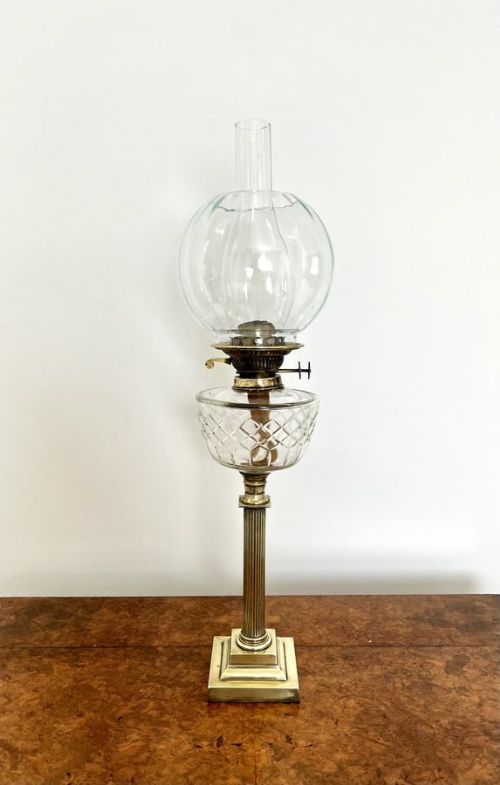
The most common formats on this page are table lamps and oil lamps featuring brass or silver-plated Corinthian columns beneath cut glass fonts. Pendant lights, chandeliers, and candlesticks also appear regularly across the nineteenth-century and early twentieth-century periods.
How They Were Made
Makers shaped heavy lead crystal and glass through deep wheel-cutting to create sharp geometric facets that refract light thoroughly. These glass sections join with cast brass, gilded bronze, or silver-plated metal components using threaded rods and collars.
Many examples incorporate fitted fabric shades or etched glass globes above burners and brass galleries. Structural elements often rely on solid cast brass bases combined with copper or bronze detailing.
Materials across these listings combine cut crystal, brass, bronze, and silver plate with fabric and etched glass shades.
What Varies in Quality
The depth and crispness of the glass cutting dictate much of the visual fidelity, where sharper facets catch ambient light more cleanly than softer, moulded alternatives. Heavier gauge brass and thicker lead crystal columns provide greater physical stability and substance.
Proportion and casting definition in the metal mounts distinguish standard production from finer workshop output, particularly in Corinthian column capitals and cast bronze elements.
Goldsmiths and Silversmiths Company·Clarke·Osler·Baccarat·Messengers·Harrods
The Victorian Cut Glass Lamp Glossary
- Font
- The oil reservoir portion of a lamp, usually formed from heavy cut glass or crystal mounted above a metal column.
- Corinthian Column
- A classical architectural column design featuring ornate acanthus leaf capitals, frequently utilised for Victorian lamp stands.
- Lustre
- A decorative tabletop ornament featuring hanging crystal glass drops suspended around a central stem or candle holder.
- Electrolier
- A light fixture designed for electricity rather than gas or oil, often created by converting older multi-branched oil lamps.
- Ormolu
- Gilded bronze or brass ornamentation applied to furniture and lighting fixtures to provide a rich metallic contrast against glass.
Victorian Cut Glass Lamp: Frequently Asked Questions
How do I convert an old oil lamp?
Conversion typically involves running electrical wiring down through the central burner collar without altering the original structural metalwork or glass font. Many examples already feature modern internal rewiring while retaining their vintage appearance.
Professional electricians ensure the fitting matches the diameter of the burner gallery so the shade sits securely upon the frame.
What periods do these lamps cover?
Most pieces date from the Victorian era and the broader nineteenth century, alongside Edwardian examples from around 1900 to 1920. Stylistic influences span from Regency designs through to later nineteenth-century revival styles.
Manufacturing dates often correlate with registration marks or maker stamps found on the metal burner mechanisms.
How do I clean cut glass safely?
Warm water and mild washing liquid applied with a soft cloth clear away dust without risking the antique metal plating. Brass and silver-plated sections require non-abrasive polishing creams to preserve the underlying finish.
Detaching glass shades or reservoirs before cleaning prevents accidental strain on older threaded joints.
Were these lamps originally for oil?
The majority of nineteenth-century examples functioned as oil or paraffin burners using cotton wicks housed inside brass mechanisms. Many surviving pieces have since undergone conversion to electricity for modern domestic use.
Retained burners and galleries indicate the original paraffin-burning configuration of the piece.