


Victorian Coupe Glasses
Victorian coupe glasses bring a shallow elegance and historic weight to celebrations, offering collectors distinct colour and deep engraving from the nineteenth century.
Victorian Coupe Glasses
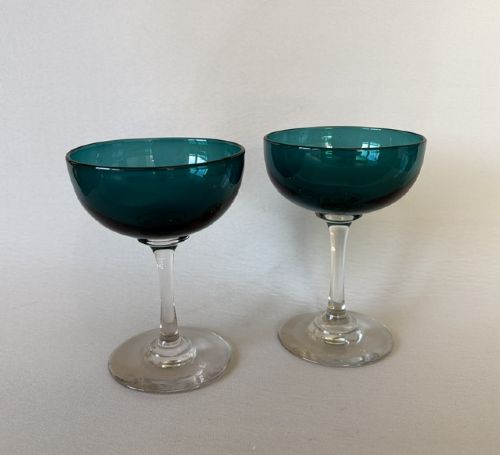
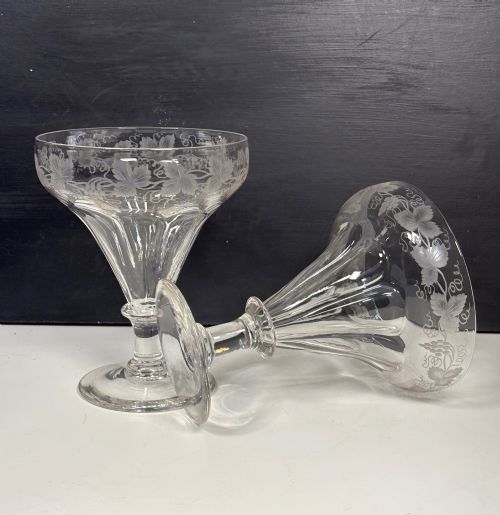
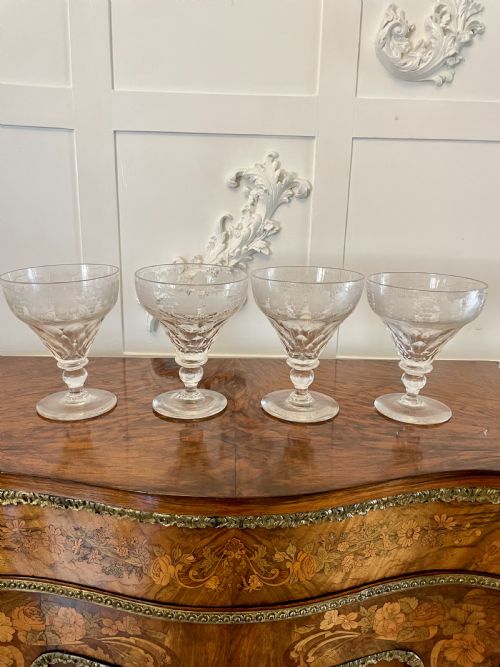
Victorian coupe glasses encompass champagne glasses, champagne coupes, and engraved bowls spanning the mid to late nineteenth century. These items include pairs and large sets originating from English, French, and Austrian makers.
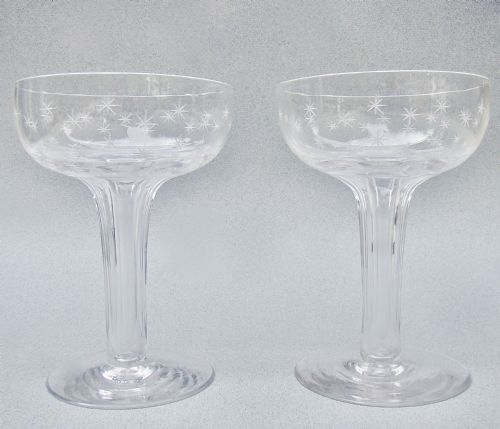
The most common forms on this page are champagne coupes and hollow stem champagne glasses, often decorated with cut glass, star-etching, or coloured overlays. They combine functional tableware with decorative glass traditions of the period.
Pieces range from simple amber glasses and table services to elaborate cranberry over crystal and red over crystal vessels. Collectors encounter both single pairs and larger matched sets suited to period dining.
How they were made
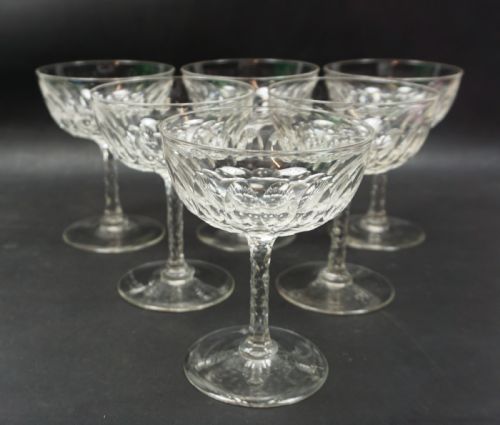
Makers utilised glass and lead crystal as the foundational material for these vessels, shaping them into pedestals, bowls, and stems. Techniques such as facet cutting created sharp angles along the stems to catch the light.
Surface decoration relied on skilled hand engraving to carve motifs like convolvulus and fruiting vines directly into the glass. Overlay techniques layered coloured glass over clear crystal before cutting away sections to reveal the contrast beneath.
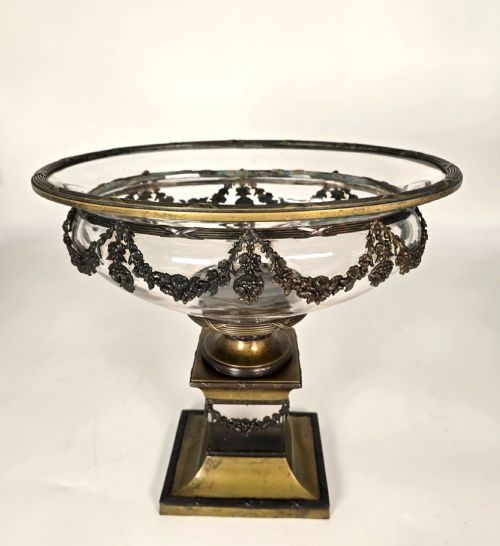
Certain vessels integrated enamel work and gilt bronze or brass mounts, merging glassblowing with metalwork. These decorative additions reflect Historicism and French Second Empire influences across European workshops.
Glassmakers occasionally invited summer garden party guests to admire hollow stems designed to watch champagne bubble upwards.
What varies in quality
Quality rests upon the depth and precision of the hand engraving and cutting found across the bowl and stem. Crisp facet cuts and finely detailed botanical motifs separate standard production from superior examples.
The choice of material and colour layering dictates the visual richness of the piece, particularly in cranberry and red over crystal items. Heavier lead crystal and complex mounts, such as bronze fittings, indicate higher ambition in the workshop.
Fritz Heckert
The Victorian Coupe Glasses Glossary
- Cranberry glass
- A transparent pinkish-red glass produced by adding gold chloride to the molten batch. It became particularly popular during the nineteenth century for decorative tableware.
- Coupe
- A shallow, broad-bowled glass traditionally used for champagne. Its wide rim allows the aromas of sparkling wine to release quickly.
- Lead crystal
- Glass containing a high proportion of lead oxide, which increases weight, clarity, and brilliance. This material allows for deeper and sharper cutting without fracturing.
- Overlay
- A technique where a layer of coloured glass is fused over a clear crystal body. Artisans then cut through the outer layer to expose the clear glass beneath, creating striking patterns.
- Facet cut
- A geometric surface decoration formed by grinding and polishing flat planes into the glass. This method enhances the refractive qualities of lead crystal.
Victorian Coupe Glasses: Frequently Asked Questions
What were Victorian coupe glasses used for?
These vessels were designed primarily for serving champagne and sparkling wines during formal dinners and garden parties. Their broad, shallow bowls suited the sweeter sparkling wines popular in the nineteenth century.
Today, collectors use them for celebratory toasts or display them as part of antique tableware sets. They bring authentic period character to modern dining tables.
How do I care for antique glass?
Hand washing in lukewarm water with a mild detergent is essential for preserving nineteenth-century glass and gilt mounts. Dishwashers subject fragile lead crystal and enamel to thermal shock and harsh chemicals.
Dry the pieces promptly with a lint-free cloth to prevent water spots. Store them securely on stable shelving away from edge hazards.
How can I tell the period?
Dating relies on observing the weight of the lead crystal, the style of the hand engraving, and the presence of pontil marks on the base. Victorian pieces often exhibit distinct botanical motifs like fruiting vines or convolvulus.
Matching the form to known regional styles, such as French bronze mounts or English facet-cut stems, helps narrow down the decade of production.
Are these glasses safe to use?
Most nineteenth-century tableware remains structurally sound for gentle use with beverages and food. Lead crystal is stable under normal dining conditions, though acidic liquids should not be stored in them for extended periods.
Inspect the rim and base for structural chips before use. Hand cleaning ensures the preservation of delicate enamelling and engraved surfaces.